National Historic Site of Canada
Adelaide Hunter Hoodless Homestead National Historic Site of Canada
St. George, Ontario
Also known as Adelaide Hunter Hoodless Homestead, Homestead d'Adelaide Hunter Hoodless
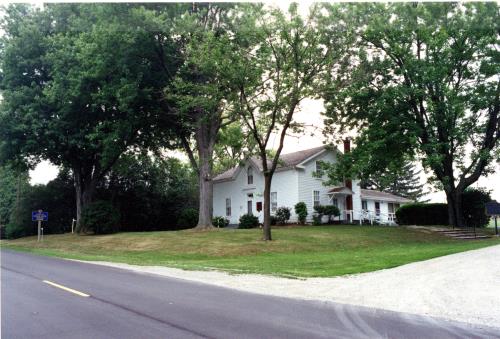
Corner view of the house
Photo: Parks Canada | Parcs Canada
- Built
- 1830–1839
- Recognized
- 1995
- By
- Government of Canada
The register’s text, word for word
Description
Adelaide Hunter Hoodless Homestead is an early nineteenth-century one-and-half storey wood-frame farmhouse located in a pastoral setting in the rural community of St. George, Ontario. The designation refers to the house on its lot.
Heritage value
Adelaide Hunter Hoodless Homestead was designated a National Historic Site of Canada in 1995 for its concrete linkages with the contributions of Adelaide Hunter Hoodless, a champion of maternal feminism, who was instrumental in the founding of the Women’s Institute, the Young Women’s Christian Association, the National Council of Women, the Victorian Order of Nurses, and three faculties of Household Science, and because the rural situation and lack of amenities found in Hoodless’ childhood home speak eloquently to the hard labour and isolation experienced by many rural women in the mid 19th century, a situation Hoodless spent her entire life trying to alleviate.
The heritage value of Adelaide Hunter Hoodless Homestead National Historic Site of Canada lies in its direct association with Adelaide Hunter Hoodless, particularly in its role in defining and describing the reason she became a figure of national importance. Its value is expressed by the relatively isolated setting and in its illustration of a typical farm house of mid-to-late nineteenth century Ontario. Adelaide Hunter was born in this house, and lived here until 1881 when she married successful Hamilton furniture manufacturer John Hoodless. Here, as the youngest child in a large farming family raised by a widowed mother, she experienced the hardship and isolation that attracted her to social activism. That experience, together with the loss of her youngest child 1889, inspired her determination and defined the nature of the causes she championed.
Adelaide Hunter Hoodless (1857-1910) herself was recognized by the Historic Sites and Monuments Board of Canada in 1959 as a person of national historic significance.
SourceHistoric Sites and Monuments Board of Canada, Minutes, November 1995.
Character‑defining elements
Key elements contributing to the heritage value of the site include:
- its simple rectangular massing, one-and-half storey, “Ontario cottage” plan;
- its modest scale, balanced definition and broad Georgian proportions;
- its simple vernacular details (prominent central door with overlight, returned eaves, central gable with round-headed window);
- its modest materials (wood and shingle) and frame construction,
- its centre-hall interior plan with a utilitarian disposition of space (large kitchen, slant-roofed bedrooms, first floor sick room, central hall and staircase);
- its modest interior materials and finishes (with decoration restricted to classically inspired moldings);
- archaeological remains of the Hunter Hoodless period (such as the barn, outhouses, porches on the house);
- the isolated rural location of the house, and its setting on a country road within a generous domestic plot with mature trees, lawn and a creek;
- its unobstructed viewscapes to surrounding planted farm fields.
End of the register’s text
Location
359 Blue Lake Road, St. George, Ontario, N0E, Canada
43.23700° N, 80.29703° W
Get directions (opens in a new tab)Being on the register doesn’t make a place open to visitors. Many are private homes or businesses; please view them from the street.

Loading map…
Nearby

Similar places
Places whose register descriptions are closest to this one.
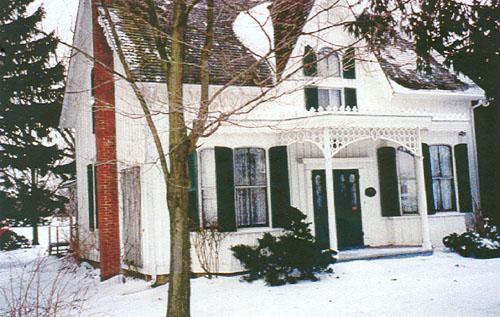 Erland Lee (Museum) Home National Historic Site of CanadaHamilton, Ontario
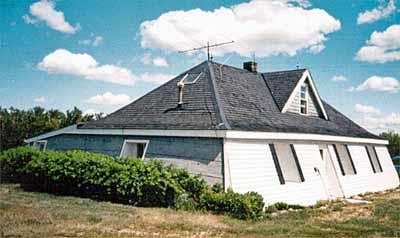 Addison Sod House National Historic Site of CanadaKindersley, Saskatchewan
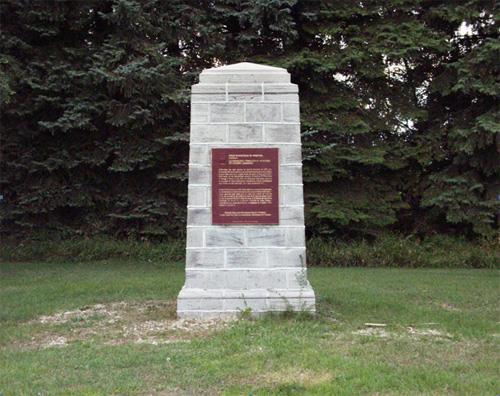 First Homestead in Western Canada National Historic Site of CanadaPortage la Prairie, Manitoba
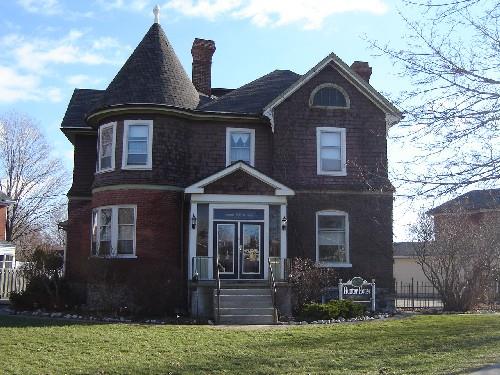 Hunter HouseTown of, Ontario
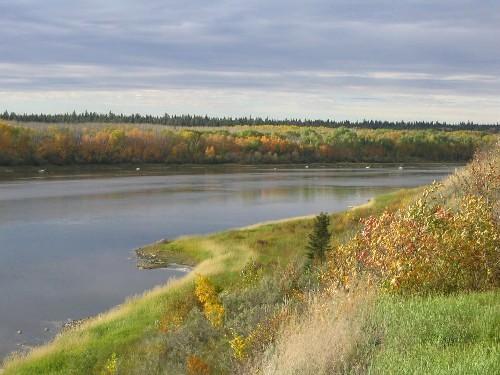 South Branch House Provincial Historic SiteSt. Louis RM 431, Saskatchewan
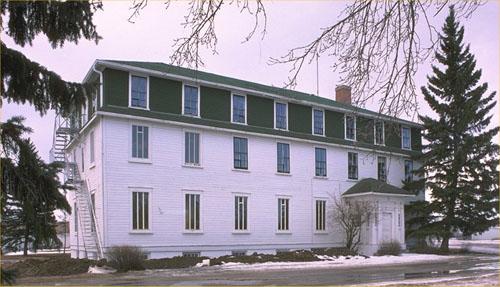 Old Government House / Saint-Charles Scholasticate National Historic Site of CanadaBattleford, Saskatchewan
From the Canadian Register of Historic Places, as last updated on December 12, 2025. The register’s text is shown word for word.