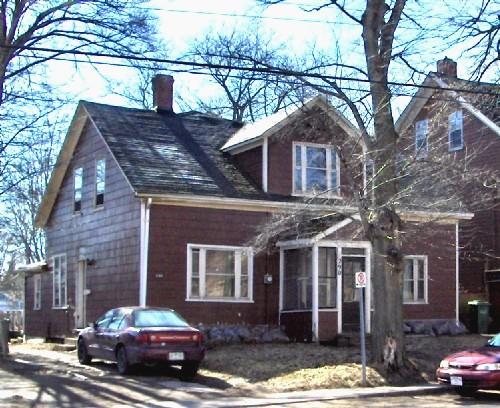
288 Grafton Street
Also known as: 288 Grafton Street, James White House
Description
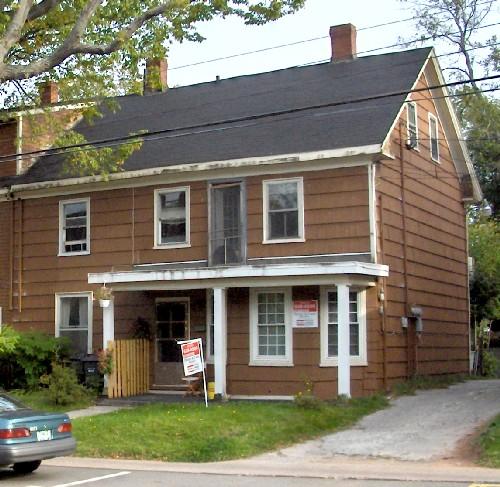
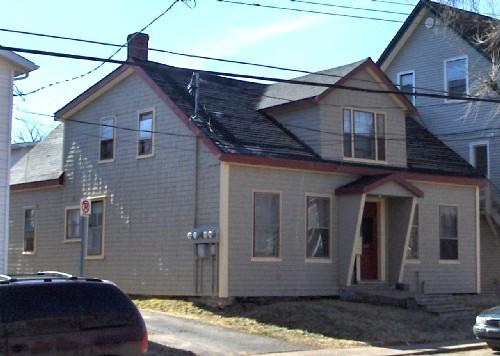
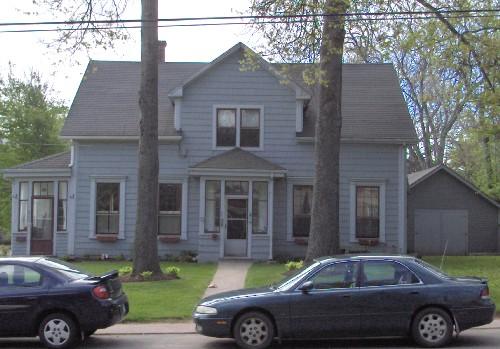
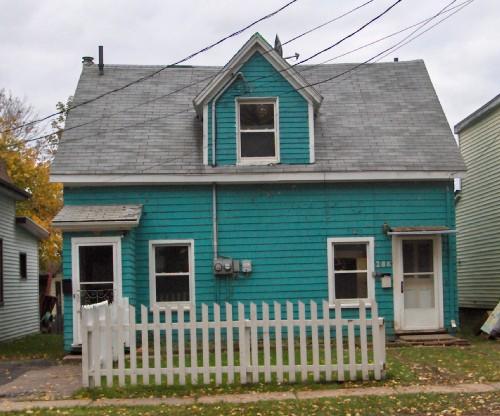
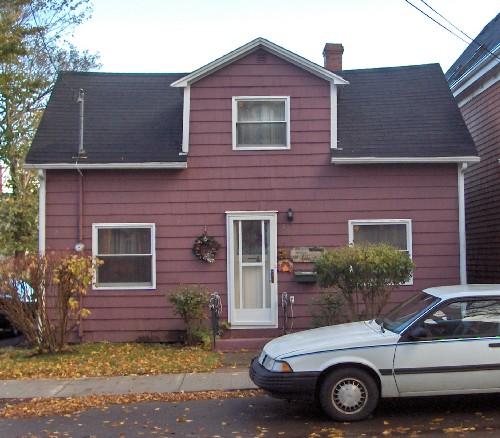
288 Grafton Street is a wood framed former single family dwelling that has been converted into an apartment building. It is now attached to a simpler styled building of an earlier age. It features stacked bay windows topped with a gable roof and various shingle patterns on the exterior. The designation encompasses the building's exterior and parcel; it does not include its interior.
Heritage Value
The heritage value of 288 Grafton Street lies in its association with shipwright, James White; railway superintendent, G.A. Sharp; and college professor, John Caven.
James White had 288 Grafton Street built sometime between 1864 and 1870. As a shipwright, one of the more notable vessels he constructed was the SS Heather Belle in 1862, a steamer that once plied the waters of the Hillsborough River. An engraving of it was featured in an 1878 panoramic map of Charlottetown. During his career, White worked with a number of shipbuilders including Clement White from Clement White and Company, who lived next door at 286 Grafton Street.
A later owner of the home was G.A. Sharp, stationmaster for the Prince Edward Island Railway. During Sharp's ownership, the professor, journalist and historian, John Caven, LL.D (1826-1914) resided at 288 Grafton Street. He was listed in the 1871 Lovell's Directory as a professor at St. Dunstan's College. Caven later became a professor at Prince of Wales College supervising student teachers in the model school. St. Dunstan's College (later St. Dunstan's University) and Prince of Wales College would combine in 1969 to form the present University of Prince Edward Island. Caven's lectures were a popular draw among the college students and he would continue to write on topics of Island history in local publications. Not only an educator, Caven was also a journalist who for a time owned and edited the Charlottetown Herald newspaper.
Located among a number of homes built in the 19th century, 288 Grafton Street plays a significant role in supporting the streetscape.
Sources: Heritage Office, City of Charlottetown Planning Department, PO Box 98, Charlottetown, PE C1A 7K2
#1916
Character-Defining Elements
The heritage value of the building is shown in the following character-defining elements:
- the two-and-one-half storey massing of the building
- the wood frame construction and wood shingle cladding
- the extensive use of decorative brackets and mouldings
- the gable roof
- the brick chimney
- the side placement of the main door
- the style, size and shape of the windows, including the stacked bay windows with gable roof
Gallery
3 imagesLocation
Loading map...
Similar Places
Heritage sites with similar characteristics