Registered Heritage Structure
White House
Portugal Cove, Newfoundland and Labrador
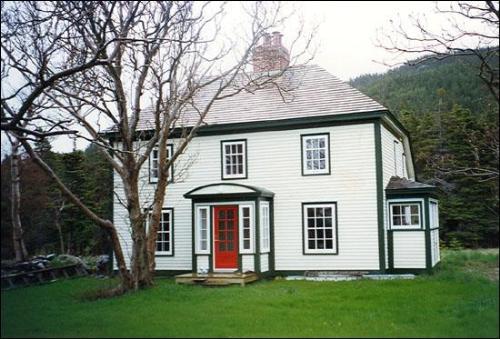
Exterior view of front facade, White House, Portugal Cove/St. Philips, NL.
Photo: Heritage Foundation of Newfoundland and Labrador, 2006
- Recognized
- 1992
- By
- Heritage Foundation of Newfoundland and Labrador
The register’s text, word for word
Description
The White House, built between 1800-1830, is a two storey hip roofed house located in Portugal Cove, NL. The designation is confined to the footprint of the building.
Heritage value
The White House is designated because of its architectural significance and historical and cultural values.
The building has architectural value as a noteworthy example of construction techniques employed by Irish settlers to Newfoundland. Of particular note is the large open fireplace or inglenook contained within the structure, a very rare example of Irish vernacular construction in the region. Made of stone, the thickness of the three walls range from 0.61 metres to 0.91 metres. These walls are approximately 1.83 metres high, with the rear wall measuring 2.59 metres in length and projecting side walls measuring 1.83 metres in length. The flagstone hearth floor covers 4.74 square metres. An open fire would be placed on this floor and two benches, which could seat upwards of ten people, were built onto the projecting walls.
Built sometime in the early nineteenth century, the building has historical value because of its age, being one of the older intact structures in the region. Irish Studies scholar John Mannion has suggested that the house was built for the immigrant family of Michael White of County Wexford, Ireland in the early 1800s. Given the date of construction, the original owners would have been among the last wave of Irish immigrants to the island but continued to employ the construction techniques of earlier Irish settlers to Newfoundland and Labrador.
The building is culturally significant as it evokes a certain sense of time and place. Aside from the obvious functions of providing a cooking space and a source of heat, large open fireplaces, like that in the White House, were a place in which socialization occurred and cultural values were disseminated. As wood and oil stoves were introduced to rural areas, inglenooks became less common but kitchens continued to be centres of socialization and enculturation.
SourceHeritage Foundation of Newfoundland and Labrador unnumbered property designation file, Portugal Cove - White House
Character‑defining elements
All those elements that reflect the Irish vernacular method of construction, including:
-large open fireplace (inglenook);
-number of storeys;
-hip roof;
-wooden roof shingles;
-location of porch on centre front facade;
-narrow clapboard;
-corner boards;
-window size, style, trim and placement;
-size, style, trim and placement of exterior doors;
-chimney style and off-centre placement; and -dimensions, location and orientation of building.
End of the register’s text
Location
Portugal Cove, Newfoundland and Labrador, A1M, Canada
47.62248° N, 52.86056° W
Get directions (opens in a new tab)Being on the register doesn’t make a place open to visitors. Many are private homes or businesses; please view them from the street.

Loading map…
Nearby
 West Point Cemetery Municipal Heritage Site450 m · Portugal Cove-St. Philip's
 Somerton Property7 km · Wabana · 1927
 Bell Island No. 2 Mine Registered Heritage Structure7 km · Wabana
 Squires Barn and Carriage House9.5 km · St. John's · 1917
 Squires Barn and Carriage House Municipal Heritage Building9.5 km · St. John's · 1917
 Thimble Cottage Registered Heritage Structure10 km · St. John's · 1850
Similar places
Places whose register descriptions are closest to this one.
 The White HouseNorth Saanich, British Columbia
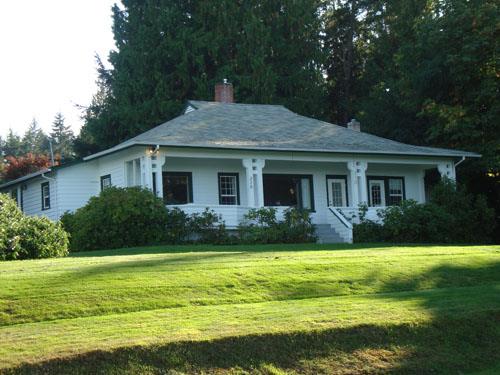 White HouseQualicum Beach, British Columbia
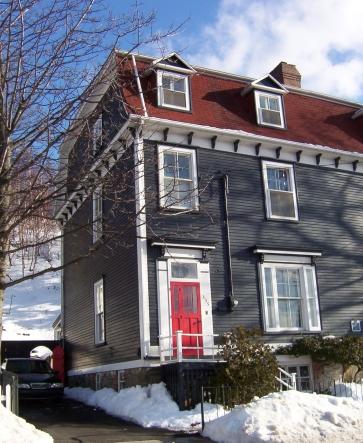 The New House, 335 Southside RoadSt. John's, Newfoundland And Labrador
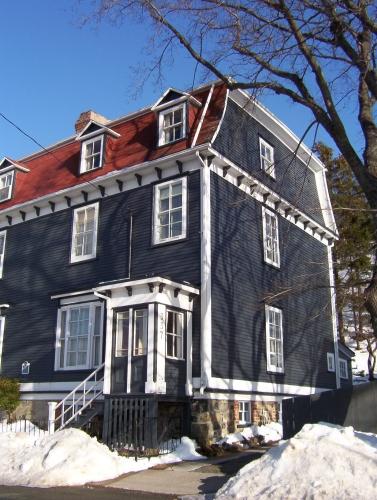 The New House, 337 Southside RoadSt. John's, Newfoundland And Labrador
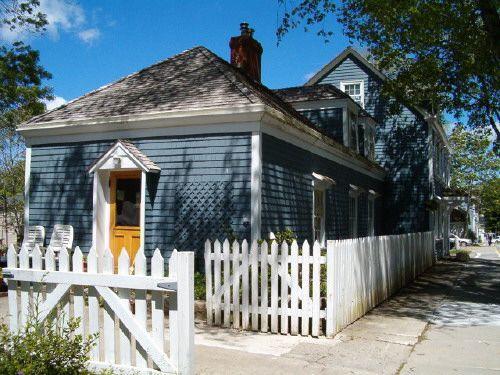 White-Irwin HouseShelburne, Nova Scotia
 EnhancedGovernment House National Historic Site of CanadaSt. John's, Newfoundland And Labrador
From the Canadian Register of Historic Places, as last updated on December 12, 2025. The register’s text is shown word for word.