Waterloo Train Station
Also known as: Waterloo Train Station, 20 Regina Street South, Waterloo Canadian National Railway (CNR) Station
Description
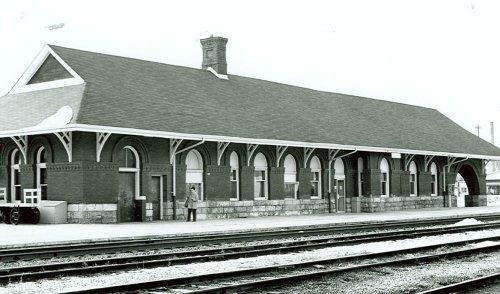
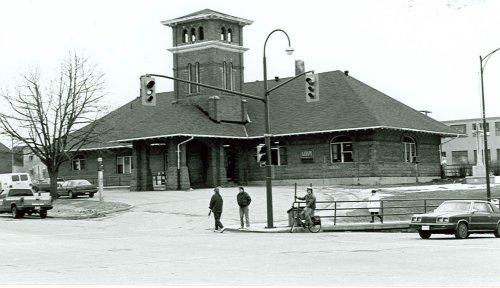
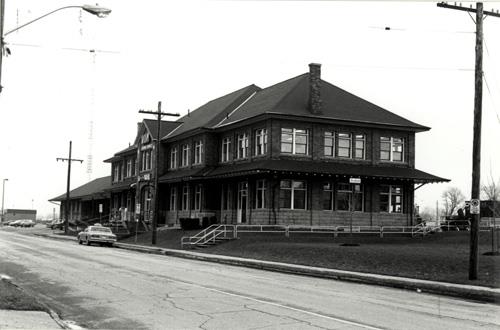
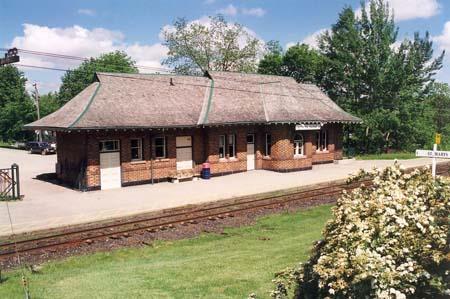
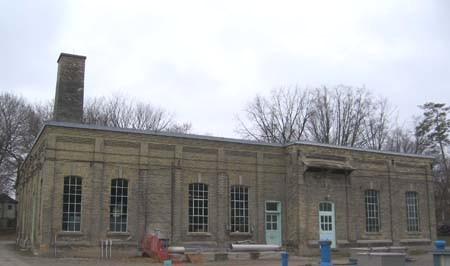
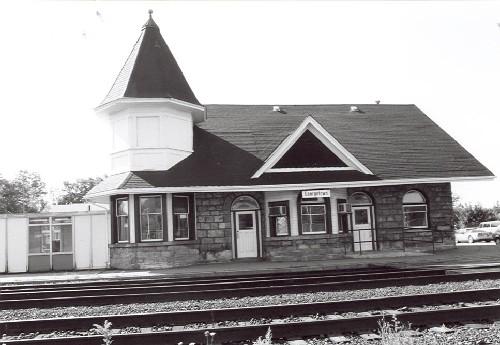
The Waterloo Train Station, located at 20 Regina Street South, is situated on the east side of the street, south of Erb Street, in the City of Waterloo. This one-storey buff-brick building was designed in the Romanesque style and was constructed in 1910.
This property was designated by the City of Waterloo, for its heritage value, under Part IV of the Ontario Heritage Act (By-law 95-118).
Heritage Value
The Waterloo Train Station was built in 1910 as a replacement for the original wooden structure. This building was originally owned and operated by the Grand Trunk Railway for the purpose of securing a rail line to Waterloo from Berlin (Kitchener). In 1917 the Grand Trunk Railway was absorbed by the Canadian National Railway system. At its peak the train station served nine trains a day - six passenger and three freight. It also acted as a departure point for troops in both WWI and WWII. The station was closed to passengers, in 1934. This was due to a decline in passengers as a result of the proliferation of automobiles.
The Waterloo Train Station was constructed of buff-brick with cut stone around the windows, doors and at each corner of the building. It is defined as a “second class station”, in a style typical of the Grand Trunk Railway stations. This Romanesque building has a sweeping, hip roof with flared eaves and the window of the ticket office extends up above the roofline.
Sources: City of Waterloo By-Law 95-118; Justine M. Murdy, L.A.C.A.C. Building Description, 1990; City of Waterloo Designated Landmarks, LACAC, 1995.
Character-Defining Elements
Character defining elements that contribute to the heritage value of the Waterloo Train Station include its:
- location on the rail line from Waterloo to Berlin
- location as the departure point for troops serving in WWI and WWII
- simple construction resulting in its definition as a “second class station”, typical of Grand Trunk Railway stations
- buff-brick exterior
- cut stone accents around the door, windows and corners
- hip roof with flared eaves
- ticket window which extends beyond the roofline
Gallery
3 imagesLocation
Loading map...
Similar Places
Heritage sites with similar characteristics