National Historic Site of Canada
Triple Island Lighthouse National Historic Site of Canada
Prince Rupert, British Columbia
Also known as Triple Island Lighthouse, Phare de l'île Triple, Triple Island Lightstation
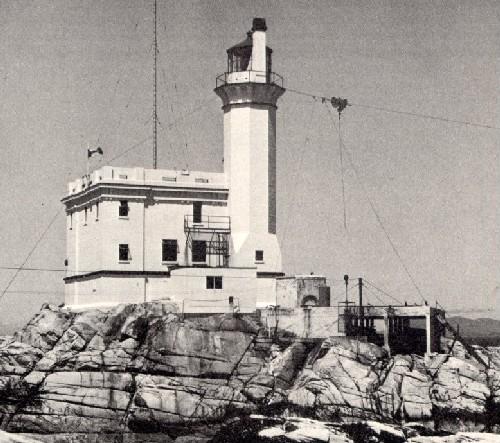
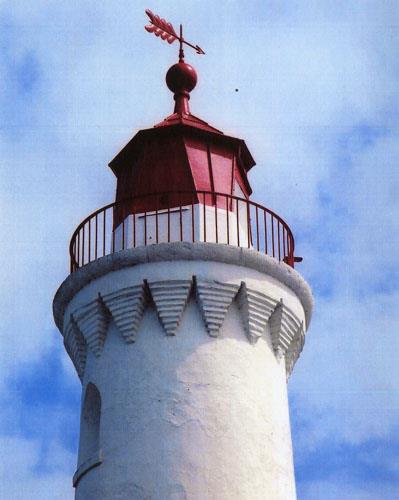
General view of Triple Island Lighthouse, showing the clean lines, and subtle ornamentation, including the decorative brackets supporting the platform surmounted by an iron lantern.
Photo: Parks Canada Agency / Agence Parcs Canada.
- Built
- 1919–1920
- Recognized
- 1974
- By
- Government of Canada
The register’s text, word for word
Description
The Triple Island Lighthouse National Historic Site of Canada stands sentinel on an exposed, rocky islet off the coast of British Columbia. The concrete, octagonal tower rises from the northeastern corner of an unornamented, square-shaped keeper’s dwelling and fog alarm building. It is a simplified, well-scaled, classical design occupying a large part of Triple Island. The strategic location makes it highly visible to maritime traffic. The official recognition refers to the building on its rocky island.
Heritage value
Triple Island Lighthouse was designated a national historic site of Canada in 1974 because:
- prevailing westerly gales and high flood tides in the spring and fall made construction of a lighthouse here one of the most hazardous tasks in Canadian maritime history.
The heritage value of this site resides in the physical presence of the lighthouse as witness to the achievement of its construction on such an exposed site. The contractor, J.H. Hildritch of Prince Rupert completed the job in seventeen months without a single loss of life. Triple Island Lighthouse also illustrates the improvement of aids to navigation on the west coast of Canada, and was built 1919-1920 to aid marine traffic using the Inside Passage to Alaska, and ships bound for Prince Rupert. The lighthouse, with its 3rd Order Dioptric light with a focal plane of 29.5 metres, was a custom design for the site, and was constructed according to the designs of Col. W. A. Anderson of the Department of Marine and Fisheries.
SourceHistoric Sites and Monuments Board of Canada, Minutes, November 1974.
Character‑defining elements
The key elements that contribute to the heritage character of this site include:
- the highly visible location on a rugged, rocky location at the edge of a busy seaway;
- the maritime coastal setting on a small, exposed, storm-swept island;
- the sturdy, reinforced-concrete construction;
- the overall form and strong, clean massing of the structure which consists of a tall octagonal 23 metre high tower with lantern, and a two-storey, cube-like keeper’s dwelling;
- the simplified classical design;
- the clean lines, and subtle ornamentation, including the decorative brackets supporting the platform surmounted by an iron lantern;
- the regular placement of doors and windows;
- the horizontal stringcourse with decorative brackets;
- the smooth, painted finish of the exterior walls with its identifying colour scheme of white with red painted lantern.
End of the register’s text
Location
Prince Rupert, British Columbia, V0V, Canada
54.29464° N, 130.88050° W
Get directions (opens in a new tab)Being on the register doesn’t make a place open to visitors. Many are private homes or businesses; please view them from the street.

Loading map…
Similar places
Places whose register descriptions are closest to this one.
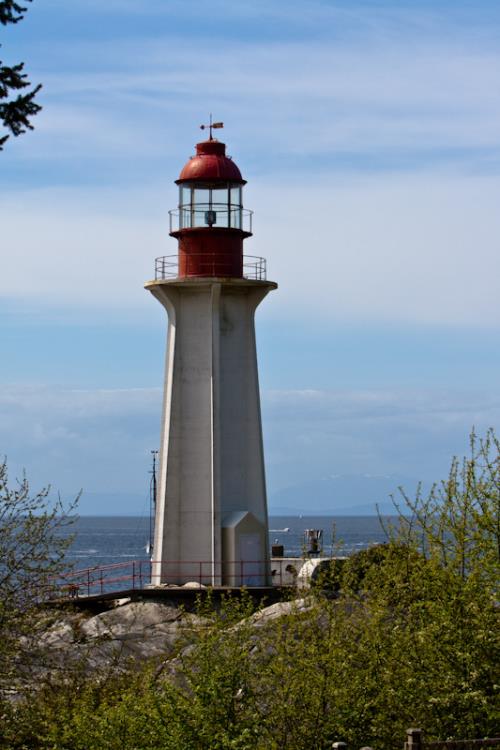 Point Atkinson Lighthouse National Historic Site of CanadaWest Vancouver, British Columbia
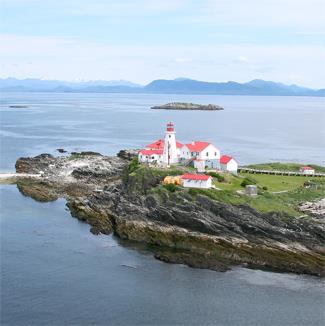 Green Island LighthouseSkeena-Queen Charlotte A, British Columbia
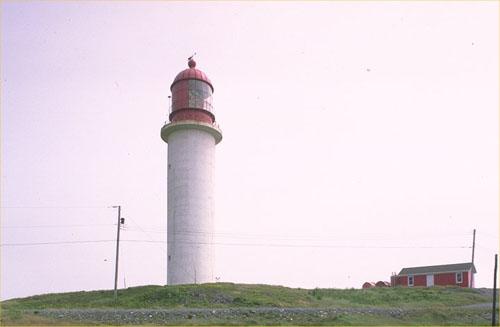 Cape Race Lighthouse National Historic Site of CanadaCape Race, Newfoundland And Labrador
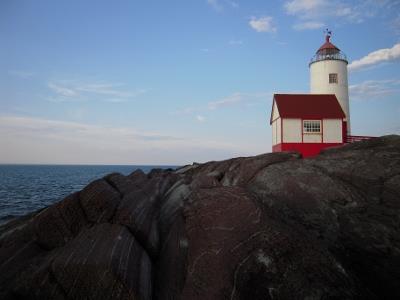 Île-Verte Lighthouse National Historic Site of CanadaNotre-Dame-des-Sept-Douleurs, Quebec
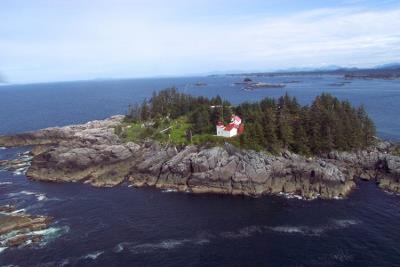 McInnes Island LighthouseMcInnes Island, British Columbia
 Fisgard Lighthouse National Historic Site of CanadaColwood, British Columbia
From the Canadian Register of Historic Places, as last updated on December 12, 2025. The register’s text is shown word for word.