Strathgartney Homestead National Historic Site of Canada
Also known as: Strathgartney Homestead, Strathgartney Homestead National Historic Site of Canada, Strathgartney Homestead
Description
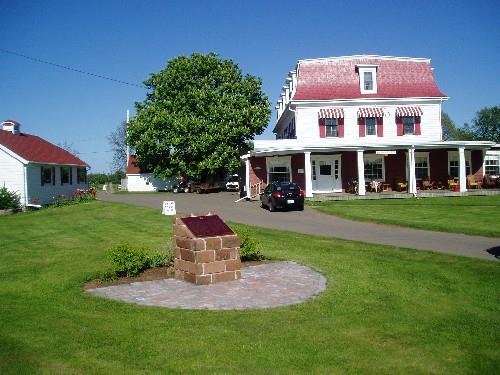
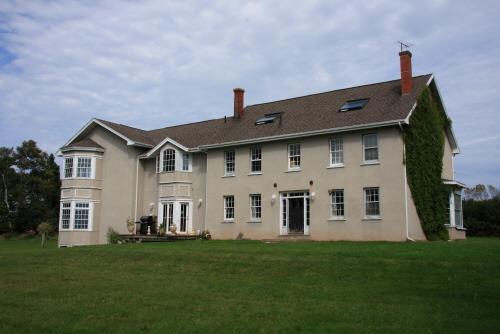
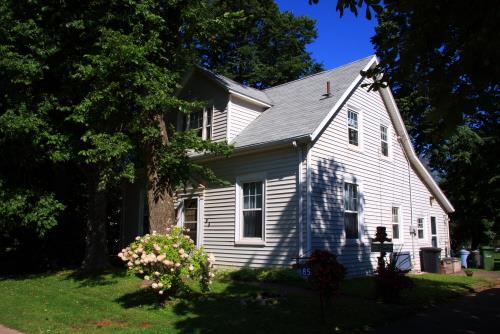
Strathgartney Homestead National Historic Site of Canada is a 32-acre (12.9 ha) remnant of the 500-acre (202.3 ha) estate of Robert Bruce Stewart, a nineteenth-century landowner. It contains the Stewart house, a carriage house and a collection of seven farm outbuildings from the Stewart period set in an agricultural landscape.
Heritage Value
Strathgartney Homestead was designated a national historic site in 1996 because:
- it is an important reminder of the land tenure system that dominated political and social life on Prince Edward Island for over a century,
- it illuminates the broader debate over the Land Question in the decades leading to the Land Purchase Act of 1875. To its owner, Robert Bruce Stewart, the estate embodied the rights of property and for Island tenants, it pointed to the inequity of leasehold tenure.
The heritage value of this site resides in the buildings and landscape that constitute the Strathgartney Homestead as remnant survivals, symbolic of the role of the Stewart family in the land tenure history of the island and their ability to illustrate the lifestyle of the Stewart family.
The Strathgartney estate was constructed by Robert Bruce Stewart in the early 1860s and run by his family until 1876 when they left in response to the 1875 approval of the Land Purchase Act. The homestead has been much changed since that time.
Source: HSMBC Minutes, 19-20 November 1996, p. 39-40.
Character-Defining Elements
Key features contributing to the heritage value of this site include:
- the large unadorned residence and its associated outbuildings dating from the period of Stewart occupancy (the carriage house, cattle barn, horse barn, hen house, granary building, coach house, blacksmith's shop and boat house) in their found materials and forms, particularly those standing on their original locations,
- the residence with its cross-gable massing and large porch,
- the vernacular forms and wood materials (clapboard and shingle) of outbuildings dating from the period of Stewart occupancy (carriage house, cattle barn, horse barn, hen house, granary building, coach house, blacksmith's hope, and boat house),
- evidence of the early spatial relationships between the buildings on the site (with particular emphasis on those buildings occupying their original locations),
- the secluded setting of the Homestead on a high elevation in a peaceful, rural clearing exhibiting remnants of a formal garden, woods, and rolling countryside.
Gallery
1 imageLocation
Loading map...
Similar Places
Heritage sites with similar characteristics