Steele Narrows National Historic Site of Canada
Also known as: Steele Narrows, Steele Narrows, Battle of Loon Lake
Description
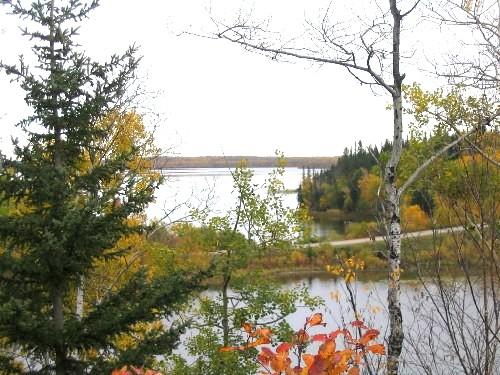
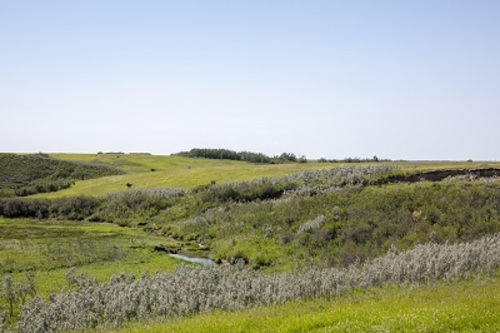
Steele Narrows National Historic Site of Canada is located 10km west of the village of Loon Lake, Saskatchewan. The site is a flat, grassy landscape on the east and west sides of Steele Narrows, the channel connecting Makwa Lake to the north and Sanderson Bay in Upper Makwa Lake to the south. A bridge spans the narrows. Interpretive panels and white concrete markers relate the events and indicate their location. On a hill on the west side of the narrows is an HSMBC commemorative cairn. Official recognition refers to a circle with a 200 meter radius centered on the middle of the bridge crossing Steele Narrows encompassing the narrows and the land on either side of the bridge.
Heritage Value
Steele Narrows was designated a national historic site of Canada in 1950 because:
- it is the site of the last engagement of the North West Rebellion.
The heritage value of Steele Narrows National Historic Site of Canada lies in its association with the North West Rebellion. Following the Battle of Frenchman Butte on 28 May 1885, the First Nations forces led by Misto-ha-a-Musqua (Big Bear) retreated toward Loon Lake with hostages from Fort Pitt. On 3 June 1885, Big Bear and his band were overtaken by Major Steele and his Scouts who formed an elite section of the North-West Mounted Police. Steele attacked from the west side of the narrows, thereafter named Steele’s Narrow, and after a three hour exchange of fire the First Nations withdrew northward with their prisoners, eventually surrendering at Fort Carlton on July 2. The police retired a few miles west to await re-enforcements and medical aid for their wounded. This skirmish marked the last engagement of the North West Rebellion. The site highlights the key events of the confrontation.
Character-Defining Elements
Key features contributing to the heritage value of this site include: - its location associated with the last engagement of the 1885 North West Rebellion; - the HSMBC cairn which commemorates the national significance of the battle; - the integrity of any surviving or as yet unidentified archaeological remnants which may be found within the site in their original placement and extent; - the white concrete markers which denote significant events of the battle, located throughout the site.
Gallery
3 imagesLocation
Loading map...
Similar Places
Heritage sites with similar characteristics