St. Peter's Bishop's Palace
Description
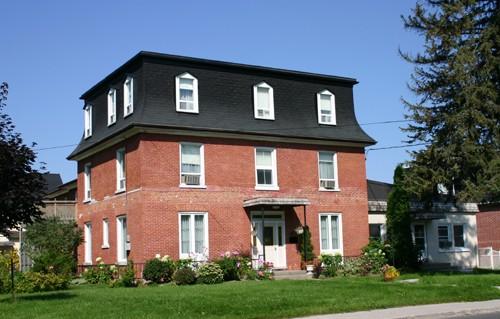
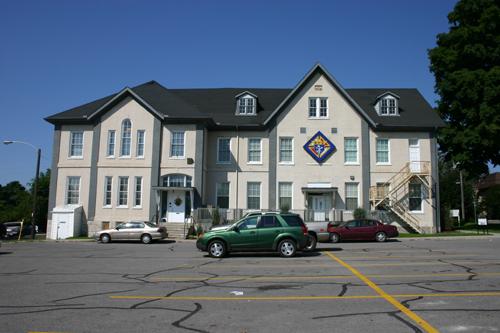
One of several Catholic holdings surrounding the Cathedral of St. Peters in Chains, the Bishops Palace is located in a 19th century residential neighborhood in the City of Peterborough. A two and one half storey brick structure, it is recognized for its heritage value by the City of Peterborough Bylaw 1978-178.
Heritage Value
The heritage value of the St. Peter's Bishop's Palace resides in it being an excellent example of late Victorian architecture. Originally a three-storey French Second Empire home with a mansard roof with iron cresting, the building was seriously damaged by a fire in 1932. Renovations were undertaken that replaced the mansard roof with a cross gable roof. Since the renovations, the house has taken on a more Italianate exterior, with its two and one half storey structure, wide overhanging eaves and decorative brackets.
The heritage value of the St. Peter's Bishop's Palace also resides in its association with the political and ecclesiastical leaders of nineteenth century Peterborough. Built in 1885 for Senator George A. Cox, then mayor of Peterborough, the building at 350 Hunter Street was one of the most expensive residences in nineteenth century Peterborough. Cox never occupied the house, choosing to rent it for several years before selling it to the parish of St. Peters in Chains Cathedral. It became the home of second bishop of the newly formed Roman Catholic Diocese of Peterborough, Bishop T.J. Dowling. The house continues to be occupied by the Bishops of the Diocese of Peterborough.
Source: Heritage Designation Brief, Office of the Clerk, City of Peterborough Bylaw 1978-178
Character-Defining Elements
Key elements that embody the heritage value of the St. Peter's Bishop's Palace include:
-the two and one half storey rectangular plan with projecting bays
-the wide overhanging eaves and decorative brackets
-the paired windows
-the cross gabled roof
Gallery
1 imageLocation
Loading map...
Similar Places
Heritage sites with similar characteristics