National Historic Site of Canada
Salem Chapel, British Methodist Episcopal Church National Historic Site of Canada
St. Catharines, Ontario
Also known as Salem Chapel, British Methodist Episcopal Church, Chapelle Salem de la British Methodist Episcopal Church, St. Catharines British Methodist Episcopal Church
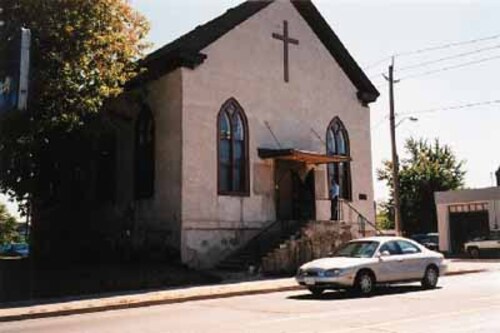
General view of Salem Chapel, showing its central entry door on one gable end, set between two large pointed-arch windows, 1998.
Photo: Parks Canada | Parcs Canada, 1998.
- Built
- 1851–1855
- Recognized
- 2000
- By
- Government of Canada
The register’s text, word for word
Description
Salem Chapel British Methodist Episcopal Church National Historic Site of Canada is a gable-fronted church set on a high foundation. Located at 92 Geneva Street, in St. Catharines, Ontario, this stucco-clad building is distinguished by its regularly arranged pointed-arch windows, modest scale and overall simplicity. Official recognition refers to the church on its footprint at the time of designation.
Heritage value
Salem Chapel British Methodist Episcopal Church was designated a national historic site of Canada in 2000. It is recognized because:
- it is typical of the auditory-hall design of UGRR-related churches; and,
- through its association with famed UGRR conductor Harriet Tubman, it was an important locus of abolitionist activity in Canada.
Salem Chapel British Methodist Episcopal Church was an important centre of 19th-century abolitionist and civil rights activity in Canada. Built circa 1855, it replaced a smaller log church in order to accommodate St. Catharines’ growing community of refugees arriving via the Underground Railroad. Among them was Harriet Tubman, the famous UGRR conductor, who lived near Salem from 1851-1858 and personally led many refugees from the southern United States to safety in Canada. The heritage value of this church resides in its exceptional associations with the anti-slavery movement and the early UGRR black community to which it bears witness as illustrated by the church with its auditory-hall form, typical of early African Canadian churches.
SourceHistoric Sites and Monuments Board of Canada, Minutes, November 1999, June 2002.
Character‑defining elements
Key elements that contribute to the heritage character of this site include:
- the corner siting in the heart of old St. Catharines;
- its rectangular footprint and cubic massing under a gabled roof;
- its central entry door on one gable end, set between two large pointed-arch windows and approached by a split staircase;
- its four regularly spaced pointed arch windows on each side elevation;
- its wood construction materials, wood trim, and stone foundation;
- its high basement;
- its open auditory-hall design with three-sided gallery;
- its simple interior finishes and surviving original fittings including the long single-log walnut benches.
End of the register’s text
Location
92 Geneva Street, St. Catharines, Ontario, L2R, Canada
43.16518° N, 79.24014° W
Get directions (opens in a new tab)Being on the register doesn’t make a place open to visitors. Many are private homes or businesses; please view them from the street.

Loading map…


Similar places
Places whose register descriptions are closest to this one.
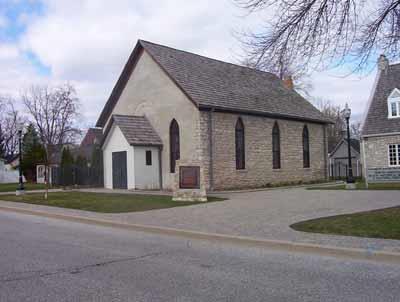 Nazrey African Methodist Episcopal Church National Historic Site of CanadaAmherstburg, Ontario
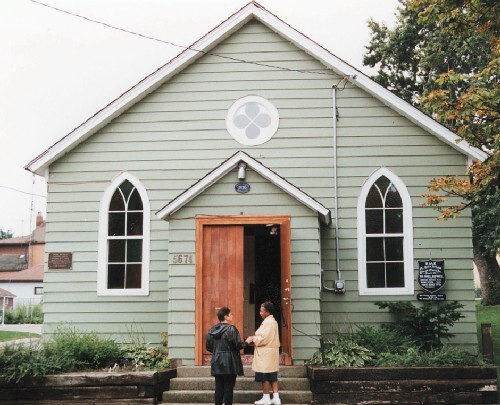 R. Nathaniel Dett British Methodist Episcopal Church National Historic Site of CanadaNiagara Falls, Ontario
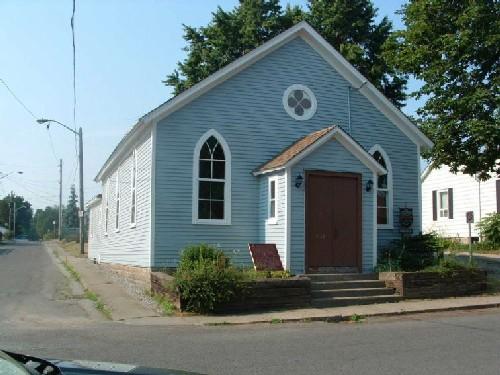 Nathaniel Dett ChapelNiagara Falls, Ontario
 Oro African Methodist Episcopal Church National Historic Site of CanadaOro-Medonte, Ontario
 Amherstburg First Baptist Church National Historic Site of CanadaAmherstburg, Ontario
 Sandwich First Baptist Church National Historic Site of CanadaWindsor, Ontario
From the Canadian Register of Historic Places, as last updated on December 12, 2025. The register’s text is shown word for word.