National Historic Site of Canada
Amherstburg First Baptist Church National Historic Site of Canada
Amherstburg, Ontario
Also known as Amherstburg First Baptist Church, Église de la First Baptist Church d’Amherstburg
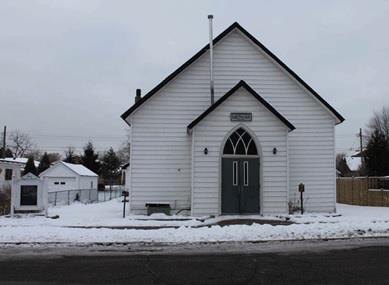
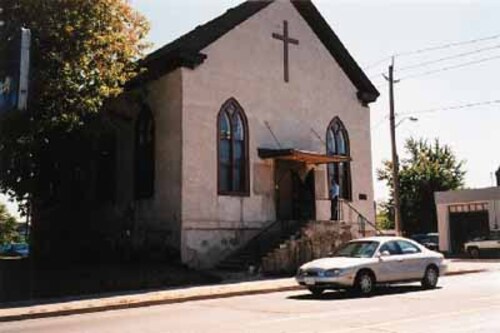
Amherstburg First Baptish Church exterior
Photo: Parks Canada Agency | Agence Parcs Canada, Jennifer Cousineau.
- Built
- 1848–1849
- Recognized
- 2012
- By
- Government of Canada
The register’s text, word for word
Description
Amherstburg First Baptist Church National Historic Site of Canada is located in a residential street in the town of Amherstburg, in southwestern Ontario. Set on a small, flat lot this modestly sized wooden church features a gable roof, pointed arch windows, a gabled vestibule, and a rear addition. Built in 1848-49, it is typical of auditory churches built by Black settlers in this period of settlement. The modest scale is in keeping with surrounding housing stock. The designation refers to the building on its footprint.
Heritage value
Amherstburg First Baptist Church was designated a national historic site of Canada in 2012 because:
-it was a principal Underground Railroad-related Black church in Upper Canada with a strategic location on the international border between Upper Canada and the United States;
-its simple, compact auditory form and the early addition of specialized architectural features such as the baptismal pool offered a fitting spiritual home for thousands of Black Baptists. The building was important in the everyday lives of congregants and to the development of a distinctive Black Baptist church tradition in Ontario;
-as the Mother Church of the Amherstburg Regular Missionary Baptist Association it played a crucial role in the development of Black communities and identity in Ontario by founding an organization within which people of African descent could pursue their ambitions, develop their talents, and assume positions of leadership at a time when they were denied these opportunities elsewhere.
The First Baptist Church was built in 1848-49. From its inception, the First Baptist Church was associated with the flight from slavery and, later, the Underground Railroad. It was also the Mother Church of the Amherstburg Regular Missionary Baptist Association, one of the most important Black organizations in Canada West, later Ontario. The First Baptist Church was central to the establishment and development of the Black Baptist church tradition in Ontario. As the material expression of the practices and the beliefs of the early Black Baptists who settled in the region, it made visible what some historians have called "the invisible institution," in reference to the black church in North America under slavery.
Amherstburg First Baptist Church was constructed mostly by its Baptist congregants after a four year fund-raising period. The charismatic Pastor/Elder Anthony Binga had recognized the need for a purpose built structure to house his growing congregation. The neighbourhood, developed in the 1830s and 40s at the same time as the church was constructed, was a mixed neighbourhood with a significant population of newly settled Black people. Many were refugees from American slavery with later arrivals often travelling via the Underground Railway. Built in what was then the back ranges of Amherstburg the neighbourhood was further away from the Detroit River. This may have been influenced by the fear of slave catchers from the United States. The simple massing and modest scale is typical of the churches built by black settlers and other Protestant groups. The church was designed so that the entire congregation could see and hear the preacher. The simple, uncluttered auditory-hall form of the interior is a feature of many of the churches established by communities linked to the Underground Railroad in Canada.
SourceHistoric Sites and Monuments Board of Canada, Minutes, July 2011
Character‑defining elements
Key elements that contribute to the heritage value of this site include:
- the location on a residential street;
- the setting within an older neighbourhood of Amherstburg;
- the timber-frame construction covered with wood siding;
- the single-storey rectangular massing under a gable roof with the west end gable facing the street:
- the pointed arch (lancet) windows, three on each of the side elevations;
- the vestibule’s pointed arch windows and centrally placed entry door set under a lancet shaped fanlight;
- the clear and simple design of the open auditory hall plan, and the ceiling rising to the full height of the roof;
- surviving evidence of original interior finishes and trim, and the angled barrel vaulted wooden ceiling.
End of the register’s text
Location
232 George St, Amherstburg, Ontario, N9V, Canada
42.10273° N, 83.10559° W
Get directions (opens in a new tab)Being on the register doesn’t make a place open to visitors. Many are private homes or businesses; please view them from the street.

Loading map…
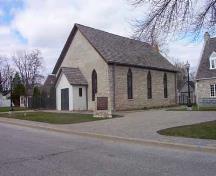 Nazrey African Methodist Episcopal Church National Historic Site of Canada150 m · 1848
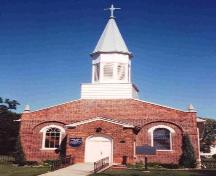 Christ Church Amherstburg (Anglican)500 m · 1818
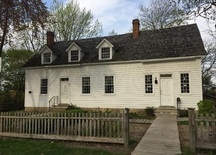 Park House National Historic Site of Canada650 m · 1790
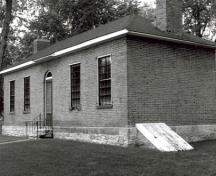 Commissariat Office / Callum House650 m · 1831
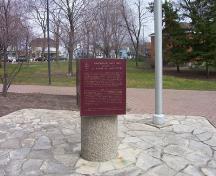 Amherstburg Navy Yard National Historic Site of Canada700 m
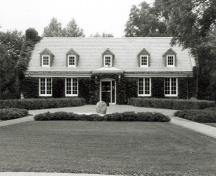 Visitor Orientation Centre800 m · 1939
Similar places
Places whose register descriptions are closest to this one.
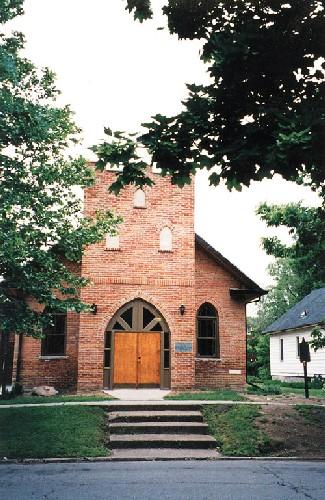 Sandwich First Baptist Church National Historic Site of CanadaWindsor, Ontario
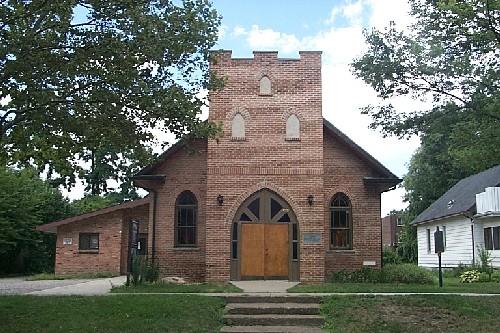 Sandwich First Baptist ChurchCity of Windsor, Ontario
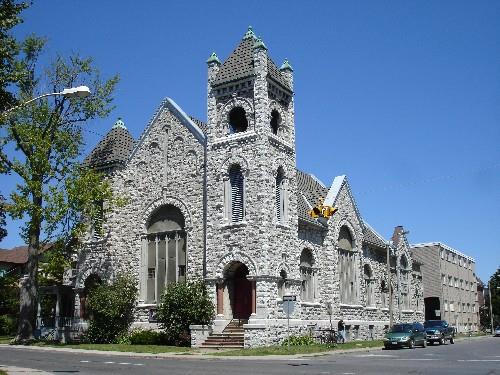 First Baptist ChurchCity of, Ontario
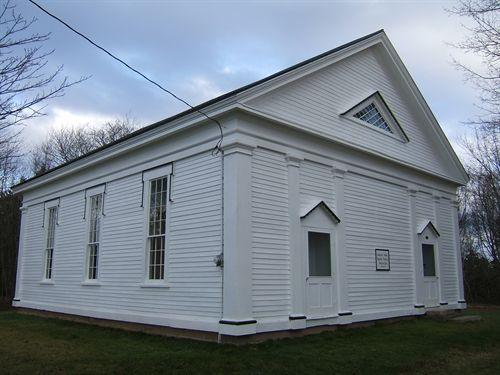 Amherst Point Baptist ChurchAmherst Point, Nova Scotia
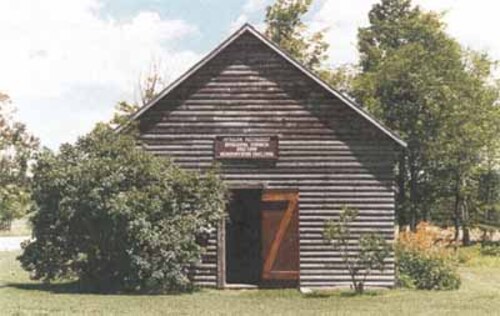 Oro African Methodist Episcopal Church National Historic Site of CanadaOro-Medonte, Ontario
 Salem Chapel, British Methodist Episcopal Church National Historic Site of CanadaSt. Catharines, Ontario
From the Canadian Register of Historic Places, as last updated on December 12, 2025. The register’s text is shown word for word.