Norrona Church
Also known as: Norrona Church, Narrona Lutheran Church, Narrona Evangelical Lutheran Church
Description
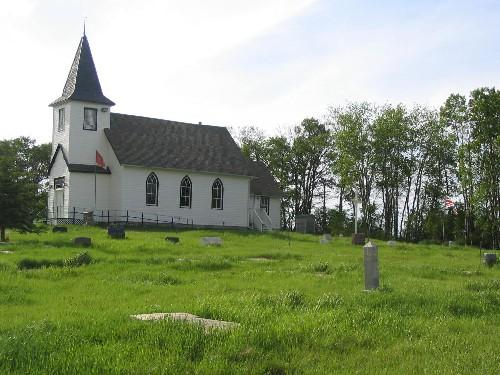
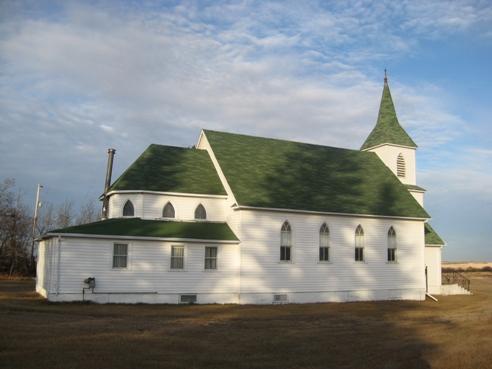
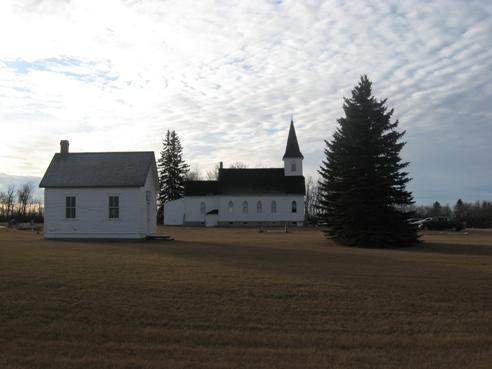
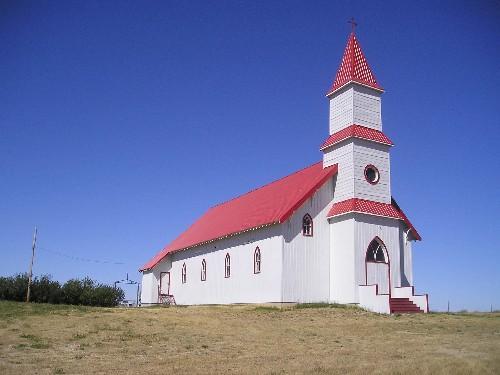
Norrona Church is a Municipal Heritage Property located in the Rural Municipality of McKillop No. 220, approximately three kilometres south and eight kilometres west of the Village of Bulyea. Occupying a parcel of wooded land, the property features a wood-frame church with a prominent spire, constructed in 1917, and cemetery dating from the same year.
Heritage Value
The heritage value of Norrona Church resides in its association with the Norwegian pioneers that settled in the area. The Long Lake District was surveyed in 1882 and by late 1906, several Norwegian families had homesteaded in the district. The Evangelical Lutheran congregation was formally organized in December, 1910 and plans were initiated to construct a church. ‘Norrona’, a Norwegian word which refers to the early Norse settlements in Iceland and the Faroes, was selected as the name for the church. The rectangular church, which is similar to one in Syvde, Norway, was completed in 1917. The church, which is currently active, has served the Bulyea district continuously since its dedication in 1917.
The heritage value of the property also lies in the cemetery’s role as an important burial place in the district. The cemetery has been the final resting place of many of the early pioneers since 1917. In 1970, part of a large petrified tree trunk, which was found in the area, was erected as a focal point of the cemetery and a plaque installed as a memorial to the Christian pioneers of the district.
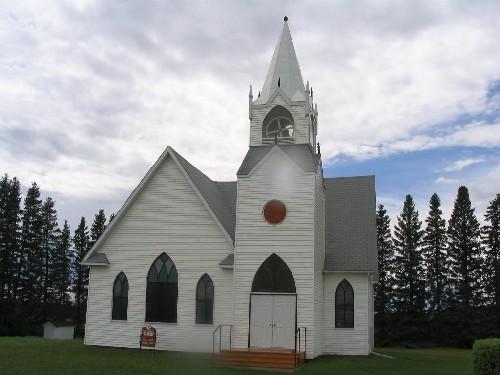
Heritage value also resides in the architecture. The property features elements of the Gothic Revival style, such as the central tower entrance with bell-shaped spire, and pointed-arch windows, which all contribute to its status as a landmark in the community.
Source:
Rural Municipality of McKillop No. 220 Bylaw No. 121/88.
Character-Defining Elements
The heritage value of Norrona Church lies in the following character-defining elements:
-those elements that express the church’s association with the Norwegian community, including the cemetery with rows of grave markers and large petrified tree trunk with memorial plaque, and the building’s location on its original lot;
-those elements that reflect the church’s Gothic Revival style of architecture, such as the central entrance tower with bell-shaped spire, and pointed-arch windows.
Gallery
2 imagesLocation
Loading map...
Similar Places
Heritage sites with similar characteristics