National Historic Site of Canada
Next of Kin Memorial Avenue National Historic Site of Canada
Saskatoon, Saskatchewan
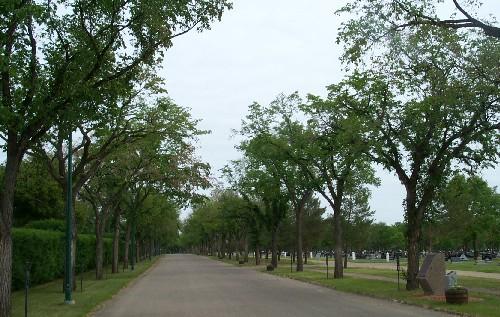
General view of Next of Kin Memorial Avenue, showing the mature trees on either side of the avenue, 2003.
Photo: Parks Canada Agency / Agence Parcs Canada, 2003.
- Built
- 1922–1923
- Recognized
- 1992
- By
- Government of Canada
The register’s text, word for word
Description
Next of Kin Memorial Avenue National Historic Site of Canada is a picturesque 0.7 kilometre-long “Road of Remembrance” located in Woodlawn Cemetery in Saskatoon, Saskachewan. The Avenue begins at a pair of stone pedestals, flanked by a wrought-iron fence, and runs northwards following the western boundary of the cemetery. It ends in a paved circle surrounding a stone memorial cairn. The asphalt-paved roadway is flanked on either side by a single row of 112 stately, mature elm trees, accompanied by bronze plaques on wrought-iron stands that dedicate each tree to a deceased soldier. Official recognition refers to Memorial Avenue and a boundary extending 14.2 metres from its centre, including the stone cairn.
Heritage value
Next of Kin Memorial Avenue was designated a national historic site of Canada in 1992 because:
- it is an excellent example of the “Roads of Remembrance” phenomenon which developed to honour the First World War dead; and
- it is the only such boulevard in Canada to have retained its integrity.
Following the First World War, the Imperial Order Daughters of the Empire sponsored and initiated the tradition of planting memorial trees to honour Saskatoon residents killed in the war. Memorial avenues were based on two symbol-laden images. The first was the long, straight, tree-lined roads of France; the second was, as a living memorial, trees symbolizing the victory of life over death. Initially, 265 trees were planted in single rows on either side the avenue. Each tree was planted in individual memory of a deceased First World War soldier and was accompanied by a standardized bronze plaque bearing his name, rank and dates of birth and death. The tradition was later expanded to include tree memorials to casualties of both the Second World War and the Korean War. The cemetery now contains more than 1200 memorial trees, 112 of which are on Next of Kin Memorial Avenue.
SourceHistoric Sites and Monuments Board of Canada, Minutes, November 1992.
Character‑defining elements
Key elements contributing to the heritage value of this site include:
- its siting in Saskatoon’s north end, bounded by a residential neighbourhood on one side and Woodlawn Cemetery on the other;
- the 0.7 kilometre long, 10 metre wide roadway, extending through much of Woodlawn Cemetery;
- the existing characteristics of a Road of Remembrance, including a linear, evenly-spaced, tree-lined roadway, semi-rural setting, and a single species of tree;
- the pair of stone pedestals and wrought-iron fence that define the beginning of the avenue at the southern end of the cemetery;
- the mature trees on either side of the avenue with their bronze plaques on wrought-iron stands that dedicate them to individual soldiers.
- the memorial cairn situated at the opposite end of the avenue.
End of the register’s text
Location
Saskatoon, Saskatchewan, S7K, Canada
52.14710° N, 106.65810° W
Get directions (opens in a new tab)Being on the register doesn’t make a place open to visitors. Many are private homes or businesses; please view them from the street.

Loading map…
Similar places
Places whose register descriptions are closest to this one.
 Cenotaph SiteWaldron, Saskatchewan
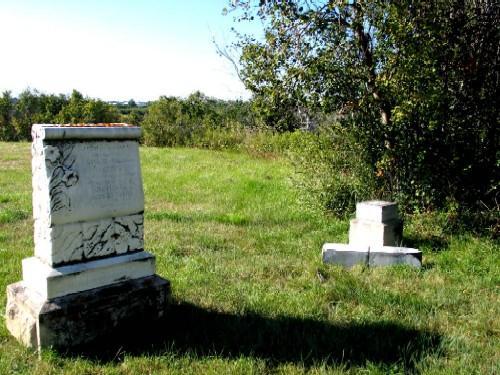 Pioneer Cemetery or Nutana CemeterySaskatoon, Saskatchewan
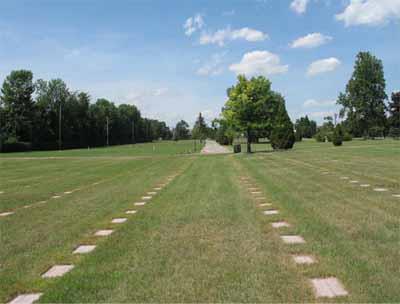 Last Post Fund National Field of Honour National Historic Site of CanadaMontréal, Quebec
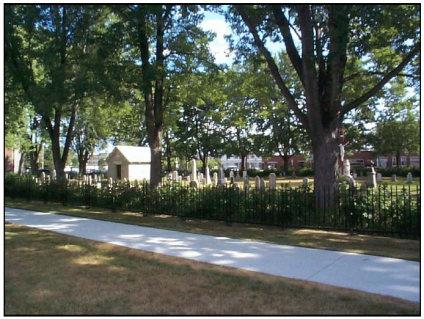 Hôpital-Général de Québec Cemetery National Historic Site of CanadaQuébec, Quebec
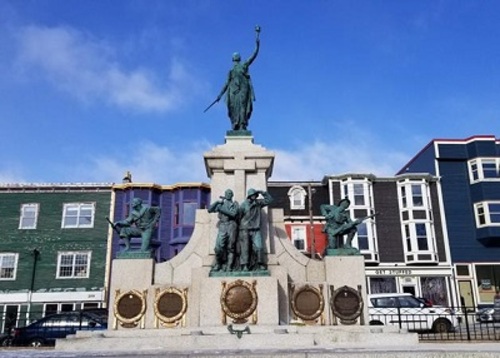 Newfoundland National War Memorial National Historic Site of Canadaacross from Harbourside Park, Newfoundland And Labrador
 Notre-Dame-des-Neiges Cemetery National Historic Site of CanadaMontréal, Quebec
From the Canadian Register of Historic Places, as last updated on December 12, 2025. The register’s text is shown word for word.