Murray Premises National Historic Site of Canada
Also known as: Murray Premises National Historic Site of Canada, Murray Premises, Bâtiments Murray
Description
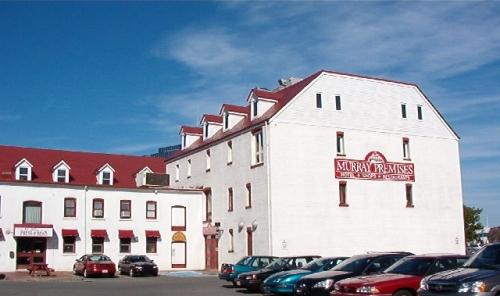
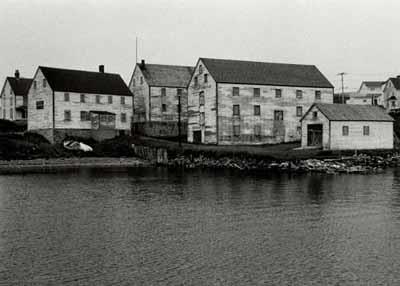
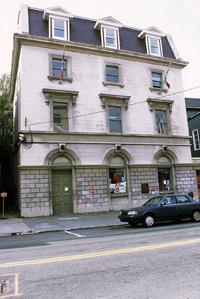
Murray Premises National Historic Site of Canada is located on the waterfront in downtown St. John’s, Newfoundland. The site is comprised of three adjoining former warehouses of varying heights associated with Newfoundland’s fisheries industry. The stone and brick premises have been rehabilitated to serve as shops and a hotel. Official recognition refers to the three buildings on their properties at the time of designation (1976).
Heritage Value
Murray Premises was designated a national historic site of Canada in 1976 because:
- these mid-19th century functional structures typify the offices and warehouses which once lined the harbour and represent a long tradition of seafaring commerce.
The heritage value of these buildings resides in their association with the mercantile activities tied to the fisheries industry and in their illustration of 19th-century construction techniques. Although their builders are unknown, their construction belongs to the 19th-century Atlantic waterfront tradition as illustrated by the regular façades topped by pitched roofs, and sturdy masonry walls encasing heavy timber framing. Originally owned by Richard O’Dwyer, later by A. H. Murray, these buildings were occupied by numerous merchants from the mid-nineteenth century to the twentieth century.
Source: Historic Sites and Monuments Board of Canada, Minutes, November 1976.
Character-Defining Elements
Key elements that contribute to the heritage character of the site include:
- the location in downtown St. John’s with direct access to the waterfront;
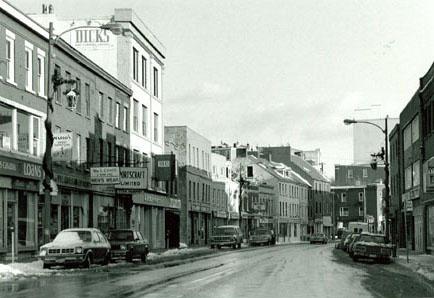
- the location within Water Street Historic District National Historic Site of Canada;
- the spatial relationship of the buildings to each other and to the harbour;
- the rectangular two-and-a-half- to three-storey massing of the buildings under flat or pitched roofs;
- the original rubble masonry and timber construction materials;
- the surviving dressed stone facing and white stucco finish;
- the surviving examples of original post and beam construction method and brick nogging;
- the regular fenestration with larger openings for loading;
- the minimal exterior detailing except for end quoins;
- the viewscapes across St. John’s Harbour.
Gallery
3 imagesLocation
Loading map...
Similar Places
Heritage sites with similar characteristics