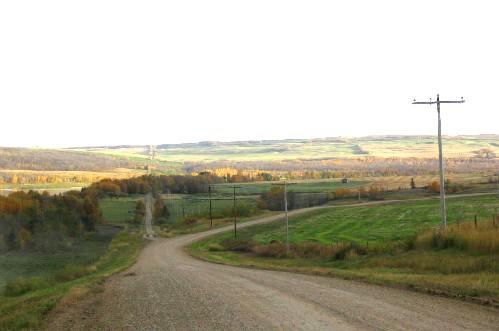
Lemsford Ferry Tipi Rings Protected Area
Also known as: Lemsford Ferry Tipi Rings Protected Area, Archaeological Site EgOh-1
Description
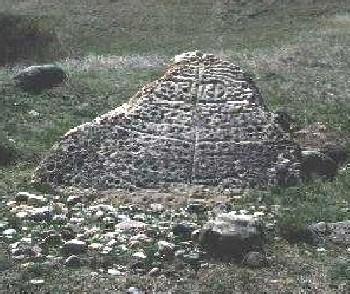
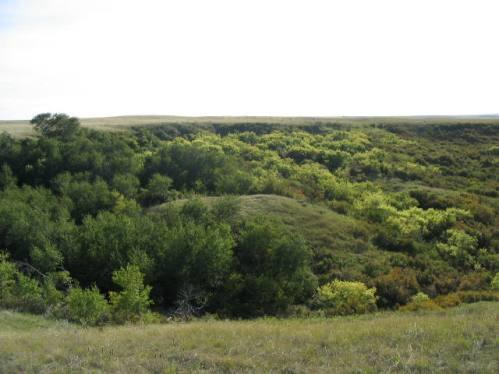
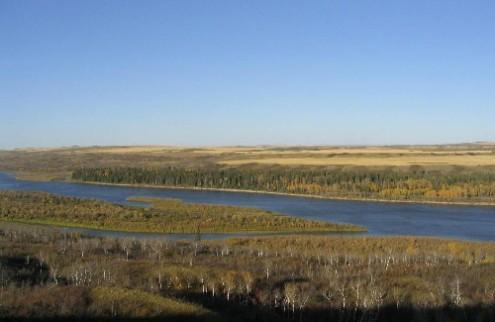
The Lemsford Ferry Tipi Rings Protected Area encompasses 36 hectares of land on the north rim of the South Saskatchewan River valley in southwestern Saskatchewan. The site contains at least 158 stone rings, 30 rock cairns and a buffalo rubbing stone.
Heritage Value
The heritage value of the Lemsford Ferry Tipi Rings Protected Area lies in its large and well-preserved collection of stone features that provide information regarding precontact bison hunting cultures. The property’s numerous stone rings once held down the hide coverings of conical lodges (tipis) that could be easily transported as the hunters followed a seasonal round focused on bison. Individual rings reveal the internal structure of dwellings, while the distribution of rings across the property shows how campsites were organized. It is thought that the rock cairns may have protected food caches or were stockpiles of rock for hearths and tipi anchors. One site investigator felt that two of the cairns might mark burials. A large boulder, polished by bison rubbing against it, attests to the one-time presence of this important animal.
Recurring use of the property is suggested by groupings of similar size rings, superimposed rings and rings with missing rocks, presumably scavenged for later constructions. Undoubtedly, the expansive view from the valley edge, prime game habitat, and ready availability of wood, water, and rock were factors that brought people back to the site repeatedly.
Source:
Province of Saskatchewan, The Parks Act, May 26, 1986.
Character-Defining Elements
The heritage value of the Lemsford Ferry Tipi Rings Protected Area resides in the following character-defining elements:
-elements of the property’s natural environment that would have contributed to its attractiveness as a precontact campsite, including its native vegetation, undisturbed landforms, and expansive, unobstructed views of the river valley;
-elements that reflect precontact First Nations use of the property, including features such as stone rings, cairns and hearths; precontact artifacts; and the spatial relationships and environmental context of the cultural remains;
-elements that indicate the former presence of bison, such as large boulders with polished surfaces that were used by the animals as rubbing stones.
Gallery
3 imagesSimilar Places
Heritage sites with similar characteristics