National Historic Site of Canada
Kodlunarn Island National Historic Site of Canada
Kodlunarn Island, Nunavut
Also known as Frobisher Site, Site Frobisher, Countess of Warwick Island
- Built
- 1576–1578
- Recognized
- 1964
- By
- Government of Canada
The register’s text, word for word
Description
Kodlunarn Island National Historic Site of Canada is situated on Kodlunarn Island in Frobisher Bay, 190 km from Iqaluit. Ruins of a stone house, earthworks and mining excavations created during Elizabethan explorer Martin Frobisher’s gold mining expeditions can still be seen on its shores. Official recognition refers to the island, delimited by the shoreline and including the low tide mark.
Heritage value
Kodlunarn Island was designated a national historic site of Canada in 1964 because:
- it is associated with Martin Frobisher’s “gold mining” activities in Frobisher Bay in 1576, 1577 and 1578.
The heritage value of Kodlunarn Island National Historic Site of Canada lies in its association with the mining attempts of Martin Frobisher as illustrated by the site and the archaeological evidence it retains to confirm Frobisher’s 16th-century presence and activities. Evidence also survives in the oral traditions of the Inuit people who have preserved an account of this first European attempt to exploit the natural resources of the Arctic.
Kodlunarn Island was the site of mining expeditions by British explorer Martin Frobisher during the summers of 1576, 1577, and 1578. Like his predecessor John Cabot, Frobisher was searching for a northwest passage when he found what he thought was gold. His vessels returned to the Arctic for three consecutive years to remove some 1400 tons of worthless ore from several mines. They remained for a period of four to five weeks each of year, exploring the area and making landfalls to extract ore. One of the major sites they visited was Kodlunarn Island, also known as Qallunaat, White Man’s Island, and Countess of Warwick Island, where Frobisher planned to leave a large party to mine during the winter of 1578-79. Although his plan was never realized, he did build a stone house for accommodation. Today the ruins of this house together with various excavations, earthworks and scattered artifacts remain on the island. Archaeological expeditions carried out preliminary surveys of the locations related to Frobisher on this island in the 1970s and 1980s.
SourceHistoric Sites and Monuments Board of Canada, Minutes, 1976.
Character‑defining elements
Key elements that contribute to the heritage value of this site include:
- the location of the island in Frobisher Bay;
- the island’s topography in its form and extent;
- the integrity of artifacts and sites on the island related to Frobisher, including remains of the ship’s trench, the industrial area, the reservoir trench, Frobisher’s house, and other remains from the 1576-1578 period;
- the spatial relationship of in situ artifacts and sites;
- the as-found forms and materials of artifacts removed from the site;
- the associated knowledge embodied in Inuit oral traditions and practices related to this site.
End of the register’s text
Location
Kodlunarn Island, Nunavut, X0A, Canada
62.81751° N, 65.42885° W
Get directions (opens in a new tab)Being on the register doesn’t make a place open to visitors. Many are private homes or businesses; please view them from the street.

Loading map…
Similar places
Places whose register descriptions are closest to this one.
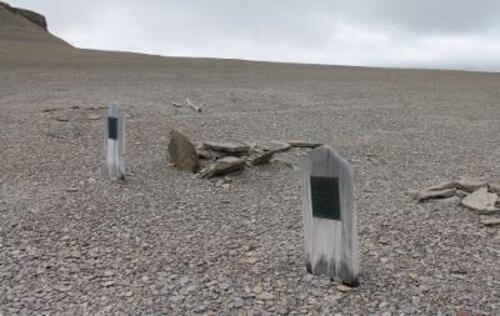 Beechey Island Sites National Historic Site of CanadaBeechey Island, Nunavut
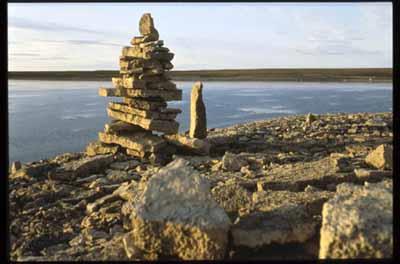 Igloolik Island Archaeological Sites National Historic Site of CanadaIgloolik Island, Nunavut
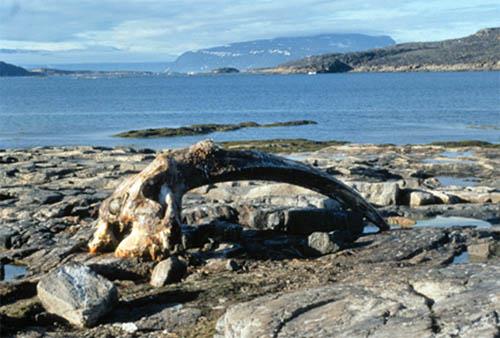 Kekerten Island Whaling Station National Historic Site of CanadaKekerten Island, Nunavut
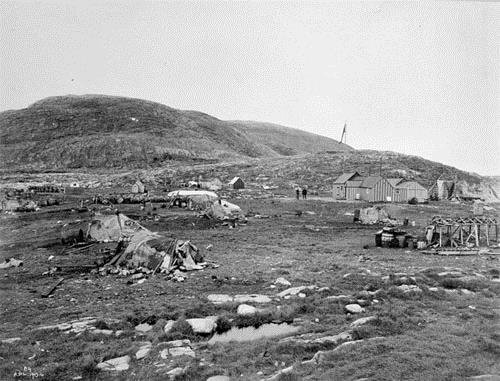 Blacklead Island Whaling Station National Historic Site of CanadaBlacklead Island, Nunavut
 Port Refuge National Historic Site of CanadaDevon Island, Nunavut
 Minister's Island Pre-contact Sites National Historic Site of CanadaMinisters Island, New Brunswick
From the Canadian Register of Historic Places, as last updated on December 12, 2025. The register’s text is shown word for word.