National Historic Site of Canada
Halifax Citadel National Historic Site of Canada
Halifax, Nova Scotia
Also known as Halifax Citadel, Citadelle d'Halifax
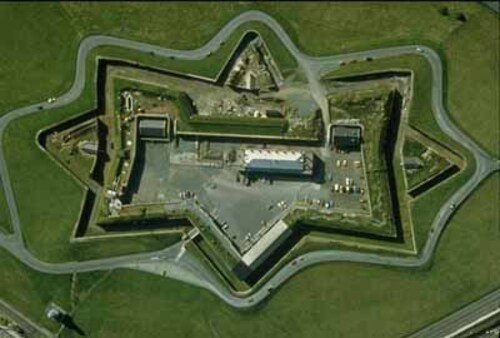
Aerial view from the north of Halifax Citadel National Historic Site of Canada.
Photo: Parks Canada Agency / Agence Parcs Canada
- Built
- 1828–1856
- Recognized
- 1935
- By
- Government of Canada
The register’s text, word for word
Description
Halifax Citadel is a large, stone early 19th-century British fortification located atop Citadel Hill, in Halifax, Nova Scotia. The walled citadel is surrounded by an expansive grassed glacis descending to the commons on the west side and downtown Halifax on the east side. It is the most prominent fortification in a network of defensive works that have historically guarded Halifax, its dockyard and its harbour.
Heritage value
Halifax Citadel was designated a national historic site because of:
- its role in the development of Halifax as one of the four principal naval stations of the British Empire during the 18th and 19th centuries, and because
- it is an important element in the uniquely complete conspectus of shore defences that developed at Halifax between the 18th century and World War II, to defend British and, after 1906, Canadian interests.
The heritage value of Halifax Citadel National Historic Site lies in its commanding location, in the legibility of its found cultural landscape as a substantial 19th-century fortification, and in the integrity of surviving 18th, 19th, and 20th-century remnants of that landscape. These include all historic resources linked to the landward defence of the town and to the harbour defences along the water that protected the naval station.
Although Halifax Citadel was established as a British post in 1749, the present fort dates from the 1828-1856 period and is its fourth generation of defence works. The Citadel was occupied by British forces until 1906, then by the Canadian military as a detention camp during World War I, and as Halifax headquarters for anti-aircraft defences during World War II. It became a national historic site in 1956 and has since been restored for public visitation.
SourceHSMBC, Minutes, 1965; Commemorative Integrity Statement.
Character‑defining elements
Key features contributing to the heritage value of this site include:
- the evolved cultural landscape comprising its star-shaped footprint, the profile of its built features, its open ground, and remnants of 18th-20th-century military activity including the glacis, the footprint of Fort George, extant historic buildings, structures, site roads, remains and landscape features,
- siting on a drumlin centrally located on the peninsula adjacent to Halifax harbour,
- the open ground that surrounds it (the lack of trees on the glacis),
- the 1930s perimeter roadway connecting the Citadel to the town, and roadways, pathways, channels and tunnels providing internal communications,
- viewplanes to the inner harbour, to landward approaches, to other harbour defences, to the town blocks adjacent to the harbour and those historically linked to the Citadel such as Royal Artillery Park, the Commons, and the Public Garden.
The fort:
- the bastion design with star-shaped footprint and profile,
- functional design, found form, materials and spatial relationships of elements including the parade, south-east and north-east salients, the redan, the south-west and north-west demi-bastions and the west front, fort walls, casemates, counter-mine tunnels and musket gallery, the ditch, ravelins and glacis, south magazine, and north magazine (canteen building).
Defensive works outside the fort:
- the siting, mass, design and spatial relationships of extant military resources on the hill including casemates, north and south magazines, two expense magazines on the ramparts, the Cavelier building,
- the found materials of their construction (primarily stone with supplementary brick as structural support in such areas as casemate arches).
Archaeological remains
- the footprints, materials and spatial relationships of early military facilities including gun emplacements on the ramparts (for smooth bores and RMLs), a barracks foundation, cisterns with a drainage system beneath the parade, a tunnel under the glacis' west side.
End of the register’s text
Location
5425 Sackville Street, Halifax, Nova Scotia, Canada
44.64731° N, 63.58039° W
Get directions (opens in a new tab)Being on the register doesn’t make a place open to visitors. Many are private homes or businesses; please view them from the street.

Loading map…
Similar places
Places whose register descriptions are closest to this one.
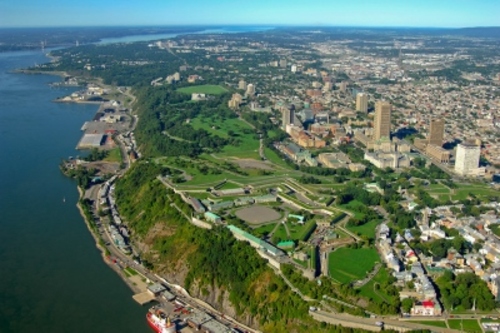 Québec Citadel National Historic Site of CanadaQuébec, Quebec
 York Redoubt National Historic Site of CanadaHalifax, Nova Scotia
 Halifax Dockyard National Historic Site of CanadaHalifax, Nova Scotia
 Georges Island National Historic Site of CanadaHalifax, Nova Scotia
 Fort McNab National Historic Site of CanadaHalifax, Nova Scotia
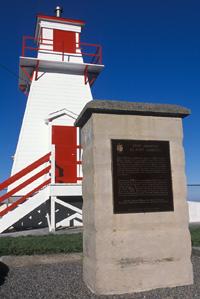 Fort Amherst National Historic Site of CanadaSt. John's, Newfoundland And Labrador
From the Canadian Register of Historic Places, as last updated on December 12, 2025. The register’s text is shown word for word.