National Historic Site of Canada
Georges Island National Historic Site of Canada
Halifax, Nova Scotia
Also known as Georges Island, Île Georges
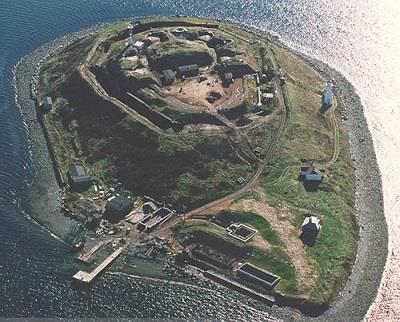
Aerial view of Georges Island National Historic site of Canada.
Photo: Parks Canada Agency / Agence Parcs Canada
- Built
- 1749
- Recognized
- 1965
- By
- Government of Canada
The register’s text, word for word
Description
Georges Island National Historic Site of Canada is a labyrinth of military works that represented a vitally important element in the sea defences for Halifax Harbour. This cultural landscape, which comprises buildings and archeological remains, covers a small island situated in the middle of the harbour directly in front of what today is the Halifax waterfront.
Heritage value
Georges Island was designated a national historic site in 1965 because:
— it played an important role as part of the Halifax Defence Complex which protected one of the principal naval bases of the British Empire during the 18th and 19th centuries;
— it contains representative examples of shore defences from the late 18th century to the Second World War;
— it served as a location for the detention of Acadians at different times between the beginning of the Deportation in 1755 and the end of the Seven Years War in 1763.
Georges Island stand out by its geographic and strategic location in the middle of one of the finest natural harbours in the world, and in the range of military works constructed during the 18th, 19th and 20th centuries for inner harbour defence.
The cultural landscape of the island bears witness to significant changes in military strategy and defence technology through the found location, form and materials of surviving complexes of historic buildings, engineering works, fortifications, paths, landscape features and remains above and below ground, on land and in water.
The construction of defence works on Georges Island began when Halifax was established in 1749. Significant periods during which facilities were upgraded include 1794-1812 (masonry escarp linking north and south batteries, stone Martello tower - smooth bore ordnance), 1864-1869 (construction of Fort Charlotte with rifled-muzzle-loading ordnance), 1870-1879 (submarine mine period), 1902 (the breech-loading period). The island continued to play a military role in the Canadian war efforts in both World Wars.
Georges Island played an important role during the Deportation of the Acadians who were placed here in detention camps used between 1755 and 1763. Some inmates were allegedly assigned the task of constructing buildings and other structures. Those interned here experienced inadequate facilities and difficult living conditions while awaiting deportation to Anglo-American colonies or to Great Britain. There are no buildings remaining from this period.
Georges Island became a national historic site in 1965 and has since been conserved.
SourceHistoric Sites and Monuments Board of Canada, Minutes, 1965, July 2012.
Character‑defining elements
Key features contributing to the heritage value of this site include:
— its siting on an island in Halifax Harbour on an axis between the Halifax Citadel and the Dartmouth shore;
— the evolved cultural landscape with its surviving remnants of 18th, 19th and 20th-century military activity;
— the drumlin land formation providing excellent viewplanes;
— roadways, pathways, channels and tunnels providing internal communications;
— viewplanes up the harbour channel outer harbour defence works, to the inner harbour, including the town, the historic navy yard and the Citadel.
Built resources
— the polygonal footprint, surviving form and materials of Fort Charlotte;
— the spatial relationships of remnants of its defensive facilities during the smooth bore, rifled-muzzled-loading, breech-loading and submarine mining periods (including buildings, building complexes, fortifications, other defensive works and the barrels of ten rifled muzzle loaders that are part of the armament on the island during the rifled-muzzle-loading period).
Archaeological remains
— surviving forms, materials and spatial relationships of military remains, particularly the stone foundation of a Martello tower, and foundations for enlisted and senior non-commissioned officers’ barracks, single officers’ quarters and privy, torpedo mine store, and the drainage system related to mine assembly outside the fort.
End of the register’s text
Location
Halifax, Nova Scotia, Canada
44.64131° N, 63.55930° W
Get directions (opens in a new tab)Being on the register doesn’t make a place open to visitors. Many are private homes or businesses; please view them from the street.

Loading map…
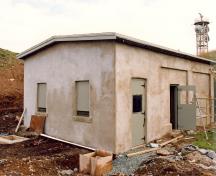 Laboratory, former Building 92within 100 m · 1885
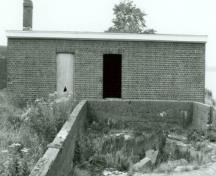 Former Field Forge Storage Building No. 90within 100 m · 1873
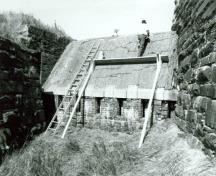 Halifax Defense Complex, Georges Island, Fort Charlotte, South, Southeast and Southwest Caponierswithin 100 m · 1866
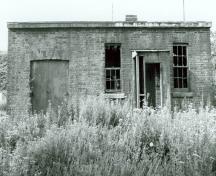 Former Guardhouse / Fire Engine House / Coal Stores, Building 114within 100 m
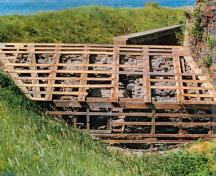 North Caponiers, Building 82A & 82Bwithin 100 m · 1829
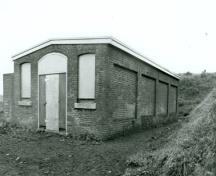 Former Artillery Stores, Building 91within 100 m · 1873
Similar places
Places whose register descriptions are closest to this one.
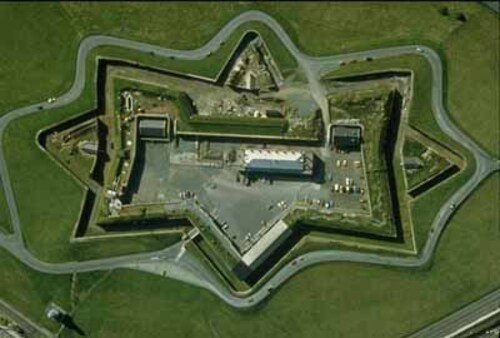 Halifax Citadel National Historic Site of CanadaHalifax, Nova Scotia
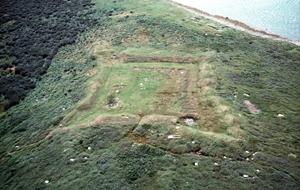 Grassy Island Fort National Historic Site of CanadaCanso, Nova Scotia
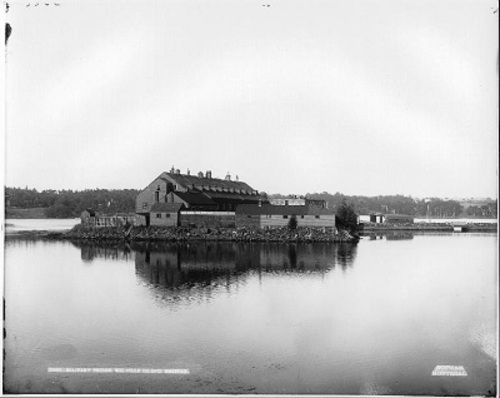 Melville Island and Deadman’s Island National Historic Site of CanadaHalifax, Nova Scotia
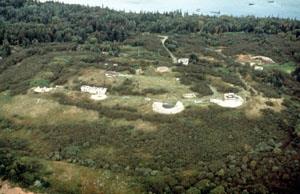 Fort McNab National Historic Site of CanadaHalifax, Nova Scotia
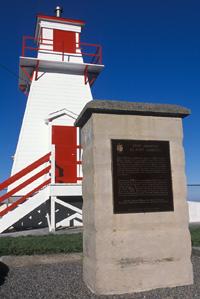 Fort Amherst National Historic Site of CanadaSt. John's, Newfoundland And Labrador
 Fortress of Louisbourg National Historic Site of CanadaLouisbourg, Nova Scotia
From the Canadian Register of Historic Places, as last updated on December 12, 2025. The register’s text is shown word for word.