National Historic Site of Canada
Granville Block National Historic Site of Canada
Halifax, Nova Scotia
Also known as Granville Block, Ilot Granville
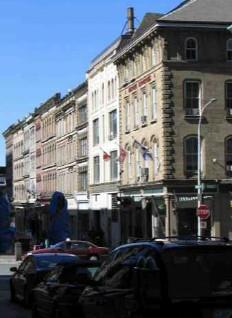
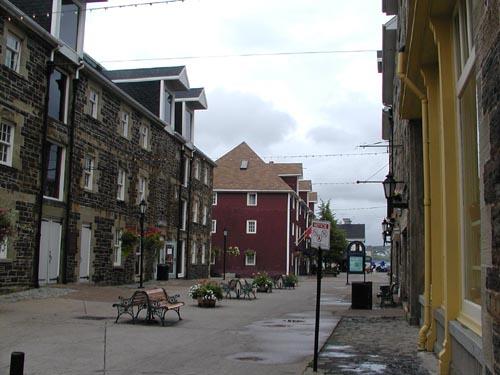
View of Granville Block, showing the similar four to five storey massings of the buildings with stone and brick façades, 2005.
Photo: Parks Canada Agency / Agence Parcs Canada, 2005.
- Built
- 1860–1904
- Recognized
- 2007
- By
- Government of Canada
The register’s text, word for word
Description
Granville Block National Historic Site of Canada is located in the southern section of downtown Halifax, Nova Scotia, and consists of a complex of 19 buildings. The buildings are fairly uniform in design and construction and consist of a brick or stone front, with some stucco finishes and generally date from the late 19th century. Most have a commercial ground floor and some have cast iron decoration on the front. The buildings are now part of the Nova Scotia College of Art and Design (NSCAD). Official recognition refers to the roughly rectangular block in downtown Halifax where the buildings are located.
Heritage value
Granville Block was designated a national historic site of Canada in 2006 because:
- the rehabilitation of this city block in the 1970s was an early and influential demonstration that heritage conservation is a viable approach to urban planning and redevelopment; this approach, based on conserving rather than replacing groups of buildings, was subsequently adopted widely in North America, particularly for port and waterfront areas;
- the rehabilitation project, solidly anchored by an important cultural institution, the Nova Scotia College of Art and Design (NSCAD), was an important catalyst in conserving and reviving part of Halifax's historic urban fabric;
- the buildings in this city block form a harmonious whole in terms of their unity of scale, their quality of materials (brick, stone, cast iron) and their often-elegant architecture, expressed in a richness of detail (cornices, window surrounds, keystones); and,
- it is a surviving testimony to the role the city of Halifax played in the commercial history of Canada at the end of the 19th century, when its port was an important point of entry and transit for goods.
In the 18th century and for much of the 19th century, Halifax was a major distribution and trade centre and Granville Street was a major commercial thoroughfare. In September 1859, a fire destroyed large sections of the downtown area, which were quickly rebuilt and became known for their concentration of novelty shops, haberdasheries and other stores dealing primarily in dry goods.
The façades of the Granville Block are generally known for their Italianate style. They are primarily of four or five storeys high and most of the buildings have a stone or brick façade, although a few are stucco, and some have cast iron elements on the front. The Italianate design elements include arched windows, projecting eaves, meticulous treatment of surfaces and an array of bas-relief sculptures. An all-concrete building (the Bell Building) was constructed on Granville Street around 1904; it is one of the oldest concrete buildings in Nova Scotia.
The heritage value of the block also lies in its role in the history of urban renewal and conservation in the 1970s. A comprehensive urban renewal and building rehabilitation initiative took shape in Halifax in 1971-1972. The rehabilitation consisted of making space for retailers as well as the NSCAD. The approach used was to modernize the utilities, whilst many period staircases and decorative elements were retained in order to preserve the authenticity of the place; these include the lath walls and the exposed concrete in the Bell Building.
SourceHistoric Sites and Monuments Board of Canada, Minute, June 2006.
Character‑defining elements
Key elements contributing to the heritage value of this site include:
- the setting of the complex in downtown Halifax;
- the similar four to five storey massings of the buildings with stone and brick façades;
- the concrete construction of the Bell Building;
- the Italianate design elements such as the ornate moldings on the eaves, the carved window jambs, the sculpted keystones in the arched windows and openings, and the decorative elements of the wrought-iron detailing;
- any remaining original elements of the interiors, including those preserved during the rehabilitation project.
End of the register’s text
Location
Granville, Hollis, Duke Streets, Halifax, Nova Scotia, Canada
44.64988° N, 63.57437° W
Get directions (opens in a new tab)Being on the register doesn’t make a place open to visitors. Many are private homes or businesses; please view them from the street.

Loading map…
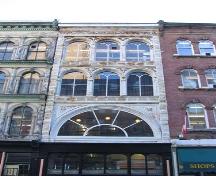 Granville Mall Streetscapewithin 100 m · 1864
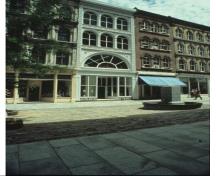 Cast Iron Façade / Coomb's Old English Shoe Store National Historic Site of Canadawithin 100 m · 1860
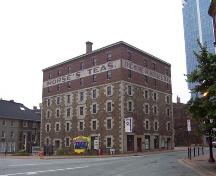 Morse’s Teaswithin 100 m · 1841
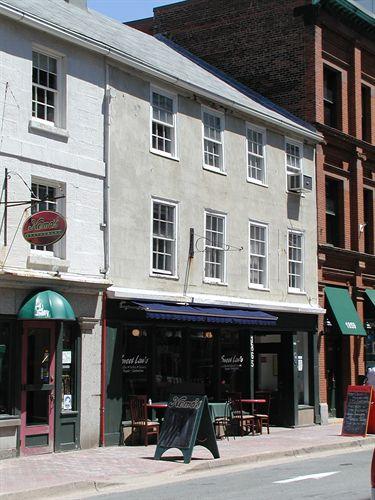 Fishwick & Company Buildingwithin 100 m · 1820
 Shaw Buildingwithin 100 m · 1903
 P. Martin Liquors Buildingwithin 100 m · 1875
Similar places
Places whose register descriptions are closest to this one.
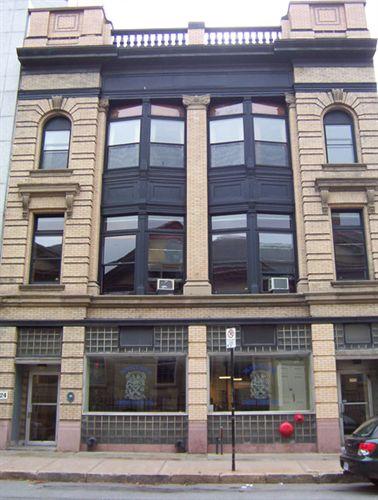 1724 Granville StreetHalifax, Nova Scotia
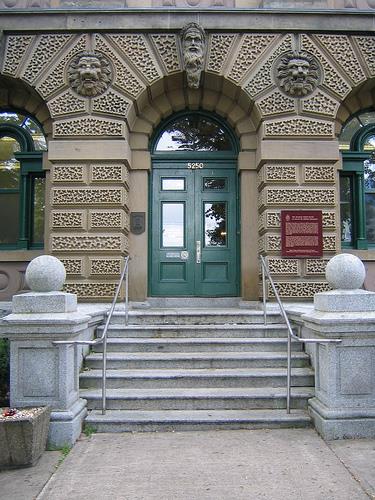 Halifax Court House National Historic Site of CanadaHalifax, Nova Scotia
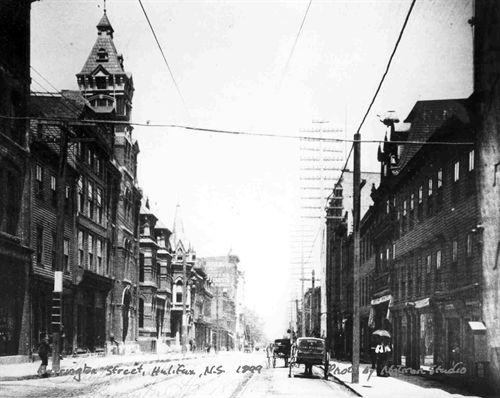 National Film Board BuildingHalifax, Nova Scotia
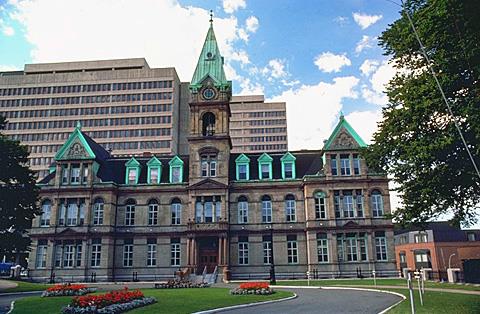 Halifax City Hall National Historic Site of CanadaHalifax, Nova Scotia
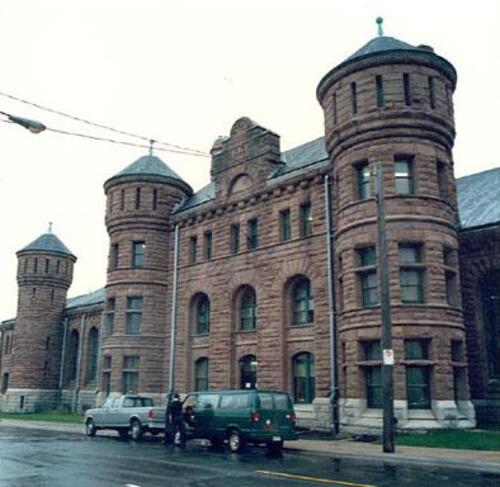 Halifax Drill Hall National Historic Site of CanadaHalifax, Nova Scotia
 Halifax Waterfront Buildings National Historic Site of CanadaHalifax, Nova Scotia
From the Canadian Register of Historic Places, as last updated on December 12, 2025. The register’s text is shown word for word.