Structure patrimoniale inscrite au répertoire
Ridley Hall Ruins Registered Heritage Structure
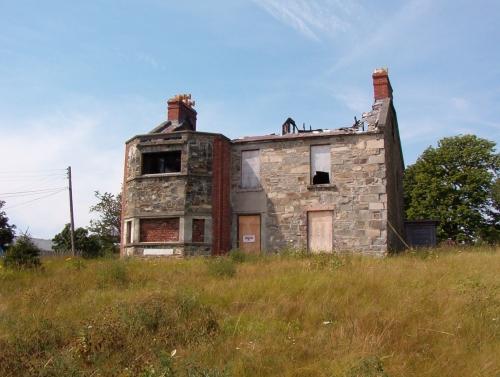
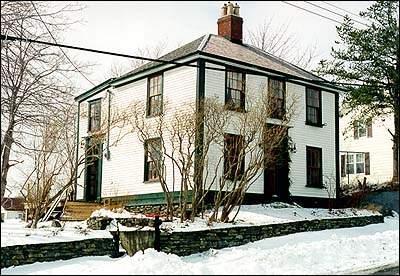
Photo: Deborah O'Rielly/ HFNL 2007
- Reconnaissance
- 1994
- Par
- Heritage Foundation of Newfoundland and Labrador
Le texte du répertoire, mot pour mot
Description
Ridley Hall Ruins is the site of an early nineteenth-century stone residence located on Water Street, Harbour Grace. The two-storey house has a two-storey bay at the front, and had a truncated gable roof with end chimneys. The building, designated in 1994, remained vacant for many years and was slated for restoration. However, in 2003 it was almost completely burned out by fire. The designation is confined to the footprint of the ruins.
Valeur patrimoniale
Ridley Hall Ruins has been designated a Registered Heritage Structure for its historic and aesthetic values.
Ridley Hall was built by Thomas Ridley in 1834. Ridley was a fishing/sealing merchant between 1820 and 1870 in Harbour Grace which, at that time, was a bustling seaport that rivaled St. John’s as the colony’s capital. Thomas Ridley was a wealthy man and this affluence was displayed in his family home, which he built and named Ridley Hall. The house, located amongst a collection of highly ornate, mercantile houses, was the centre of most of the social, political and economic activities in the community. Thomas Ridley lost his business in 1873 to bankruptcy, mostly because the cod fishery collapsed. The house was sold after the disastrous Newfoundland Bank Crash of 1894 (Black Monday) when trade came to an abrupt halt and unemployment and destitution became widespread after two of the commercial banks of Newfoundland closed their doors and never opened again.
Ridley Hall Ruins is also historically valuable for its varied uses. Reports of a glamorous ball given in 1855 say it was the “most brilliant entertainment that has ever taken place in Newfoundland”. A ballroom addition at the rear of the house was used for this event. Another grand ball was held in honour of representatives from the Direct United States Cable Company Ltd., who, in 1866 were in the area to recover a lost, trans-Atlantic submarine cable between Heart’s Content and Halifax. During the 1930s and ‘40s the building was used as a cable station by the same company, though, by this time it was known as Cable and Wireless Ltd. Eventually Ridley Hall was used again as a private residence until the 1980s when it became vacant. Ridley Hall was extensively damaged when fire struck in 2003, resulting in a stone ruin where once stood a house that was commonly saluted by passing ships.
Today Ridley Hall Ruins' value lies in the remnants of the once-imposing dwelling house and the history that was made there. Set upon a large plot of land, and within the Harbour Grace Registered Historic District, the ruins occupy a prominent area of town that can clearly be seen from the ocean, directly across the street.
SourceHeritage Foundation of Newfoundland and Labrador, unnumbered property file: Harbour Grace - Ridley Hall
Éléments caractéristiques
All those remaining elements of the ruins, including:
-context of the ruins on their original siting;
-remaining stone walls built of locally quarried bluestone;
-window and door openings that have remained intact;
-two end-wall chimneys;
-T-shaped foundation with ballroom at the rear;
-remaining sandstone door, window and eave trims; and -two-storey bay at the main facade.
Fin du texte du répertoire
Emplacement
47.69267° N, 53.21531° W
Itinéraire (s’ouvre dans un nouvel onglet)L’inscription au répertoire ne rend pas un lieu accessible au public. Beaucoup sont des résidences ou des commerces privés; admirez-les depuis la rue.

Chargement de la carte…
À proximité
Les 17 lieux de Harbour Grace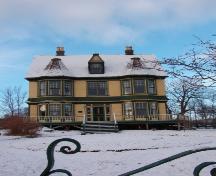 The Maplesà moins de 100 m · Harbour Grace · 1900
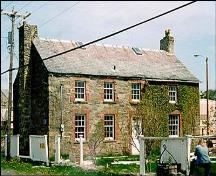 Ridley Office200 m · Harbour Grace · 1838
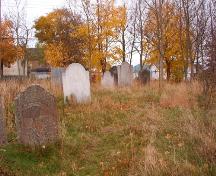 Roman Catholic Parish Cemetery200 m · Harbour Grace
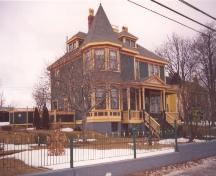 Rothesay House, Munn/Godden Residence250 m · Harbour Grace · 1855
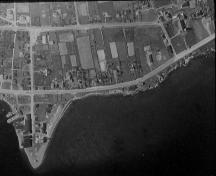 Harbour Grace Registered Heritage District250 m · Harbour Grace · 1830
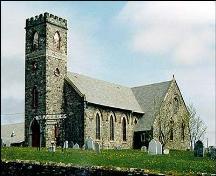 St. Paul's Anglican Church350 m · Harbour Grace · 1835
Lieux semblables
Les lieux dont la description du répertoire se rapproche le plus de celle-ci.
Tiré du Répertoire canadien des lieux patrimoniaux, dans sa dernière mise à jour du 12 décembre 2025. Le texte du répertoire est reproduit mot pour mot.