Structure patrimoniale inscrite au répertoire
Pickersgill Premises Registered Heritage Structure
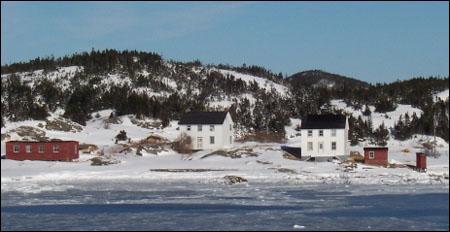
Photo: 2005 Heritage Foundation of Newfoundland and Labrador
- Construction
- 1912–1914
- Reconnaissance
- 1997
- Par
- Heritage Foundation of Newfoundland and Labrador
Le texte du répertoire, mot pour mot
Description
The Pickersgill Premises includes two two-storey, early 20th century, steep gable style houses, two stores, a stable and an outhouse. This grouping of buildings is located in Salvage, Bonavista Bay. The designation includes two houses and all outbuildings on the property.
Valeur patrimoniale
The Pickersgill Premises has been designated a Registered Heritage Structure because of its architectural, historical and environmental values.
Architecturally, the Pickersgill Premises is significant because it is a good example of an early twentieth century fishing premises, complete with outbuildings. The two houses, significant for their saltbox design, are some of the oldest in the community and have been virtually unaltered structurally since they were built. Traditional elements of these homes include their symmetrical facades and back porch, typical of Newfoundland outport construction during that era. In a region where the lowering of roofs became a common practice, these houses escaped the trend and have retained their steep gables, representative of the early 1900’s. The outbuildings on the property are equally as interesting as the houses for their simple design and usage. These structures are uncomplicated in design and exterior detailing, reflective of their utilitarian uses. Each is sheathed in narrow wooden clapboard painted a red ochre colour, typical of traditional Newfoundland outbuildings. The large store, which was used for a variety of uses including boat building, was originally a two storey home that was cut down to one- storey and converted in to a workspace.
Historically, this property is significant to the community of Salvage because of the people who lived there. Sandy Dunn, son of original owner Andrew Dunn, became manager of the first co-op fish plant in Salvage. Additionally, he and his wife operated a lobster cannery on the point. These two operations were important to the community as they created many jobs for the residents of the area. James Burden is also historically significant in the area because, in addition to a variety of other skills, he built the schooner Laverock, which participated in the Labrador fishery.
Environmentally, the Pickersgill Premises is significant due to its grouping and placement within the community of Salvage. The point on which these buildings are situated is directly across from the rest of the community, separated by a body of water. In this way, the location is quite dramatic, serving as a visible landmark from any point in the harbour. The composition and condition of these buildings serves as a reminder to the community of what the small fishing outports of Bonavista Bay would have looked like in the early 1900’s.
SourceHeritage Foundation of Newfoundland and Labrador, unnumbered property file, Salvage - Pickersgill Premises
Éléments caractéristiques
All elements that define the age and vernacular design of the houses including:
-steep gable roof
-narrow wooden clapboard
-corner boards
-symmetry of front façade
-size, shape and location of windows
-size, shape and location of doors
-original windows and doors
-size shape and location of linhay on rear facade
-lack of exterior decoration typical of early 20th century outport houses
-dimensions and location of houses within the community
-green space surrounding houses and outbuildings
All original features that define the outbuildings' simple vernacular design including:
-existing roof styles including a shed roof, low pitched roof and a steep gable roof;
-narrow wooden clapboard;
-location and style of windows;
-location and dimensions of doors;
-lack of exterior decoration;
-dimensions and location of outbuildings in relation to the houses; and,
-uniform red ochre colour typical of traditional Newfoundland outbuildings.
All elements that define this premises as a landmark including:
-its location within the community
-its visibility from the harbour
Fin du texte du répertoire
Emplacement
48.68333° N, 53.63333° W
Itinéraire (s’ouvre dans un nouvel onglet)L’inscription au répertoire ne rend pas un lieu accessible au public. Beaucoup sont des résidences ou des commerces privés; admirez-les depuis la rue.

Chargement de la carte…
À proximité
 Tour de phare2,6 km · Little Denier Island · 1888
 John Quinton Limited - Fish Store and Salt Store16 km · Redcliffe · 1840
 John Quinton Limited Post Office Registered Heritage Structure16 km · Red Cliffe
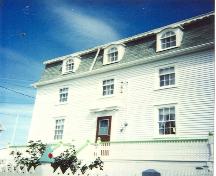 John Quinton Limited Residence Registered Heritage Structure16 km · Red Cliffe · 1884
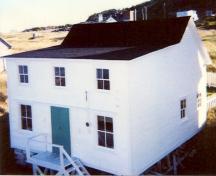 John Quinton Limited Shop Registered Heritage Structure16 km · Red Cliffe
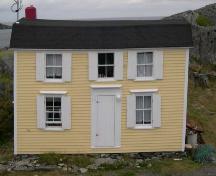 William (Billy) Wheeler House Registered Heritage Structure19 km · Keels
Lieux semblables
Les lieux dont la description du répertoire se rapproche le plus de celle-ci.
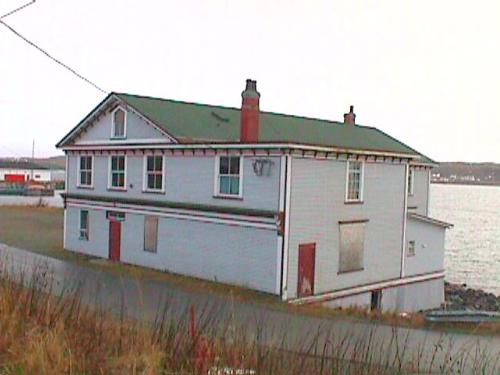
Tiré du Répertoire canadien des lieux patrimoniaux, dans sa dernière mise à jour du 12 décembre 2025. Le texte du répertoire est reproduit mot pour mot.