Fourth Street Brick Road
Description
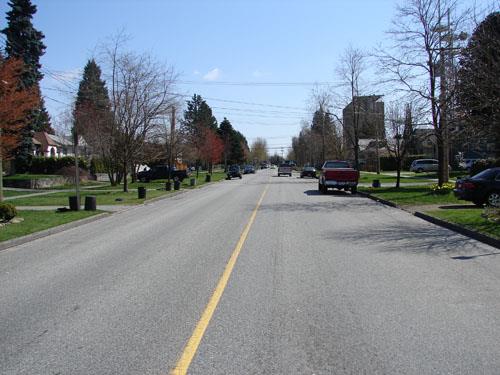
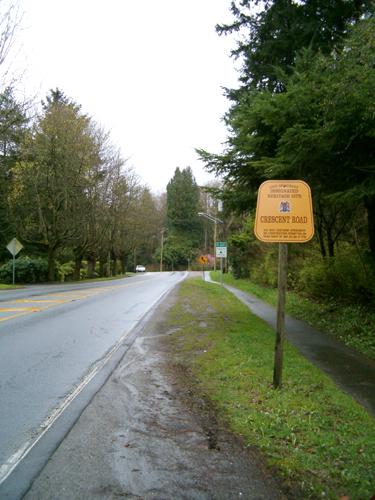
The Fourth Street Brick Road is a remnant of brick road paving that extends along Fourth Street between Royal Avenue to Queens Avenue.
Valeur patrimoniale
The Fourth Street Brick Road is important for its historical association with the city’s development and for its aesthetic and symbolic values.
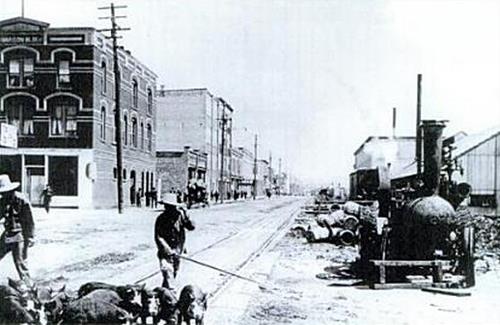
As the earliest and most affluent of New Westminster’s areas, Queen’s Park was one of the earliest neighbourhoods to have paved roads, receiving services as a matter of course. In 1906, Queen’s Park acquired paved streets and concrete sidewalks; in 1910, Columbia Street was paved, an indication of the increasingly active industry and business in the city at the time, and signifying a switch from a small town service centre to a modern community that embraced engineering and technology.
The paving has value as a remnant and reminder of the historical materials used in road construction and the processes used to create them. Made of brick, likely vitrified to ensure a dense and durable road surface, the material may have been produced by one of the city’s several brickworks. The present good condition of the brick presents a very superior finish to the product.
With the asphalt edges of the brick course, and originally used to improve the traction for horses, the street has value as a record of street construction, widening and changing materials during the continuing development of the city.
This part of Fourth Street is also significant for its link to New Westminster's history, when it was known as Clement Street, after Colonel Robert Clement Moody (the City's founder). It first shows on city maps in 1859 and its name was changed to Fourth Street in 1891.
Source: City of New Westminster Planning Department
Éléments caractéristiques
Key elements that define the heritage character of the Fourth Street Brick Road include its:
Siting, Context and Landscape
- extent of the original brick road paving
- offset bedding pattern
- size and red colour of the brick
Location
Loading map...
Lieux similaires
Sites patrimoniaux avec des caractéristiques semblables