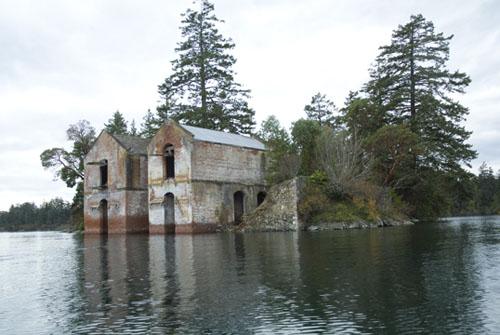
Photo: BC Heritage Branch, 2008
- Reconnaissance
- 1971
- Par
- Province de la Colombie-Britannique
Le texte du répertoire, mot pour mot
Description
Cole Island is a low-lying, partially-treed, 0.6 hectare island in Esquimalt Harbour, west of downtown Victoria. It is located close to the active Esquimalt naval base, which it once served as a repository for naval ammunition and arms. On the island are four single-storey brick magazines (buildings for the storage of gunpowder and ammunition) and a guardhouse. Two of the magazines, the most prominent structures when viewed from a distance, stand on lofty arched brick piers over the water. Fifteen other structures, including a jetty, survive only as surface remains.
Valeur patrimoniale
Cole Island is valued as the location of the former naval magazine complex of a nineteenth-century Royal Navy dockyard, as a former seasonal site of importance to First Nations, and as a recreational site.
Cole Island, now owned by the Province of British Columbia, is nationally and provincially significant as part of the Esquimalt Naval Sites National Historic Site of Canada that commemorates, through a wealth of built resources, a continuum of defence themes such as the Imperial defence period, the creation of the Royal Canadian Navy, and naval institutions in wartime. Along with the former Royal Naval Hospital, the Esquimalt Dockyard and the Royal Navy Cemetery, the surviving buildings on Cole Island contribute to a homogeneous grouping of naval structures that evoke the distinctive sense of place of a nineteenth-century Royal Navy Dockyard, which helped protect British trade interests in the Pacific.
From the establishment of a British navy presence in the northwest Pacific Ocean in the mid-1840s to its use by the Royal Canadian Navy until the end of the Second World War, Cole Island served as a magazine for the storage of ammunition and powder for the supply of the Pacific naval squadron. Its location at a distance from the naval base reflects the dangers inherent in the storage of ammunition, and the need to protect the Dockyard from a devastating explosion.
The standing buildings and their function-specific internal arrangements illustrate the type of naval weapons and ammunition stored there from ca. 1880 until 1945. Internal evidence demonstrates that the standing magazines were used for the storage of projectiles, barrels of gunpowder and other explosive material, such as gun-cotton.
Footprints of other structures illustrate the organization of a complex designed to receive, overhaul, store and issue naval ammunition. The cartridge store arrangements, in particular, illustrate that naval ordnance of the time used separate cartridge and projectile ammunition. The remains of a drying room serve to show that ammunition often arrived wet and unstable after a sea voyage, and the location of the drying room on the end of a wharf shows just how dangerous wet, unstable ammunition was known to be. The remains of a small-arms store serve as a reminder that naval vessels were equipped with side-arms for the crew and the marines on board.
The guardhouse and the remains of an associated garden illustrate that this was a secure place of great value to the British and later the Canadian navies, that required a permanent guard. The fire hydrant system, supplied from the nearby Vancouver Island mainland, illustrates the need for fire-fighting measures in a magazine complex.
Today the island is also valued by First Nations for its former traditional use as a seasonal fishing and camping site and by kayakers, boaters and local people as a picturesque recreational site.
SourceBC Heritage Branch properties files
Éléments caractéristiques
Key elements which define the heritage character of Cole Island include its:
- island location in Esquimalt Harbour
- proximity to the Esquimalt naval base and deep water
- five standing buildings, including filled shell stores and guardhouse
- remains of the wharf
- remains of the other buildings, including small-arms stores, powder magazines, and cartridge stores
- remains of infrastructure, including fire hydrant system and barrow runs
- remains of the garden and imported plant species
Fin du texte du répertoire
Emplacement
48.45355° N, 123.45132° W
Itinéraire (s’ouvre dans un nouvel onglet)L’inscription au répertoire ne rend pas un lieu accessible au public. Beaucoup sont des résidences ou des commerces privés; admirez-les depuis la rue.

Chargement de la carte…
À proximité
Les 30 lieux de Colwood Poste de garde, bâtiment 38750 m · 1938
 Craigflower Manor2 km · View Royal · 1856
 AjoutLieu historique national du Canada du Manoir-Craigflower2 km · Victoria · 1853
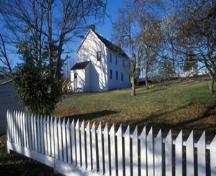 Lieu historique national du Canada de l'École-Craigflower2,2 km · Victoria · 1854
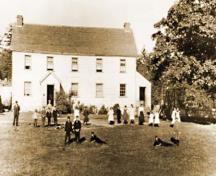 Craigflower Schoolhouse2,2 km · Saanich · 1854
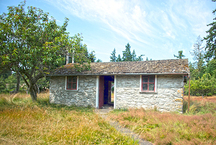 Dairy and Cheese House2,3 km
Lieux semblables
Les lieux dont la description du répertoire se rapproche le plus de celle-ci.
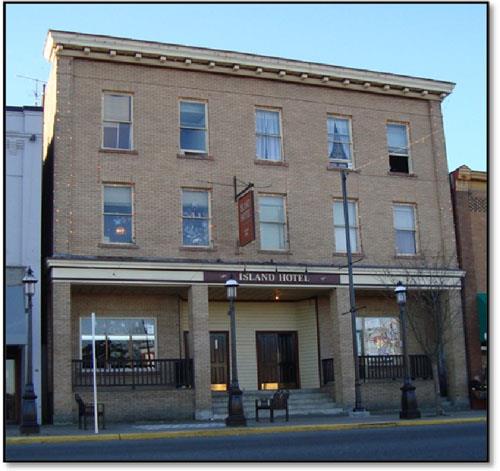 Island HotelLadysmith, Colombie Britannique
 Gallows Point Lightkeeper's CottageNanaimo, Colombie Britannique
- Capilano ShipwreckSavary Island, Colombie Britannique
- Sunny IslandNone, Colombie Britannique
 Lieu historique national du Canada des Sites-Navals-d'EsquimaltEsquimalt, Colombie Britannique
 D'Arcy IslandCapital RD, Colombie Britannique
Tiré du Répertoire canadien des lieux patrimoniaux, dans sa dernière mise à jour du 12 décembre 2025. Le texte du répertoire est reproduit mot pour mot.