Clergue Blockhouse
Description
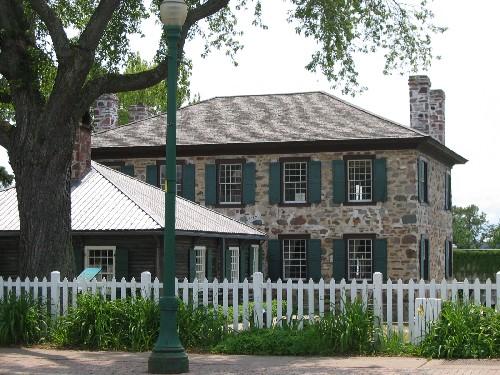
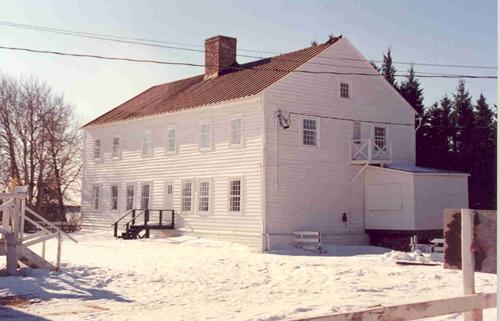
The Clergue Blockhouse consists of an upper log structure on an uncut fieldstone base. Originally located on the St. Mary’s Paper site, adjacent to the Canadian Canal, the Blockhouse is now located to the east of the Ermatinger Old Stone House at the corner of Bay and Pim Streets in downtown Sault Ste. Marie.
It has been recognized for its heritage value by the City of Sault Ste. Marie, By-Law 80-113.
Valeur patrimoniale
The Clergue Blockhouse is one of Sault Ste. Marie's most significant buildings because of its early association with the North West Company Post, a fur trading company, and its later association with F.H. Clergue, an American industrialist who established a powerful industrial complex in Sault Ste. Marie at the turn of the 20th century.
The stone walls of the Clergue Blockhouse were constructed in 1819 of uncut fieldstone and are the only remains of the North West Company Post in Sault Ste. Marie. Stark and simple in its design, this former powder magazine is an example of unadorned, wilderness architecture used by early fur trading companies.
The upper log structure, designed as a blockhouse in the style of those constructed during the Indian Wars of the preceding one hundred years, was added in 1894 by the American entrepreneur Francis H. Clergue for use as his residence and early office. The original location of this 'bachelor apartment' at the St. Mary's Paper plant allowed Clergue to survey early industries under his control including a hydro-electric plant, a pulp and paper mill, a steel plant, and a rail and marine transportation network at the industrial site located at the confluence of Lake Superior and Lake Huron, adjacent to the Canadian Canal.
The Blockhouse continued to be used as a residence for some years, however it gradually fell into disuse and was badly burned in 1974. In 1996, the Blockhouse was moved to its current site where, through community efforts, it has been restored for interpretation as a historic site.
Sources: Sault Ste. Marie Designation By-law 80-113; Clergue Blockhouse Designation Report
Éléments caractéristiques
Key character defining elements that reflect the structure's value as an example of unadorned, wilderness architecture used by early fur companies include its:
-uncut fieldstone construction
-several gun barrel openings
Key character defining elements associated with Francis H. Clergue's modification of the structure for use as a residence include its:
-log walls
-stone fireplace
-counter balanced attic stairs
-early original electric heating system
-wooden staircase
Location
Loading map...
Lieux similaires
Sites patrimoniaux avec des caractéristiques semblables