National Historic Site of Canada
Fort Townshend National Historic Site of Canada
St. John's, Newfoundland and Labrador
Also known as Fort Townshend
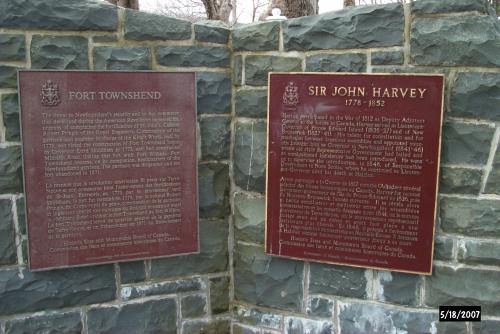
Plaque
Photo: Parks Canada
- Built
- 1773–1779
- Recognized
- 1951
- By
- Government of Canada
The register’s text, word for word
Description
Fort Townshend National Historic Site of Canada, is an archaeological site located on a hill overlooking the entrance to St. John’s Harbour in Newfoundland. The fort once formed a central part of the 18th-century British defence network, consisting of forts and smaller batteries strategically positioned throughout the area. The fort was abandoned in 1871, and the site has since become urban in character. In 2000, The Rooms, a modern complex housing the Provincial Archives, Art Gallery and Museum was built on the site. There are currently no visible remains. Official recognition refers to the footprint of the fort at the time of designation.
Heritage value
Fort Townshend was designated a national historic site of Canada in 1951 for the following reason:
- from 1779 until 1871, it was the headquarters of the Newfoundland garrison.
Originally built to protect one of the British Empire’s key fishing colonies from potential threats from the French, Fort Townshend reflected Britain’s commitment to the development of a residential fishery. The fort, a star-type fortification, occupied the centre of a system of defences, which in 1776 consisted of redoubts and batteries extending around the harbours of St. John’s, Quidi Vidi, and Torbay. Due to the outbreak of war with France, Fort Townshend was enlarged and strengthened in 1796, as part of changes made to the entire defence system. In the same year, a French fleet under the command of Admiral Richery appeared off the Narrows, but was deterred by the formidable appearance of the defences, and the fleet withdrew. With the impending threat from America as a result of the War of 1812, the Fort was again refortified although no conflicts took place there.
The garrison was withdrawn from St. John’s in 1871, from which date the fort was allowed to decay. Some storage cellars with a small building, which was used as a guardroom, still remain. While there are few accessible remains of the fort, some may still be found in situ in the basement of The Rooms, which was built upon the original site.
SourceHistoric Sites and Monuments Board of Canada, Minutes, December 2007, May 1951.
Character‑defining elements
Key elements of the site which contribute to its historic value include:
- its location in downtown St. John’s;
- its strategic setting on a hill overlooking St. John’s Harbour;
- its relation to the other defensive sites and structures surrounding the harbour;
- elements of any surviving archaeological remains, features, and artifacts related to the site;
- viewscapes across the harbour.
End of the register’s text
Location
Bonaventure Avenue and Harvey Roads, St. John's, Newfoundland and Labrador, Canada
47.56621° N, 52.71211° W
Get directions (opens in a new tab)Being on the register doesn’t make a place open to visitors. Many are private homes or businesses; please view them from the street.

Loading map…
Similar places
Places whose register descriptions are closest to this one.
 Fort Amherst National Historic Site of CanadaSt. John's, Newfoundland And Labrador
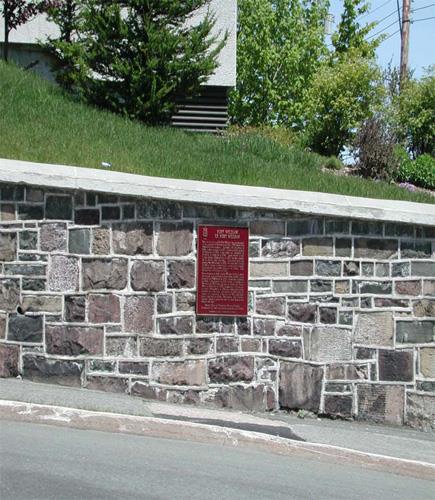 Fort William National Historic Site of CanadaSt. John's, Newfoundland And Labrador
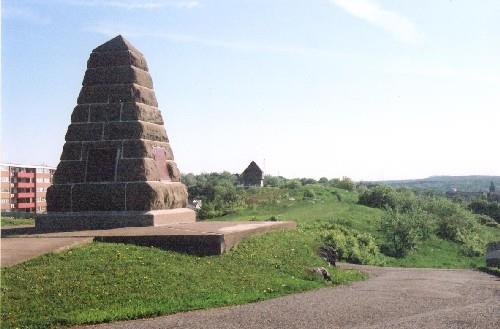 Fort Howe National Historic Site of CanadaSaint John, New Brunswick
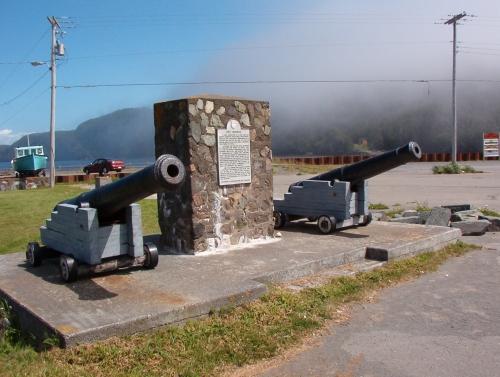 Fort FrederickPlacentia, Newfoundland And Labrador
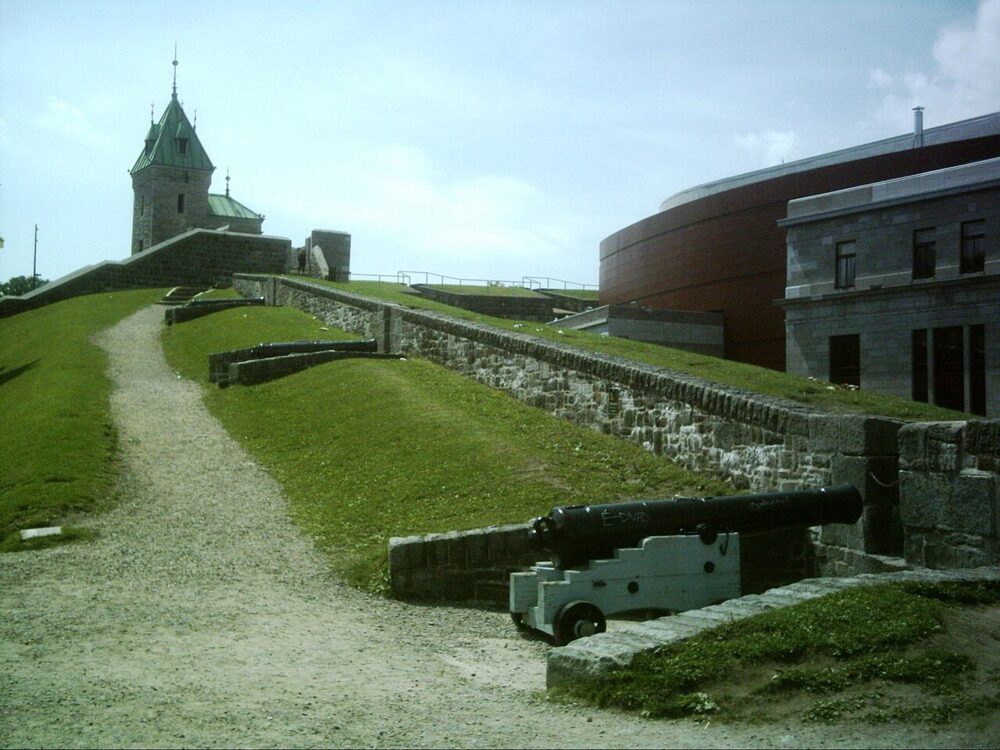 EnhancedFortifications of Québec National Historic Site of CanadaQuébec, Quebec
 Fort Edward National Historic Site of CanadaWindsor, Nova Scotia
From the Canadian Register of Historic Places, as last updated on December 12, 2025. The register’s text is shown word for word.