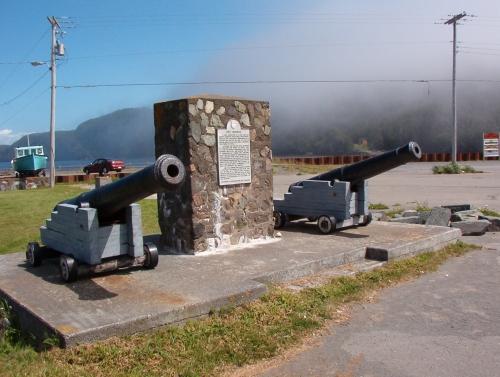
Two cannon and a provincial commemorative marker on the site of the former Fort Frederick, Placentia, Newfoundland, August 2005.
Photo: HFNL/Dale Jarvis 2005
- Built
- 1715–1717
- Recognized
- 1972
- By
- NL Municipality
The register’s text, word for word
Description
Fort Frederick is the site of an eighteenth century English fort located in the community of Placentia, NL. This site is situated on a point of land just at the harbour mouth and is marked by a stone and concrete monument flanked by two cannon. The designation encompasses the area as described by the boundaries.
Heritage value
Fort Frederick (Borden number ChAl-01) has been designated a Municipal Heritage Site because it holds historic values. The fort consisted of a semi-circular redoubt mounting twelve guns, a guard house, barracks and storehouse surrounded by a palisade. It was erected on the town side of Placentia in 1717 to protect English interests in the seasonal fishery. However, as a permanent population on the island grew, the role of the military increasingly became one of maintaining public order and suppressing civil unrest. England withdrew its military garrisons from Newfoundland in 1870, thus paving the way for the establishment of a civilian police force.
Fort Frederick was the military headquarters in Newfoundland from 1721-1746. However, the fort was poorly maintained from the beginning and by 1744 the redoubt had to be strengthened by a timber and sod-work facing and the number of guns reduced to eight. Bastions were then added to the landward angles of the palisade, upon which were mounted Coehorn mortars (a mortar first used in 1674 which fired at a fixed angle of elevation of 45 degrees). After a partial repair in 1762 the works were allowed to decay and were finally abandoned in 1811 when the ordnance was removed. Two 12 pounder cannon were mounted behind a temporary earthwork battery near this site in 1813 as protection against American privateers and can still be seen. Much of the Portland stone facing of the redoubt is incorporated in the fabric of the Placentia convent of the Presentation Sisters.
Fort Frederick is historically valuable for the archaeological information it reveals about eighteenth century military life. Archaeological work on the Fort Frederick site in 2000-2002 revealed a large collection of artifacts. Archaeologists uncovered barrel staves, cannon and musket balls, flints, Dutch tobacco pipes, pieces of pottery and tableware and coins. One coin in particular dates to 1630, confirming that Placentia was occupied by people before the French colony of Plaisance was established in 1660.
SourceTown of Placentia Council, March 7, 1972; moved by Councillor Richard McLennon and seconded by Councillor Gus Mooney.
Character‑defining elements
All those remaining elements of the eighteenth century English fort, including:
-2 cannon;
-existing commemorative plaque;
-any evident above ground features and the visible remains of the redoubt which has been covered by sods; and -the openness of the landscape and lack of built structures upon the landscape.
All those elements that respect the archaeological site and artifacts, including:
-in-situ archaeological remnants of Fort Frederick in their location, form and materials as well as artifacts removed from any and all of these sites in an intact and documented state.
End of the register’s text
Location
Placentia, Newfoundland and Labrador, A0B, Canada
47.24924° N, 53.96185° W
Get directions (opens in a new tab)Being on the register doesn’t make a place open to visitors. Many are private homes or businesses; please view them from the street.

Loading map…
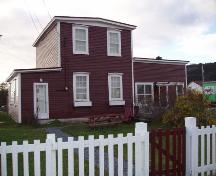 Anglo American Telegraph Company Cable Office Registered Heritage Structure200 m · 1876
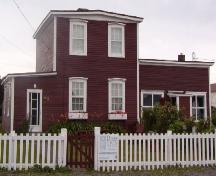 Anglo American Telegraph Building Municipal Heritage Building200 m · 1876
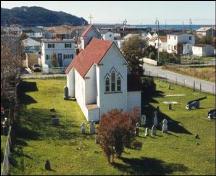 St. Luke's Anglican Church350 m · 1906
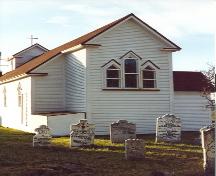 St. Luke's Anglican Church Municipal Heritage Building350 m · 1906
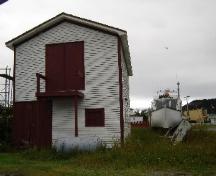 Wakeham Sawmill Municipal Heritage Building500 m · 1912
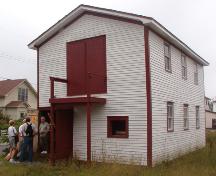 Wakeham Sawmill Registered Heritage Structure500 m · 1912
Similar places
Places whose register descriptions are closest to this one.
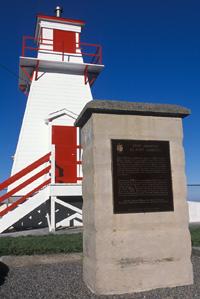 Fort Amherst National Historic Site of CanadaSt. John's, Newfoundland And Labrador
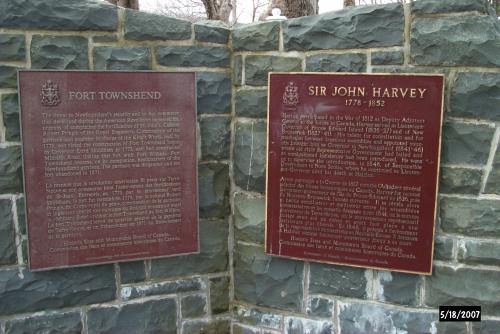 Fort Townshend National Historic Site of CanadaSt. John's, Newfoundland And Labrador
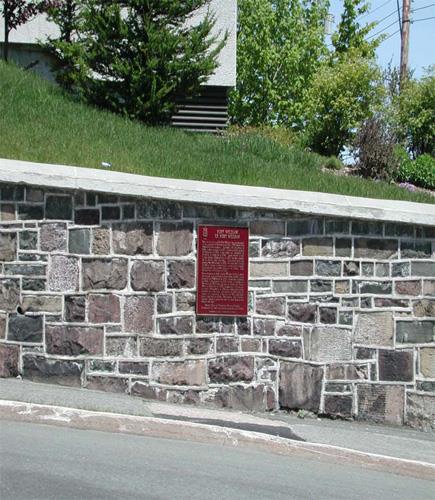 Fort William National Historic Site of CanadaSt. John's, Newfoundland And Labrador
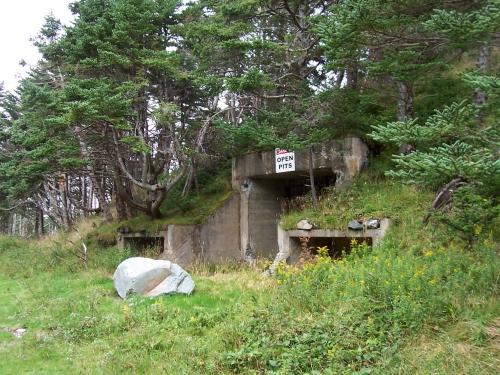 Argentia 282 Coastal Defence Battery Municipal Heritage SitePlacentia, Newfoundland And Labrador
 Dawe Property World War Two Site Municipal Heritage SiteConception Bay South (Manuels), Newfoundland And Labrador
 Newman’s Flagpole Rock Municipal Heritage SiteHarbour Breton, Newfoundland And Labrador
From the Canadian Register of Historic Places, as last updated on December 12, 2025. The register’s text is shown word for word.