Earnscliffe National Historic Site of Canada
Also known as: Earnscliffe National Historic Site of Canada, Earnscliffe, Earnscliffe
Description
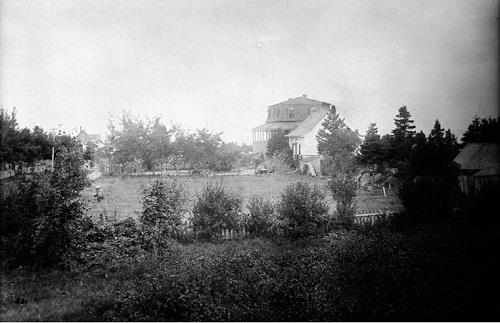
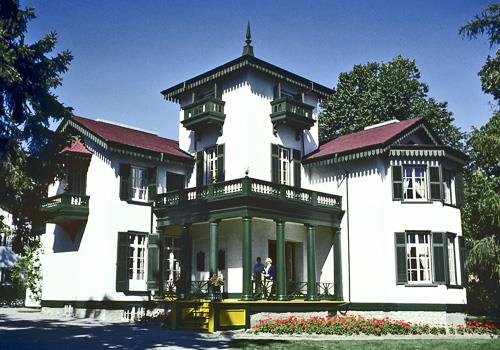
Earnscliffe National Historic Site of Canada is the former home of Canada’s first Prime Minister, Sir John A. Macdonald. Picturesquely sited on a cliff at the edge of the Ottawa River, this 19th-century villa, built of local stone, is set within landscaped grounds and faces Sussex Drive on Ottawa’s ceremonial route. The charming Gothic Revival house is now the residence of the British High Commissioner in Canada. The designation refers to the house and its grounds.
Heritage Value
Earnscliffe was designated a national historic site of Canada in 1960 because:
- it was the home of the right Honourable Sir John A. Macdonald, Chief Architect of Confederation.
The heritage value of this site resides in its historical associations with Sir John A. Macdonald as illustrated by the physical elements of the property surviving from the time of his occupancy. The house had been built in 1855-57 by John MacKinnon and rented by Sir John A. Macdonald in 1870-71 and in 1882, until he bought it in 1883. He lived here until his death in 1891. For many of those years Macdonald was Prime Minister of the Dominion of Canada. Earnscliffe was subsequently occupied by a succession of private owners until it was acquired by the government of the United Kingdom in 1930. Since that date, it has served as the residence of its High Commissioner in Canada.
Source: Historic Sites and Monuments Board of Canada, Minutes, June 1960.
Character-Defining Elements
Key elements speaking to the heritage value of this site include:
- the picturesque siting of the property at the edge of the Ottawa River;
- the setting of the house at the end of a drive through landscaped grounds with discretely placed service buildings;
- the irregular massing of the house under cross-pitched roofs with front-facing gables;
- its stone construction;
- the Gothic Revival treatment of the exterior design with gables, decorative barge boards and chimney pots, Tudor-arched central entry, drip mouldings over main windows, a variety of window sizes and forms;
- evidence of the interior layout and finishes surviving from Sir John A. Macdonald’s occupancy;
- access to river views from the rear of the house.
Gallery
1 imageLocation
Loading map...
Similar Places
Heritage sites with similar characteristics