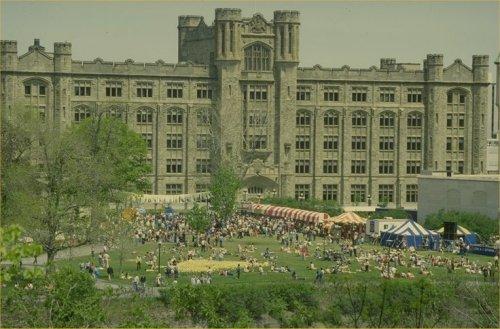
Exterior Photo
Photo: Parks Canada / Parcs Canada, 1993
- Built
- 1913–1916
- Recognized
- 1990
- By
- Government of Canada
The register’s text, word for word
Description
The Connaught Building is a large, multi-storey Tudor Gothic-style departmental building located in central Ottawa facing Major’s Hill Park, Parliament Hill and the Chateau Laurier Hotel. The designation refers to the building on its legal lot at 550 Sussex Drive.
Heritage value
The Connaught Building was designated a national historic site in 1990 because it is a tangible expression of Sir Wilfrid Laurier’s commitment to the enhancement of architecture in the National Capital.
The heritage value of this site resides in its architectural style, design, materials and location. As Prime Minister, Sir Wilfrid Laurier aimed to transform Ottawa into a more handsome national capital and supported a federal building program led by David Ewart, Chief Architect of the Department of Public Works (1897-1914). Under Ewart’s direction, a modified Tudor Gothic style, compatible with the buildings on Parliament Hill and thought appropriate for a capital associated with the British Empire, was used to build a federal identity in Canada’s capital. The Connaught Building is among Ewart’s finest achievements in uniting Tudor Gothic styling with Beaux-Arts principles. It is also the last of a group of major federal buildings designed by Ewart for the capital before World War One. It originally served as the new Ottawa Customs Examining Warehouse and offices for the Department of Customs and Internal Revenue. It was named in honour of HRH The Duke of Connaught, who served as Canada’s Governor General between 1911 and 1916.
SourceHistoric Sites and Monuments Board of Canada, Minute, February 1990.
Character‑defining elements
Key elements which relate to the heritage value of the Connaught Building include:
-the location near Parliament Hill along Sussex Drive;
-The siting, flush to the sidewalks;
-Its rectangular massing with slightly projecting central and end pavilions,
-the expression of Beaux-Art principles, evident in its symmetrically organized facade with central main entry, its focus on the main entry under a high tower elaborated with Tudor-Revival style detailing, and its use of contemporary structural design of steel and concrete with stone cladding;
-the Tudor Gothic detailing such as Tudor-arched openings, oriole bays, turrets, gables, predominantly rough-faced stonework, and decorative stonework as in corner quoins, false buttresses, crenelations, spandrels, coats of arms, rosettes, niches, trefoils, and finely articulated lintels;
-remnants of the interior spaces that testify to its original Beaux-Arts axial layout and to its former use as a customs warehouse and offices;
-the successful adaptation to its narrow sloping site, as seen in: its finely wrought detailing; strongly marked vertical elements linked in upward progression by spandrels; and the use of slightly projecting central bays to form towers;
-the visual prominence of the building as seen from the Byward Market and from Parliament Hill.
End of the register’s text
Location
559 Mackenzie Avenue, Ottawa, Ontario, K1N, Canada
45.42698° N, 75.69541° W
Get directions (opens in a new tab)Being on the register doesn’t make a place open to visitors. Many are private homes or businesses; please view them from the street.

Loading map…
Nearby
All 195 places in Ottawa
Similar places
Places whose register descriptions are closest to this one.
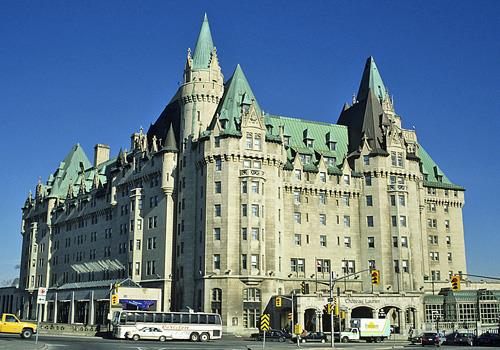 Château Laurier National Historic Site of CanadaOttawa, Ontario
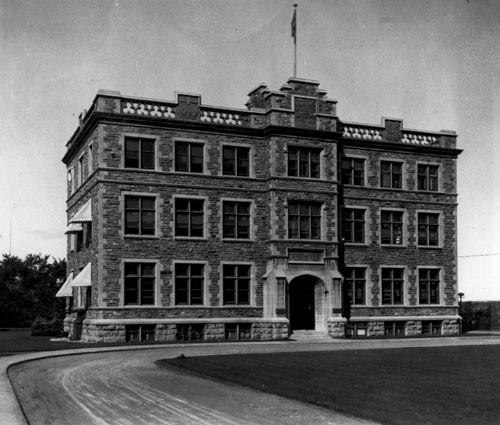 Former Archives Building National Historic Site of CanadaOttawa, Ontario
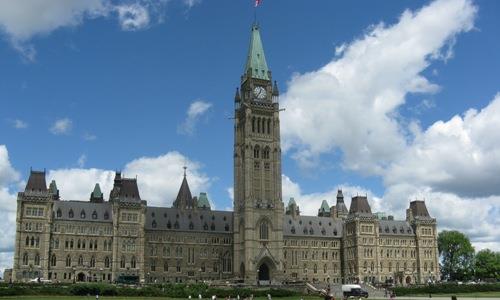 Parliament Buildings National Historic Site of CanadaOttawa, Ontario
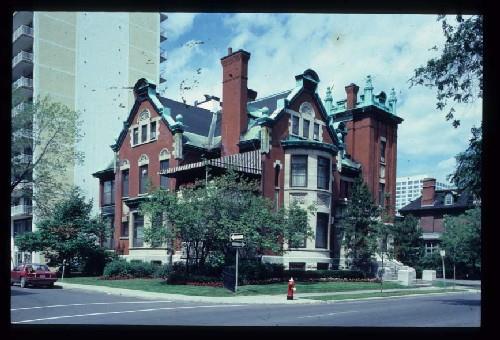 John R. Booth Residence National Historic Site of CanadaOttawa, Ontario
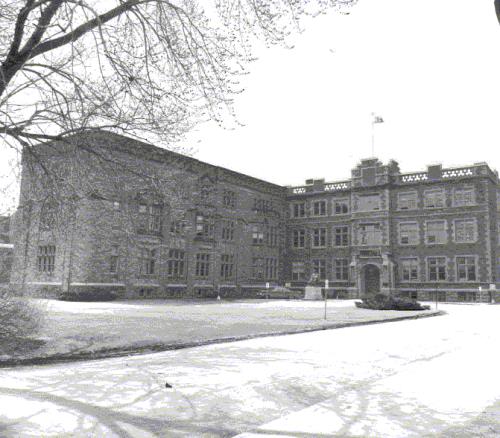 War MuseumOttawa, Ontario
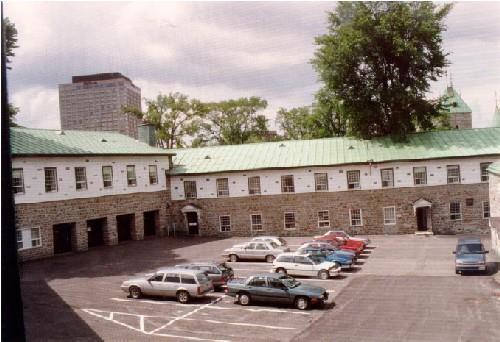 Connaught Barracks, Building 1Québec, Quebec
From the Canadian Register of Historic Places, as last updated on December 12, 2025. The register’s text is shown word for word.