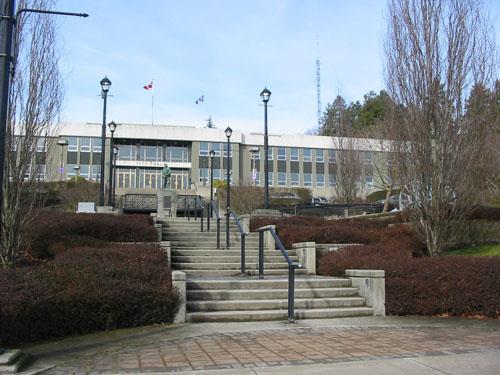
Chilliwack City Hall National Historic Site of Canada
Also known as: Chilliwack City Hall National Historic Site of Canada, Chilliwack City Hall, Hôtel de ville de Chilliwack
Description
Chilliwack City Hall is small but beautifully detailed building designed in the classical Beaux-Arts style and occupying a prominent corner site in downtown Chilliwack, British Columbia. The building occupies a site containing mature landscape features and a cenotaph commemorating the community's fallen soldiers. Official recognition refers to the building on its property.
Heritage Value
Chilliwack City Hall was designated a national historic site of Canada because:
- it is typical of a class of modestly scaled civic structures built in many smaller centres in the early 20th century;
- it is the only pre-1930 Canadian municipal hall constructed entirely of reinforced concrete and displays classically inspired styling, unusual for such a building in this period; and
- it also served as an architectural symbol of civic pride for the local community.
Designed by noted west coast architect Thomas Hooper, the building originally housed police and courtroom facilities in addition to council chambers and civic administrative offices. The building remains a vital heritage landmark within the city, although ceased to function as the municipal building in 1980. It currently houses the Chilliwack Museum. The mature landscaping and war memorial park at the rear of the building underscore its long-standing importance to the citizens of Chilliwack.
Source: Historic Sites and Monuments Board of Canada, Minutes, November 1984.
Character-Defining Elements
The key elements relating to the heritage value of this site include:
- the footprint of the building and the historical relationship between the building and its site, including the setbacks on street frontages;
- sightlines of the building along Spadina Avenue, Main Street and Yale Road;
- mature landscape features of the site, including a pair of copper beach trees planted in 1915 and a group of London plane trees and war cenotaph commemorating the community’s fallen soldiers, dating from 1923;
- the sustained integrity of the original reinforced concrete building fabric;
- the exterior forms, massing and design features of the building, notably the symmetrical façade, exterior wall finishes of cast concrete, painted white, the lower level features decorative horizontal banding that simulates traditional cut stone construction and segmental window and door openings that contrast with the upper floor treatment, twin curved formal staircases, round-headed voussoirs with keystones;
- classical detailing including paired columns and brackets, an imposing entrance portico with a pediment, prominent decorated entablature, plinth, and curved ceremonial balcony, rows of round-headed openings on front and side facades of the upper floor;
- the civic crest, city hall and construction date inscriptions on pediment which reflect the pride associated with the construction of this building as a civic landmark.
Gallery
2 imagesLocation
Loading map...
Similar Places
Heritage sites with similar characteristics