Registered Heritage Structure
Bleak House Registered Heritage Structure
Fogo, Newfoundland and Labrador
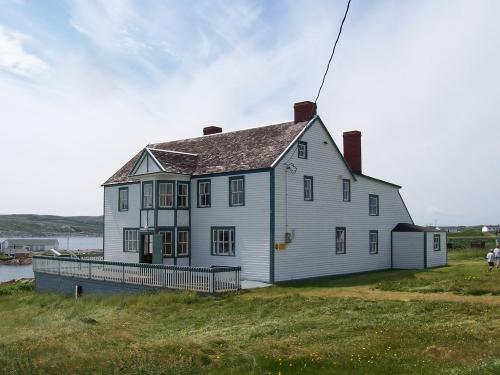
View of main facade, Bleak House, Fogo, Fogo Island. Photo taken July 2008.
Photo: Deborah O'Rielly/ HFNL 2008
- Recognized
- 1985
- By
- Heritage Foundation of Newfoundland and Labrador
The register’s text, word for word
Description
Bleak House is a two-storey, wooden house that was built around 1826-27 for Fogo merchant, John Slade. The house is a representation of a 19th century merchant house and has been home to three of the most prominent merchants in the history of Fogo. This designation is confined to the footprint of the building.
Heritage value
Bleak House is designated as a Registered Heritage Structure for its historical associations, architectural, cultural and environmental values.
Built around 1826-27 for prominent local merchant John Slade, Bleak House has been home to three of the most influential merchant families in the history of Fogo. The Slade family ran a highly successful merchant business in both Twillingate and Fogo. Furthermore, John Slade(manager of the Twillingate premises) represented the Fogo-Twillingate district and became the youngest MHA (Member of the House of Assembly) in Newfoundland history at the age of 23. The Slade family lived in the Bleak House until the mid-19th century when the house was sold to Slade’s former bookkeeper, John Owens. Owens married advantageously and built a successful business for his family in Fogo. In 1897, with the death of Owens, the property was bought by Owens’ partner, Henry Earle. Earle and Company was the most successful merchant business in Fogo and Twillingate from 1902 until 1967, when the fishery collapsed. Today, through the historical associations with the Slade, Owens and Earle families Bleak House stands as a testament to the success of the merchant business in Fogo during the 19th and 20th centuries.
Bleak House is architecturally valuable as an excellent example of a 19th century merchant house in rural Newfoundland. Bleak House is the physical manifestation of the distinction between the merchant class and the fishing class in rural Newfoundland. The architectural style is more elaborate than that of the traditional vernacular architecture of rural Newfoundland during this period. Many of the original architectural features are clearly indicative of a style native to West Country England, the home of John Slade. Furthermore, the appearance and size of the house in the context of the community is a testament to the importance of the families that lived there.
Bleak House is located atop a small hill overlooking the town of Fogo and this location is indicative of the importance and influence of the merchant families who lived there. It is highly visible on the landscape from both the land and sea.
Bleak House is a remnant of a past way of life, evoking a sense of a time gone by. The merchant life has faded from Newfoundland culture and merchant houses are some of the only remaining reminders of the influence that merchants had on the development of rural Newfoundland.
SourceHeritage Foundation of Newfoundland and Labrador unnumbered property file: Fogo-Bleak House
Character‑defining elements
-prominent location of house within community;
-2-storey centre bay on front façade;
-window placement and style;
-steep gabled roof;
-decorative use of clapboard on the bias;
-pediment at top of centre bay;
-use of traditional materials such as narrow wooden clapboard and wooden windows;
-wood moldings;
-varying rooflines and multiple porches; and -chimneys.
End of the register’s text
Location
Fogo, Newfoundland and Labrador, A0G, Canada
49.71816° N, 54.28606° W
Get directions (opens in a new tab)Being on the register doesn’t make a place open to visitors. Many are private homes or businesses; please view them from the street.

Loading map…
Nearby
All 6 places in Fogo Bleak House Municipal Heritage Buildingwithin 100 m
- Old Schoolhouse Municipal Heritage Building400 m · 1887
 Fogo United Church450 m · 1877
 Fogo Courthouse and Public Building Municipal Heritage Site500 m
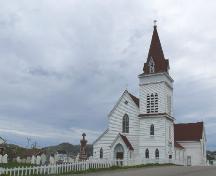 St. Andrew's Anglican Church and Cemetery Municipal Heritage Site550 m
- St. John Lodge Society of United Fishermen No. 11 Municipal Heritage Building7.8 km · Joe Batt's Arm-Barr'd Islands-Shoal Bay · 1909
Similar places
Places whose register descriptions are closest to this one.
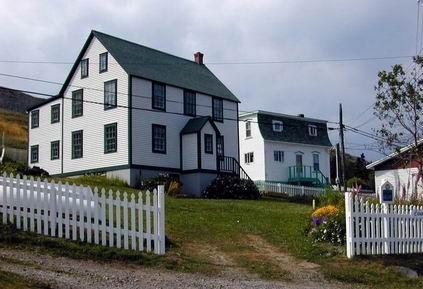 Slade HouseTrinity (Trinity Bay), Newfoundland And Labrador
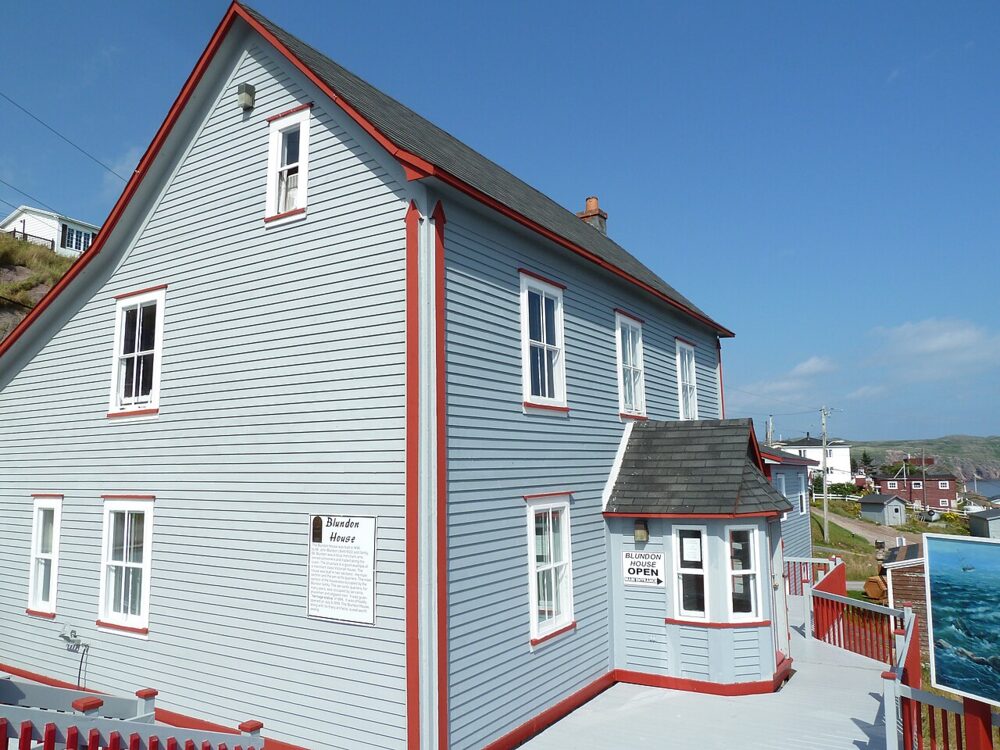 EnhancedBlundon HouseBay de Verde, Newfoundland And Labrador
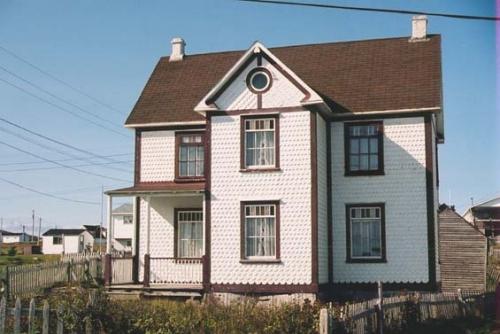 Brett House and OutbuildingsJoe Batt's Arm-Barr'd Islands-Shoal Bay, Newfoundland And Labrador
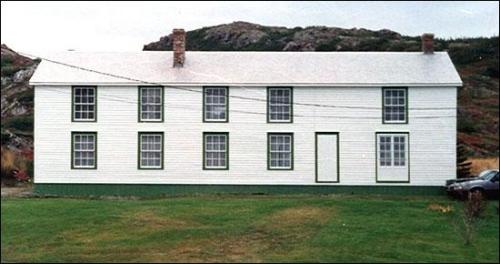 Ashbourne LonghouseTwillingate, Newfoundland And Labrador
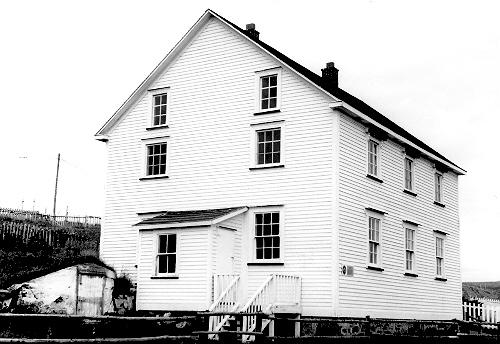 Robert Tilley HouseElliston, Newfoundland And Labrador
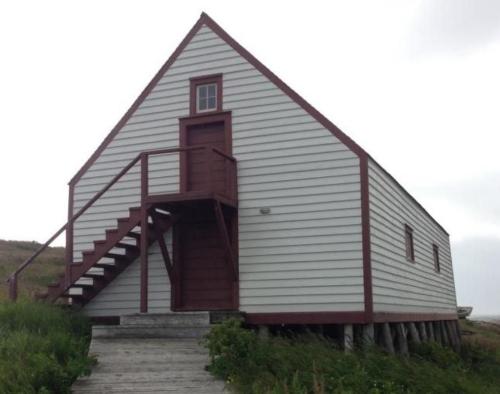 Seal Store Registered Heritage StructureBattle Harbour, Newfoundland And Labrador
From the Canadian Register of Historic Places, as last updated on December 12, 2025. The register’s text is shown word for word.