Municipally Registered Property
St. George's Church
Georgeville, Nova Scotia
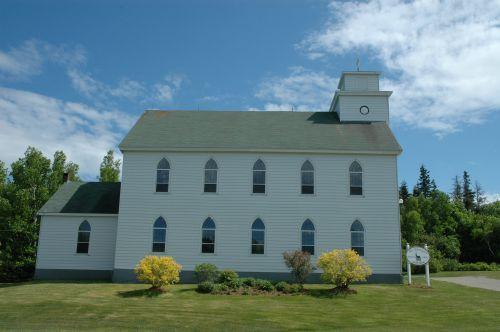
Side view of St. George's Church.
Photo: Heritage Division, N.S. Dept. of Tourism, Culture and Heritage, 2009.
- Built
- 1860–1871
- Recognized
- 1995
- By
- Local government
The register’s text, word for word
Description
St. George's Church is a two-storey, Gothic Revival Roman Catholic Church located in a quiet setting in Georgeville, Antigonish County, Nova Scotia. Construction was begun in 1860 and completed in 1871. The cemetery was established during the construction of the church. The building and property which includes a cemetery adjacent to, and across the road from the church are included in the municipal designation.
Heritage value
St. George's Church is valued for its association with the history of Roman Catholic settlement in Georgeville, Antigonish County, Nova Scotia. The first place of worship in the area was a small chapel built at Morar in 1830, about four kilometres north of Georgeville. In time there was a need for a larger church and construction was begun at the Georgeville location on July 22nd, 1860. The Morar chapel was hauled to this site and incorporated into the new building; it serves as a vestry for St. George's Church. A cornerstone was laid in which a sealed bottle was inserted containing several coins and a document written in Latin and English. The document listed the names of several individuals involved in the construction of the church including Peter MacKenzie, architect; John Smith, framer; Thomas Brown, mason. As well several building committee members were identified.
St. George's Church is valued for its association with well-known builder, Colin McLean, West River, Antigonish County. It is known that during the last phase of construction of the church McLean saw the job completed. He would become one of the leading contractors of piers, wharves, and terminal facilities in Baltimore, Maryland and founder of "McLean Contracting Company". Among construction contracts he worked on were the Williamsburg Bridge and the Brooklyn Bridge in New York. He cleared Johnstown, Pennsylvannia, after a devasting flood on May 31, 1889. The work included burying over 2,000 dead.
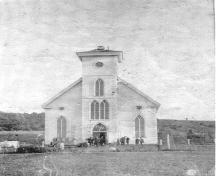
St. George's Church is valued as an example of Gothic Revival style architecture in mid-to-late nineteenth century Nova Scotia. The church features traditional Gothic elements such as a central double doorway, symmetrical three-bay facade with truncated central tower. Two rows of Gothic windows run along both sides of building and Gothic windows flank the main entrance. The foundation is stone. The adjacent cemetery contains stones from the pioneer families and stones to the present day.
SourceRegistered heritage property file no. 843. Municipality of the County of Antigonish, 285 Beech Hill Road, Antigonish, NS B2G 2L4.
Character‑defining elements
The character-defining elements of St. George's Church include:
- symmetrical three-bay facade;
- Gothic windows flanking entrance;
- two rows of Gothic windows with tracery;
- truncated tower;
- cemetery with stones of local pioneer families.
End of the register’s text
Location
9415 Highway 337, Georgeville, Nova Scotia, B2G, Canada
45.82407° N, 62.02363° W
Get directions (opens in a new tab)Being on the register doesn’t make a place open to visitors. Many are private homes or businesses; please view them from the street.

Loading map…
Nearby

Similar places
Places whose register descriptions are closest to this one.
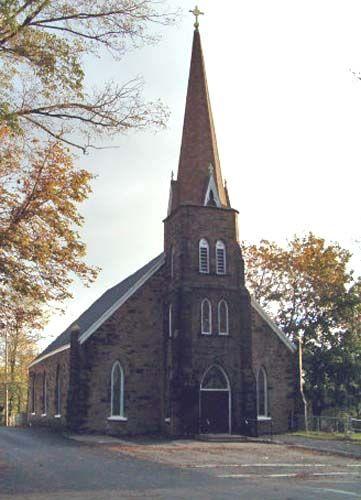 St. George's Church and GraveyardSydney, Nova Scotia
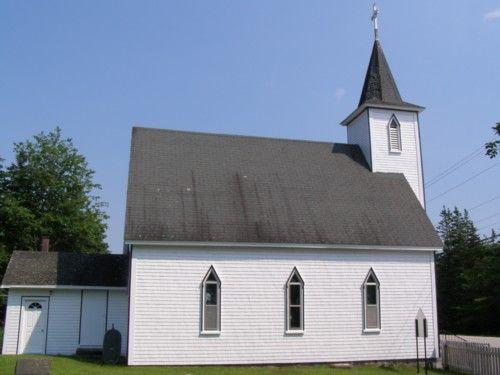 St. George's Anglican ChurchEast River, Nova Scotia
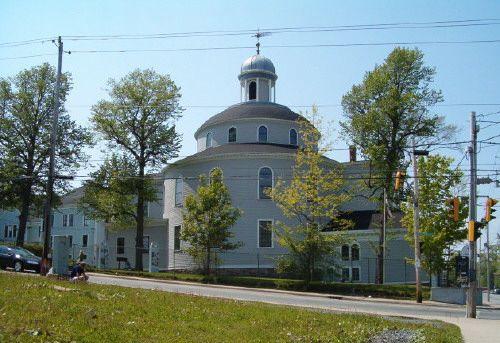 Saint George's Anglican ChurchHalifax, Nova Scotia
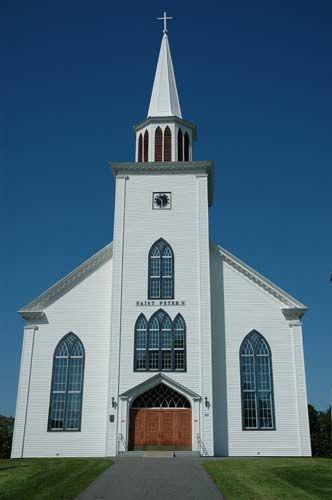 St. Peter's Roman Catholic ChurchMonastery, Nova Scotia
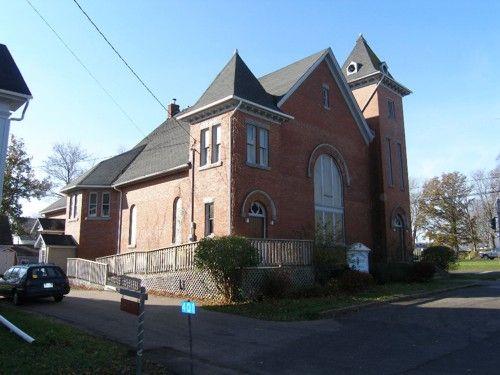 393 St. George StreetAnnapolis Royal, Nova Scotia
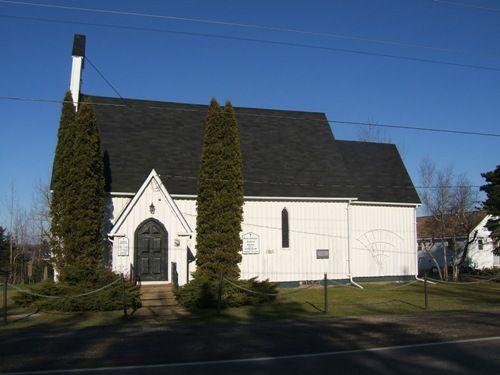 St. Andrew's Anglican ChurchWallace, Nova Scotia
From the Canadian Register of Historic Places, as last updated on December 12, 2025. The register’s text is shown word for word.