Provincially Recognized Heritage Site (Recognized)
Ocean Falls
Ocean Falls, British Columbia
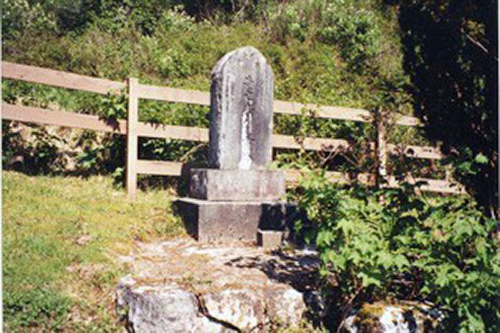
Ocean Falls;
- Recognized
- 2017
- By
- Province of British Columbia
The register’s text, word for word
Description
Ocean Falls is an isolated former pulp and paper mill town located at the head of Cousins Inlet at the west end of Dean Channel, just west of Bella Coola, in Range 3 of Coast Land District on B.C.'s central coast. The historic place consists of the remaining townsite and the still-existing Japanese cemetery monument.
Heritage value
Ocean Falls has historic, cultural, social and economic significance as one of B.C.'s largest pulp and paper towns that included a sizable Japanese Canadian workforce and community.
First settled about 1906, Ocean Falls is significant for its enormous timber resources and fresh water resource suitable for hydroelectric development. These resources enabled a local industrial base that supported a one-industry, self-sufficient company town. Typical of company towns, almost every worker was on the mill payroll, lived in a company owned dwelling and was obliged to shop at the company store.
Ocean Falls has historic and cultural value for its Japanese Canadian community which was a significant part of the pulp mill work force, representing Japanese Canadian participation in the lumbering, sawmilling and pulp and paper industries in B.C. before World War II. In the 1920s and '30s, logging camps and mills needed employees and Japanese Canadians found jobs in coastal B.C. communities such as Duncan, Paldi, Chemainus, Ocean Falls and others, where they developed settlements.
The Japanese Canadian workforce at Ocean Falls is important for its demonstration of diversity. Some workers were newly arrived from Japan, and relied on Japanese interpreters and suppliers of labour to function in the town. Others came to join family to earn money for a university education. Some became part of the local union, the International Brotherhood of Pulp, Sulphite and Paper Mill Workers.
Although a significant part of the work force in Ocean Falls, Japanese Canadians still faced discrimination. The mill jobs held by the Japanese were generally at a labourer level, with a pay scale below that of other employees. The approximately 60 families were housed in cabins, with single working men in bunkhouses, in a segregated community on the west side of the town.
Social value is found in the evolution of Japanese Canadian society in Ocean Falls which centered around the community hall and Japanese language school, which students attended regularly after public school classes. Martial arts clubs, a baseball team, associations for women and youth, and service businesses such as barbering, shoe repair, dressmaking and laundering are important for demonstrating Japanese Canadian cultural life in Ocean Falls until the late 1930s.
In 1942, Japanese Canadians in Ocean Falls suffered the same fate as others working in company towns through systematic removal of all people of Japanese descent from the west coast to internment camps in the interior.
While most traces of the Japanese Canadian community in Ocean Falls are gone, it is significant that a stone monument, placed in 1938, remains to commemorate Japanese Canadian gravesites marked by deteriorating grave markers. The gravesites are located in a separate Japanese Canadian section of the local cemetery, a reminder of the separation often brought about by discrimination.
The significance of Ocean Falls stems from the determination the Japanese Canadians brought to their work in the pulp mill, their role in diversifying the cultural identity of the company town and the reminder of the changes to the community brought about by internment in 1942.
SourceProvince of British Columbia, Heritage Branch
Character‑defining elements
Not applicable
End of the register’s text
Location
Marine Drive, Ocean Falls, British Columbia, Canada
52.35379° N, 127.69416° W
Get directions (opens in a new tab)Being on the register doesn’t make a place open to visitors. Many are private homes or businesses; please view them from the street.

Loading map…
Nearby
Similar places
Places whose register descriptions are closest to this one.
 Butedale CanneryButedale, British Columbia
 Arrandale, Mill Bay and Nass Harbour CanneriesNass Harbour, British Columbia
 Cumberland and RoystonCumberland, British Columbia
 Port EssingtonPort Essington, British Columbia
 North Pacific Cannery National Historic Site of CanadaPort Edward, British Columbia
 West Coast of Vancouver Island (Tofino and Ucluelet)Ucluelet, British Columbia
From the Canadian Register of Historic Places, as last updated on December 12, 2025. The register’s text is shown word for word.