Musquodoboit Harbour Railway Museum
Description
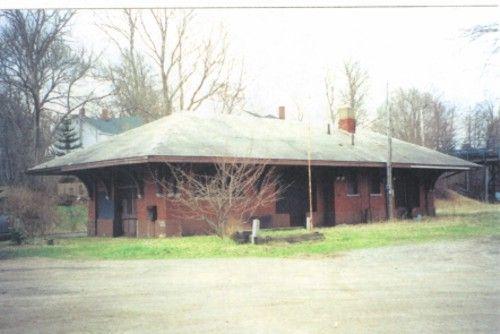
The Musquodoboit Harbour Railway Museum is a one storey wood frame construction structure located in the centre of Musquodoboit Harbour, Nova Scotia. It was built in 1918 during a period in Nova Scotia's history when rail was the popular mode of transportation. The heritage designation applies only to the railway station building and the land it occupies. It does not include any of the old rail lines.
Heritage Value
Musquodoboit Harbour Railway Museum is valued for its association with rail transportation in Nova Scotia. The construction of railway lines in Nova Scotia was slow to progress until the fall of 1911 when the Dominion Government purchased railway plans and began constructing lines using recycled materials. The line to Musquodoboit Harbour was officially opened in 1916 and became part of the Canadian National Railway.
The railway line to Musquodoboit Harbour ran from Windsor Junction, through Dartmouth, and then followed the shoreline, skirting beaches and fishing communities before turning inland, and eventually reaching Musquodoboit Harbour. From there, it followed the river into the rolling farmlands of the Musquodoboit Valley. Connecting the line to Musquodoboit Harbour was vital to the transportation of raw and manufactured materials from the ports in the Halifax Harbour and the Eastern Shore of Nova Scotia. Prior to the railway line, goods and travel was only available by boat or over very rough roads. The railway station at Musquodoboit Harbour was the first to operate a booking station with a railway agent rather than a caretaker. Today, the railway station is a museum that offers a glimpse into the history of Nova Scotia's railway system including memorabilia, photographs, maps, artefacts, posters, tickets, and a small library.
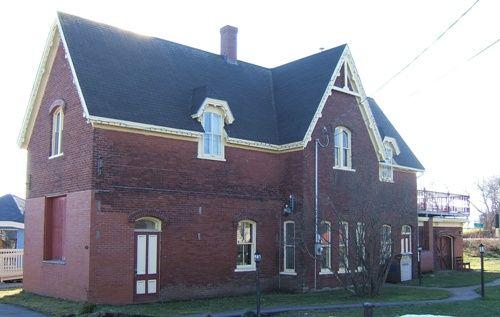
Architecturally, Musquodoboit Harbour Railway Museum is an excellent example of twentieth century railway station design. Railway stations were constructed for the convenience of the passengers and featured nicely furnished waiting rooms, freight sheds, ramps, platforms and living quarters for the railway agents. At the turn of the twentieth century, architectural styles of railway stations began to change from the large vertical brick buildings with tall gables and pitched roofs to a low horizontal wood frame structures. Those built between the late 1800s and early 1900s were long low buildings with broad flared hipped roofs under-pinned with large brackets. Other features of this style include the string course that wraps around the building emphasizing its horizontal form. The Musquodoboit Harbour Railway Museum is an excellent example of these architectural design elements.
Source: Heritage Property File: 7895 Highway 7, Musquodoboit Harbour Railway Museum.
Character-Defining Elements
The character-defining elements of the Musquodoboit Harbour Railway Museum relate to its original use and design as a Canadian National Railway station and include:
- long low horizontal form;
- wood frame construction;
- flared low pitched hipped roof;
- large overhang and surrounding wooden platform;
- corner pilasters;
- large brackets;
- trim board string course;
- varying roof lines;
- cross gable;
- bay door with transom for transporting luggage;
- shingle siding;
- vertical sliding doors;
- location near original rail lines.
Gallery
3 imagesLocation
Loading map...
Similar Places
Heritage sites with similar characteristics