Mah Society Building
Also known as: Mah Society, Mah Society Building
Description
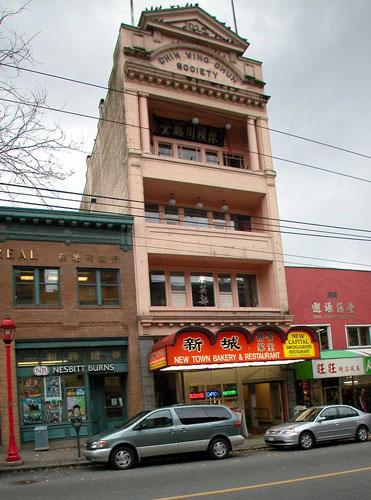
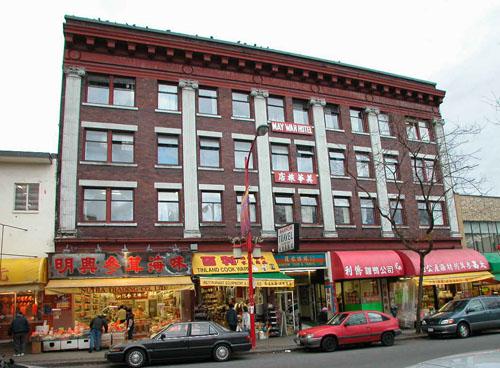
The Mah Society Building at 137 East Pender Street in Vancouver's Chinatown is a substantial five-storey brick building with a store at street level, a three-storey rooming house above, and a tong meeting hall on the top storey.
Heritage Value
The heritage value of the Mah Society Building lies in the way its original construction and subsequent alteration reflect key periods in the establishment of the Chinese-Canadian community in Vancouver.
The construction in 1913 of the original building to the designs of Henry Barton Watson, which housed the Kwong Fong grocery at street level with a rooming house - the Minglee Rooms - above, speaks to the importance of this part of East Pender Street as the Chinese-Canadian retail hub and to the continuing need for rooms for Chinese immigrants. Watson's design was of particular note for being the earliest identified example of the use of Chinese architectural motifs (now sadly lost) in the form a pagoda-roofed cornice, and Chinese temple-shaped finials.
The addition of the top storey in 1921, by architect E.J. Boughen, for meeting rooms for the Mah Gim Do Hung Society (later the Mah Society of North America) is representative of the trend in early twentieth-century Chinatown for building tong meeting rooms atop existing buildings, thereby imbuing them with status through height. The continuing use of the space by the Mah Society consolidates the building's value.
The integration of function of tong meeting space and a rooming house within the building is of value for illustrating the role that surname associations had in welcoming and supporting new immigrants, in this case with the surname Mah, to Vancouver.
Source: City of Vancouver Heritage Conservation Program
Character-Defining Elements
The character-defining elements of the Mah Society Building include:
- Mid-block location on Pender Street, in the heart of Vancouver's Chinatown
- Commanding height over adjacent buildings
- Imposing street frontage achieved by the articulation of brick surfaces and window openings.
- Elements signalling pride, for example, the flagstaff, and the tong name signage in both Chinese and Roman characters
- Decorative architectural elements, including sheet metal pilaster capitals, hood mould over arch, transom panels below windows, and string course on dentils over awning box.
Gallery
1 imageLocation
Loading map...
Similar Places
Heritage sites with similar characteristics