Lighttower
Description
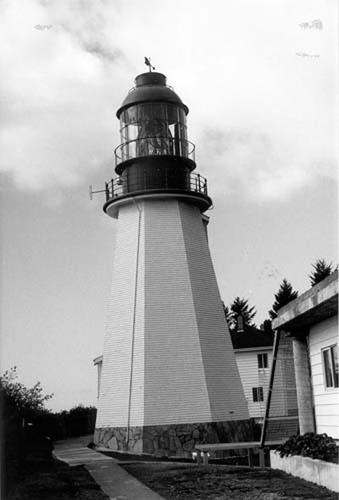
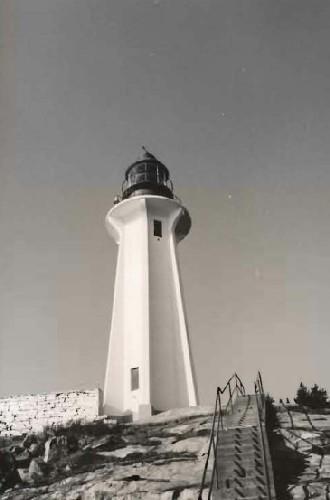
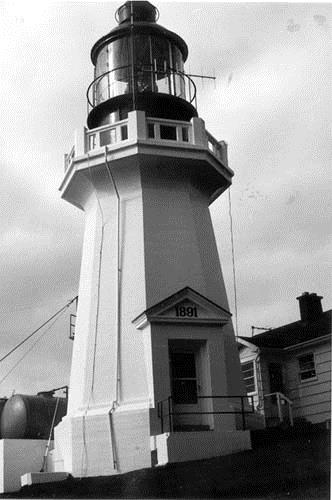
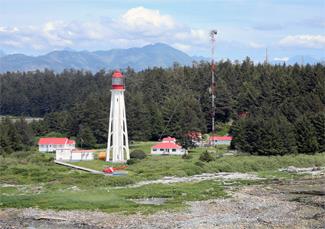
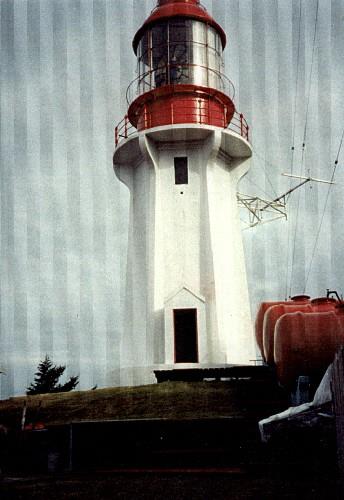
The Lighttower is located on an isolated site high above the Pacific Ocean at the end of Hesquiat Peninsula and along the treacherous western coastline of Vancouver Island. It is a unique one-hundred-foot (30.5 metres) high, white octagonal tower of reinforced concrete comprised of a central column surrounded by immense flying buttresses and crowned with a red lantern. It has an elegantly tapered profile and strong vertical emphasis created by the buttresses and the interplay of light and shadow produced by the curving buttress attachments. The tall narrow window openings, placed in accordance with the interior spiral staircase, emphasize the verticality of the tower. The designation is confined to the footprint of the building.
Heritage Value
The Lighttower is a Classified Federal Heritage Building because of its historical associations and its architectural and environmental values.
Historical Value
The Lighttower is a very good example of the expansion of the navigation system along the British Columbia coast and within Canada for the provision of coastal navigational aid. It is among the early reinforced-concrete buildings in Canada, and is considered to be the supreme example of Colonel William Anderson’s, Chief Engineer, Department of Marine and Fisheries, experimental lighttower design employing flying buttresses. This groundbreaking application of reinforced concrete construction to tall structures gained Colonel Anderson international attention in the world forefront of reinforced engineering for the first decade of the 20th Century. The Lighttower is also associated with the acceptance of Prime Minister Mackenzie King’s Mobilization Act, which instituted conscription during the Second World War, after the Light Tower was reputedly shelled by a Japanese submarine while a crucial debate on conscription was occurring in Parliament.
Architectural Value
The Lighttower is an excellent example of innovative design, construction and application of materials, combining experimental engineering with pleasing aesthetic expression. No decorative elaboration detracts from the clarity of its silhouette. The Lighttower is characterized by its tall, tapered profile and a strong vertical emphasis.
Environmental Value
The Lighttower reinforces the maritime coastal setting of Estevan Point and its associated seascape through its isolated nature in its rugged setting. Dominating its Cliffside site, the Lighttower is a west coast landmark. As the first sentinel seen by marines on the approach to Canada’s coastline, it was designed to function as a landfall light on its region of the Pacific Coast and is well known to deep sea and coastal traffic as a manned lighttower.
Sources: Martha Phemister, Estevan Point Lightstation, Estevan Point, Vancouver Island, British Columbia, Federal Heritage Buildings Review Office Building Report 90-64; Light Tower , Estevan Point, Vancouver Island, British Columbia. Heritage Character Statement 90-64.
Character-Defining Elements
The character-defining elements of the Lighttower should be respected.
Its role as an illustration of the expansion of the Canadian navigation system and the provision of aids to navigation.
Its excellent innovative design, construction and application of materials as manifested in:
- its tall, white octagonal structure;
- its central column;
- its tapered profile created by its flying buttresses and curving buttress attachments;
- its application of reinforced concrete;
- its tall narrow window openings placed in accordance with the interior spiral steel staircase;
- the lantern.
The manner in which the Lighttower reinforces the maritime coastal setting of Estevan Point and its associated seascape as a west coast landmark through its isolated nature in its rugged setting.
Gallery
1 imageLocation
Loading map...
Similar Places
Heritage sites with similar characteristics