Light Tower
Description
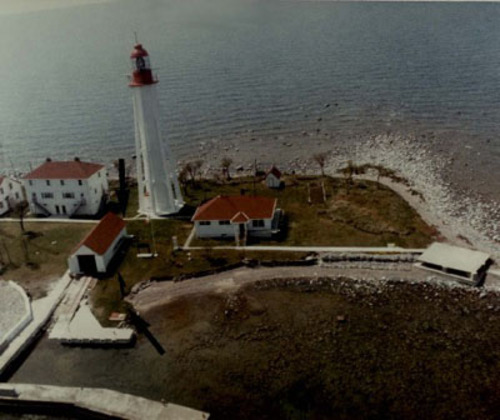
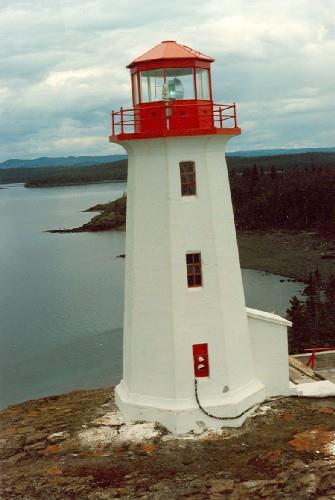
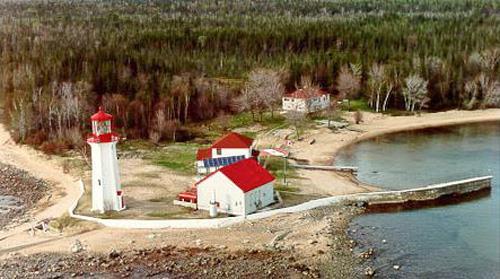
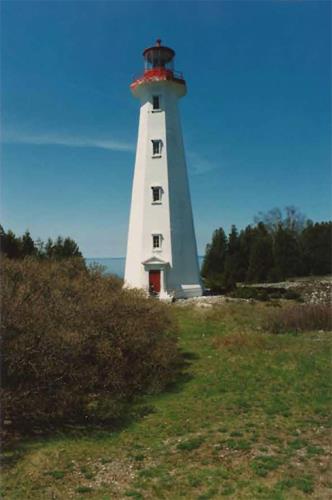
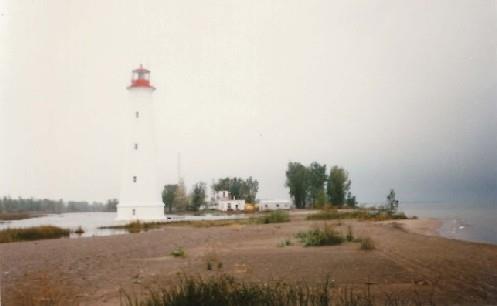
Located on the banks of the Michipicoten Island, the Light Tower is part of a group of buildings that make up a lightstation on Lake Superior. The elegant tapered profile of the concrete tower is emphasized by six flying buttresses, supported by double arches, which surround its central column. Crowning the tall tower is a lantern that sits on a circular concrete platform. The designation is confined to the footprint of the building.
Heritage Value
The Light Tower was designated Classified Federal Heritage Building for its architectural historical and environmental importance. It is an advanced example of the reinforced-concrete, flying-buttress towers developed early in the twentieth century in locations which required strong wind resistance. Its form is an adaptation of a prototype built in Belle Isle, Newfoundland in 1908, and the resulting tapered elegance and height of the light tower distinguish it from its predecessors.
The construction of the Light Tower is associated with efforts to upgrade the quality of lighthouse construction in the early years of the twentieth century, following a long period of restrained government spending.
The tower also enjoys significance for the relatively unchanged nature of the site on which it stands, and for its prominent role in establishing the character of the lightstation.
Sources: Martha Phemister, Lighttower, Michipicoten Island, Ontario, Federal Heritage Buildings Review Office Building Report 88-145; Lighttower, Michipicoten Island, Ontario, Heritage Character Statement, 88-145.
Character-Defining Elements
The following character-defining elements of the Light Tower should be respected.
Key elements that define the heritage value of the Light Tower include:
- the tower's six flying buttresses (each supported by double arches) flanking a tapered tower of particular elegance;
- the use of reinforced concrete in the construction of buttresses, permitting a structural response to the increased weight of the improved lanterns and lighting apparatus of the period, and to the horizontally applied wind loads;
- its location as part of a grouping of buildings added later in time, which provide a good example of adaptation to changing circumstances.
Gallery
1 imageLocation
Loading map...
Similar Places
Heritage sites with similar characteristics