National Historic Site of Canada
Lévis Forts National Historic Site of Canada
Lévis, Quebec
Also known as Lévis Forts, Forts de Lévis
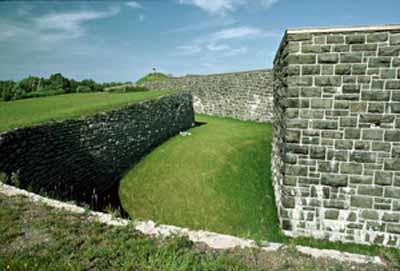
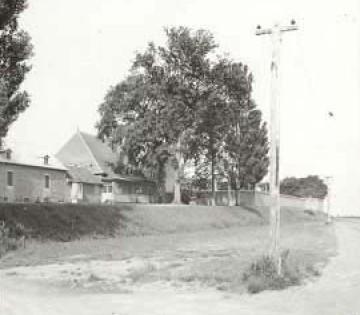
General view of the ditch, principal defensive obstacle which circled the fort, 1984.
Photo: P. St. Jacques, Parks Canada Agency / Agence Parcs Canada, 1984.
- Built
- 1865–1872
- Recognized
- 1920
- By
- Government of Canada
The register’s text, word for word
Description
Lévis Forts National Historic Site of Canada consists of the above and below-ground remains of three 19th-century stone defensive works located on a height of land on the south bank of the St. Lawrence River at Lévis, Québec. The three forts, arranged in a linear pattern, are each approximately 1800 metres apart. The site includes the extant fortification of Fort No. 1, the archaeological remains of Forts No. 2 and 3 as well as evidence of roads leading between the forts, and camps used by construction teams. Official recognition refers to an arced strip of land about 300 metres in width and 4.8 kilometres in length.
Heritage value
Lévis Forts was designated a national historic site of Canada in 1920 because:
- they are an integral part of the fortifications of Québec;
- they were of strategic importance in the defensive system of Québec.
The decision to build three forts at Lévis to complete Québec’s system of defence was made by the British during the American Civil War under the threat of an invasion by Union soldiers. The British sent William Drummond Jervois to Québec to design improvements to the defensive fortifications at Lévis in order to protect the soldiers stationed there. The construction of the three forts began in 1865, under the direction of the Royal Engineers, and Fort No. 1 was completed in 1872. In addition to the forts, work included the building of a construction camp of some 20 buildings, a dock and a communications network along the St. Lawrence River. Innovative methods were tried and proven in the design, surveying and construction of the Lévis Forts. Steam-powered equipment was used to make concrete faced with stone and the escarpment of Fort No. 1 was constructed of new types of concrete poured in stone frames. No garrisons ever occupied the forts however, because the signing of the Washington Treaty in 1871 eliminated the fear of further clashes between the British and the Americans.
SourceHistoric Sites and Monuments Board of Canada, Minutes, May 1921; December 2000; Commemorative Integrity Statement, 2004.
Character‑defining elements
The key elements relating to the heritage value of the site include:
- Fort No. 1 in its surviving original design, form and materials with its irregular-pentagonal form with perpendicular caponiers, 13 brick casemates, earth ramparts, parade ground, 5-metre-deep dry moat, escarpment and counter-escarpment, four caponiers pierced by embrasures and firing slits, four magazines, including a primary magazine and three secondary magazines located in the rear caponiers, rolling bridge set on rails, watchman’s road, and glacis;
- its siting overlooking the port of Québec, the St. Lawrence and surrounding countryside;
- the high quality of the fort’s construction, materials and craftsmanship;
- the functional design of watchman’s road, dry moat and glacis;
- the relationship between the site and the various components of Fortifications of Québec National Historic Site of Canada;
- viewscapes between the site and the various components of Fortifications of Québec National Historic Site of Canada.
The integrity of any surviving or as yet unidentified archaeological remains which may be found within the site in their original placement and extent, including:
- Lévis Forts no. 2 and 3;
- the powder magazine at Fort No. 3;
- the camp of the Royal Engineers;
- the soldiers’ camp;
- the quay;
- the military road connecting the forts to one another and to the quay and Fort No. 1;
- military survey markers;
- viewscapes from Route 132 towards the remains of Fort No. 3.
End of the register’s text
Location
41 du Gouvernement Road, Lévis, Quebec, G1K, Canada
46.81453° N, 71.15807° W
Get directions (opens in a new tab)Being on the register doesn’t make a place open to visitors. Many are private homes or businesses; please view them from the street.

Loading map…
Nearby
All 19 places in Lévis
Similar places
Places whose register descriptions are closest to this one.
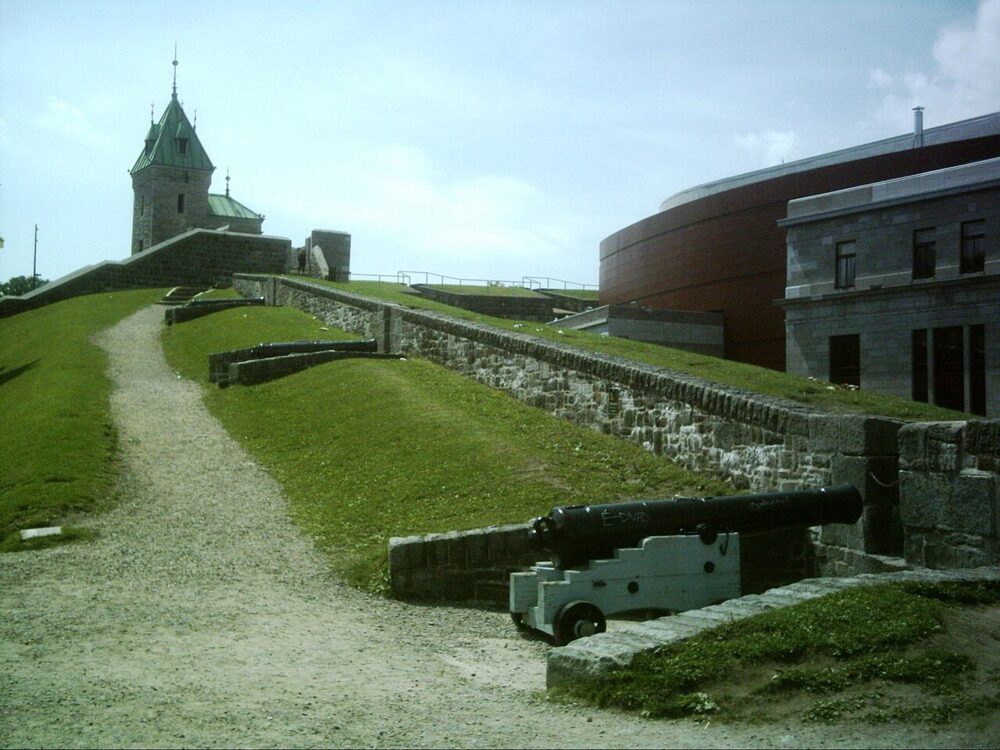 EnhancedFortifications of Québec National Historic Site of CanadaQuébec, Quebec
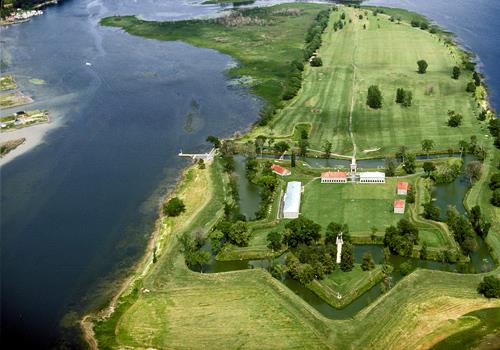 Fort Lennox National Historic Site of CanadaSaint-Paul-de-lÎle-aux-Noix, Quebec
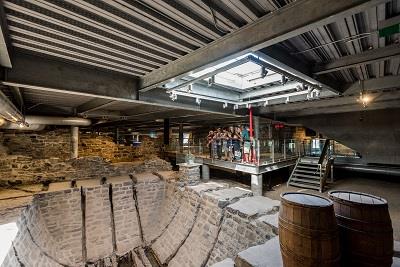 Saint-Louis Forts and Châteaux National Historic Site of CanadaQuébec, Quebec
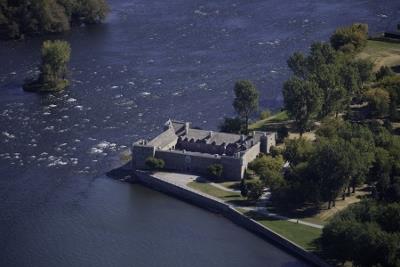 Fort Chambly National Historic Site of CanadaChambly, Quebec
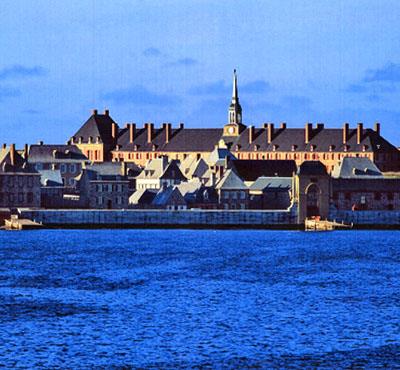 Fortress of Louisbourg National Historic Site of CanadaLouisbourg, Nova Scotia
 Fort St-Louis National Historic Site of CanadaKahnawake, Quebec
From the Canadian Register of Historic Places, as last updated on December 12, 2025. The register’s text is shown word for word.