Victoria Gas Company Works
Description
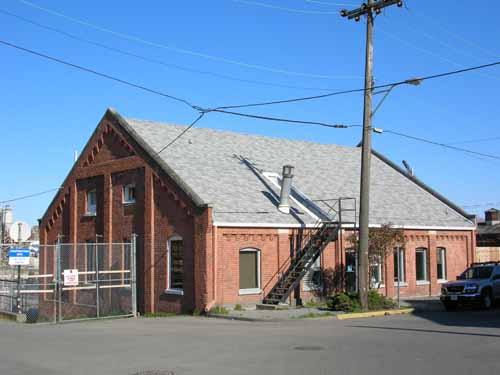
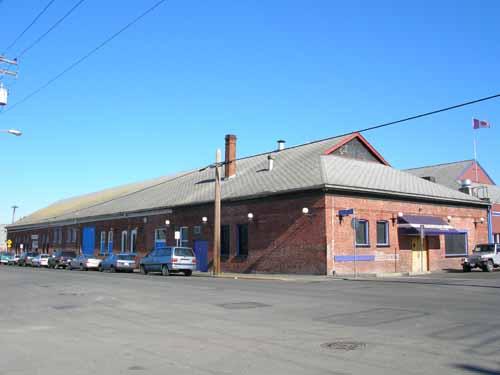
The Victoria Gas Company Works is a brick industrial building located close to the south bank of Rock Bay in the Upper Harbour.
Valeur patrimoniale
The Victoria Gas Company Works building is significant because of its association with the industrial activities that fueled the City of Victoria's growth from a boom town to a permanent city; it provided the coal gas for the City's heat and light from the gold-rush era until the early twentieth century. It is also significant as an example of purpose-built industrial architecture and is known as British Columbia's oldest brick industrial building. Built in 1860, this utilitarian structure contained one of the oldest coal gasification plants in North America, and exists today as an indication of one company's belief in progress through their use of state-of-the-art technology. This building is also notable as an indication of one of the City's first commercial investments; the Victoria Gas Company was the first incorporated company in the Crown Colony of Vancouver Island.
The location of this building is significant because it set the scene for industrial use on the shoreline of Victoria's Upper Harbour. The activities that took place in this building, from manufacturing to distribution, are illustrated by the site's patina of industrial use. The evolution of the coal gasification plant under management of the B.C. Electric Railway Company is indicated by the multiple additions and influence on the development of the Rock Bay complex.
Source: City of Victoria Planning and Development Department
Éléments caractéristiques
The character-defining elements of the Victoria Gas Company Works include:
-the relationship between the building and both the shoreline and grouping of historic industrial architecture in the Rock Bay complex;
-the 360 degree view around the Rock Bay complex and proximity to Pembroke Street;
-the un-repaired ground floor surfaces, both inside and outside of the building, capable of carrying very heavy loads;
-early masonry construction and Romanesque features such as corbelling and segmental arched windows;
-contrast of new and old surfaces, east, west and south facing additions adding to the sense of layered industrial use;
-exterior elements that show the evolution of the building as indicated by such elements as the piping, wiring conduits, cables, skylights, and small-pane glazing;
-the retained interior elements, such as windows, high ceilings, and two-story unobstructed spaces.
Location
Loading map...
Lieux similaires
Sites patrimoniaux avec des caractéristiques semblables