Bien inscrit au répertoire municipal
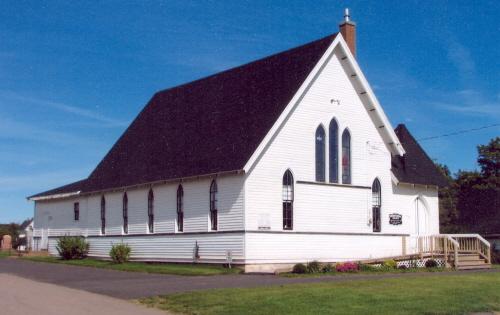
Union Presbyterian Church
Albert Bridge, Nouvelle Ecosse
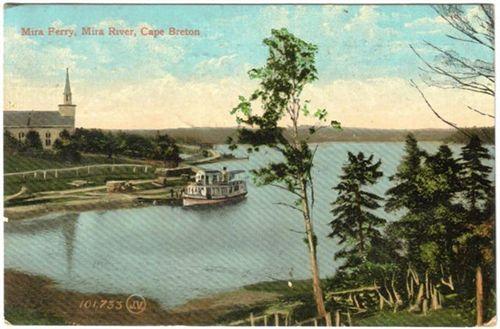
Photo: Courtesy of the Nova Scotia Museum, 2010
- Construction
- 1850–1857
- Reconnaissance
- 2009
- Par
- Administrations locales (N.-É.)
Le texte du répertoire, mot pour mot
Description
Union Presbyterian Church is prominently located in the village of Albert Bridge, within the Cape Breton Regional Municipality, Nova Scotia. It is a large, wood frame church with shingle cladding with a square frontispiece and steeple. Municipal designation covers the building and the surrounding property.
Valeur patrimoniale
The Union Presbyterian Church is valued as a landmark in the Mira River area, as well as for its architectural features. Built in 1857, it is also one of the oldest churches in the Cape Breton Regional Municipality.
In 1849, plans were made to build a large church in a central location to replace three smaller churches that were serving nearly half of the county of Cape Breton. The community of Albert Bridge was a logical choice because of its central location on the Mira River. In December of 1850, Rev. Hugh MacLeod purchased land on behalf of the congregation on the south side of the Mira. Construction then began on a hill overlooking the ferry crossing. The church was built with local pine and under the direction of the Cameron & MacDonald architecture firm of Antigonish. After almost seven years in the planning and construction phases, the church was officially opened on August 5th, 1857. Although its official name is the Union Presbyterian Church, it quickly became known locally as “the Ferry Church” as well.
Original services for this church were offered in Gaelic which, although it is not now thought of as common to this part of Cape Breton Island, was prevalent in the Mira and Catalone area. Today this tradition is continued through the church's use as one of the venues for the annual Celtic Colours Festival, including Gaelic concerts.
Each able-bodied man in the congregation was required to devote three weeks of labour to the building’s construction. Imposing in size and design, the church incorporates both Classical and Gothic Revival elements in its exterior and interior design, which remain largely intact. The Classical Revival influence is evident in the church’s symmetry, its pedimented square frontispiece, the wide mounded frieze, moderate roofline and in the prominent pilasters that accent the outer edges of the building. The Gothic Revival elements are immediately noticeable in the window style and arrangement as well as the spire.
The interior still contains a high wall pulpit and sounding board, surrounding galleries, a presenter’s box and pews with pew-end doors. The bell in the tower was specially cast for this church by Meneely’s foundry in New York State and shipped to Cape Breton. It bears an inscription stating: “Union Presbyterian Church, Mira, C.B., Hugh MacLeod D.D. Minister- Aug. 5th, 1857”. Echoing the many original features of this church, the bell is still in use to this day.
SourceCape Breton Regional Municipality; Municipal Heritage Files; Union Presbyterian Church.
Éléments caractéristiques
Character-defining Classical Revival elements of the Union Presbyterian Church include:
- symmetry and balance in shape, form and placement of windows;
- medium-pitch roof with return eaves;
- square, pedimented frontispiece and steeple;
- three-bay façade with central, double-door entry in front-facing gable end;
- wide, moulded frieze;
- prominent pilasters as cornerboards.
Character-defining Gothic Revival elements of the Union Presbyterian Church include:
- tall spire rising from an octagonal belfry;
- arched side windows edged in tracery;
- arch windows in steeple top;
- decorative Gothic half-window in frontispiece.
Fin du texte du répertoire
Emplacement
46.01958° N, 60.05838° W
Itinéraire (s’ouvre dans un nouvel onglet)L’inscription au répertoire ne rend pas un lieu accessible au public. Beaucoup sont des résidences ou des commerces privés; admirez-les depuis la rue.

Chargement de la carte…
À proximité
 Sydney and Louisburg Railway Station13 km · Louisbourg · 1895
 Louisbourg Navy League Building13 km · Louisbourg · 1941
 Lieu historique national du Canada de la Batterie-Royale14 km · Louisbourg · 1724
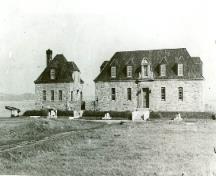 Musée et la maison du gardien14 km · Louisbourg · 1935
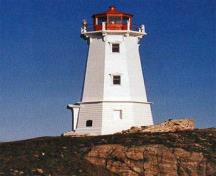 Phare15 km · Louisbourg · 1922
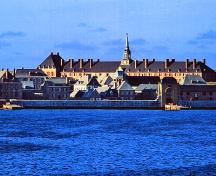 Lieu historique national du Canada de la Forteresse-de-Louisbourg15 km · Louisbourg · 1713
Lieux semblables
Les lieux dont la description du répertoire se rapproche le plus de celle-ci.
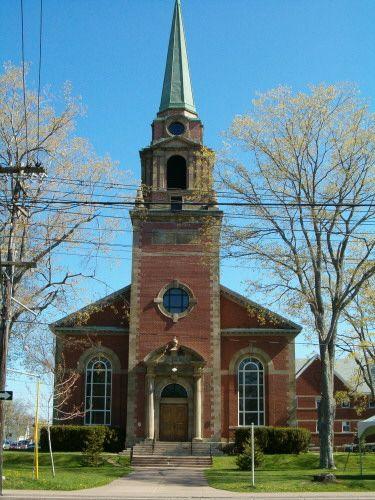 First United ChurchTruro, Nouvelle Ecosse
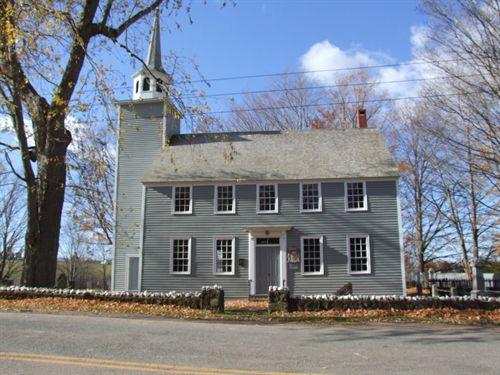 Covenanter ChurchGrand Pré, Nouvelle Ecosse
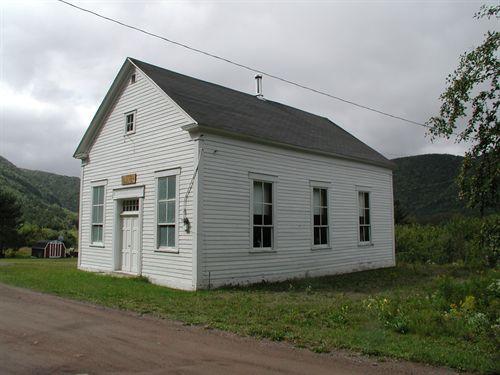 Big Intervale United ChurchMargaree Valley, Nouvelle Ecosse
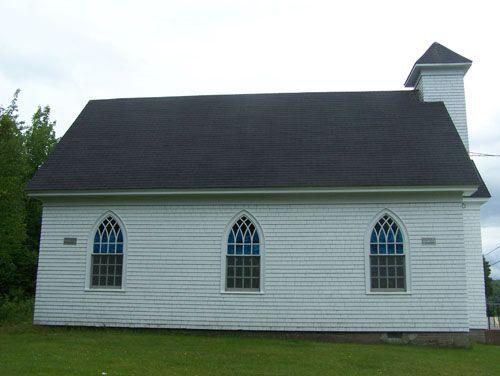 Stormont Union ChurchStormont, Nouvelle Ecosse
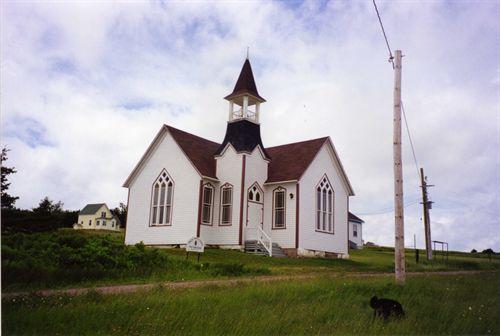 Jubilee United ChurchPort Hood Island, Nouvelle Ecosse
 Hunter River Presbyterian ChurchHunter River, Ile Du Prince Edouard
Tiré du Répertoire canadien des lieux patrimoniaux, dans sa dernière mise à jour du 12 décembre 2025. Le texte du répertoire est reproduit mot pour mot.