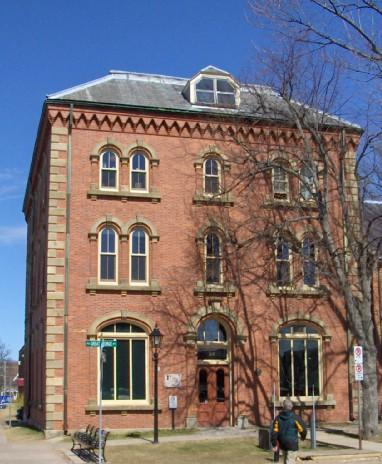
Photo: City of Charlottetown, Natalie Munn, 2005
- Construction
- 1872
- Reconnaissance
- 1979
- Par
- Ville de Charlottetown
Le texte du répertoire, mot pour mot
Description
The Union Bank Building is an Italianate influenced, three storey, brick public building located on the corner of Richmond Street and Great George Street, adjacent to Province House. The building was constructed to house the Union Bank of Prince Edward Island. It currently houses Government offices. The designation encompasses the building’s exterior and parcel; it does not include the building’s interior.
Valeur patrimoniale
The historic value of the Union Bank Building lies in its association with the Union Bank of Prince Edward Island, one of Prince Edward Island’s first banks, its Italianate architecture and its importance to the Great George and Richmond Street streetscapes.
The Island’s second British Governor, Lieutenant Governor Edmund Fanning (1737-1815), originally owned the land on which the Union Bank was built. Local businessman, Member of the Executive Council and Colonial Secretary of Prince Edward Island, Henry Haszard (1813-1872) purchased the land in 1855 and leased the small, wood framed flour and meal market building that was on the site to the City of Charlottetown. This operation ceased and eventually, in 1872, construction began on the Union Bank Building.
Established in 1863, the Union Bank of Prince Edward Island was one of the earliest banks to operate in Prince Edward Island. At the height of its success, the bank directors decided to build a structure more in keeping with its prominence in the community. To further underline the importance of the bank, they chose the site close to the seat of government, Province House, and asked prominent local architect, Thomas Alley to design the impressive structure.
The bank was built in the Italianate style so popular with architects in the late 19th century. The Italianate style was as fashionable in Charlottetown as it was throughout North America, with many public and commercial buildings showing its influence. The brick and stone buildings were modeled on the arcaded facades of the Italian Renaissance style found in Northern Italy. The Union Bank Building represents a well preserved example of this style in the City.
Unfortunately, the bank ran into financial difficulty, resulting from involvement in the building of the Prince Edward Island Railway. Consequently, the Union Bank of Prince Edward Island amalgamated with the Bank of Nova Scotia in 1883. The building was operated as the Bank of Nova Scotia until 1921.
The building not only housed the bank but also had office space. Interestingly, Robert Angus established the first telephone exchange in the province from the law offices of Palmer and MacLeod in 1884. A 1932 newspaper article indicated that the former Bank of Nova Scotia Building, which was now called the Rogers building, was sold at auction to the Royal Bank of Canada for $10 600. The Rogers that was being referred to was W.K. Rogers, an insurance agent whose office was in the building.
The Provincial Government bought the building in 1939 and has used it for various government departments. The building was renamed the J. Angus MacLean Building in 2002 after the former Premier and houses government offices to this day. The beautiful Italianate influenced building has been extraordinarily well preserved and reflects an era of prosperity and self-confidence in Charlottetown. Located on the corner of one of the most important streets in Charlottetown, Great George Street, the building is vital to the streetscape.
Sources: Heritage Office, City of Charlottetown Planning Department, PO Box 98, Charlottetown, PE C1A 7K2
#1543
Éléments caractéristiques
The following Italianate influenced character-defining elements illustrate the heritage value of the Union Bank Building:
- The overall massing of the building
- The Island and imported brick construction
- The style, size and placement of the arched windows with their freestone labels and sills
- The style, size and placement of the doors with transom lights and lunettes, particularly the arched double doors of the western facade
- The dormers, which were added to the roof at a later date
- The stone quoins on the corners of the building
- The corbelled brick cornice
Other character-defining elements of the Union Bank Building include:
- The Mansard roof which originally had iron cresting detail
- The location of the building on the corner of Great George Street and Richmond Street
Fin du texte du répertoire
Emplacement
46.23478° N, 63.12519° W
Itinéraire (s’ouvre dans un nouvel onglet)L’inscription au répertoire ne rend pas un lieu accessible au public. Beaucoup sont des résidences ou des commerces privés; admirez-les depuis la rue.

Chargement de la carte…
À proximité
Les 369 lieux de Charlottetown J. Angus MacLean Buildingà moins de 100 m · 1872
 Province Houseà moins de 100 m · 1843
 165 Richmond Street / Province Houseà moins de 100 m · 1843
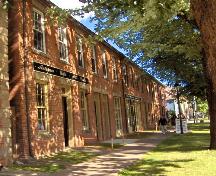 76-88 Great George Street / Heartz-O'Halloran Rowà moins de 100 m · 1859
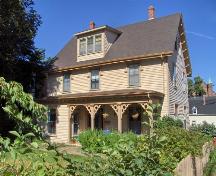 167-169 Sydney Streetà moins de 100 m · 1868
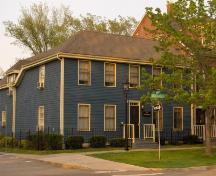 Wellington House, Inns on Great Georgeà moins de 100 m · 1811
Lieux semblables
Les lieux dont la description du répertoire se rapproche le plus de celle-ci.
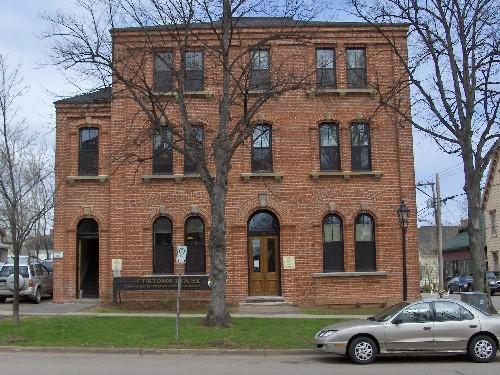 40 Great George StreetCharlottetown, Ile Du Prince Edouard
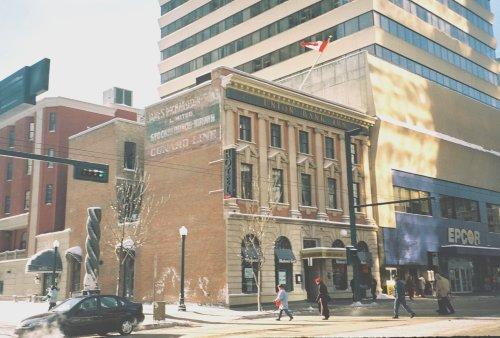 Union Bank BuildingEdmonton, Alberta
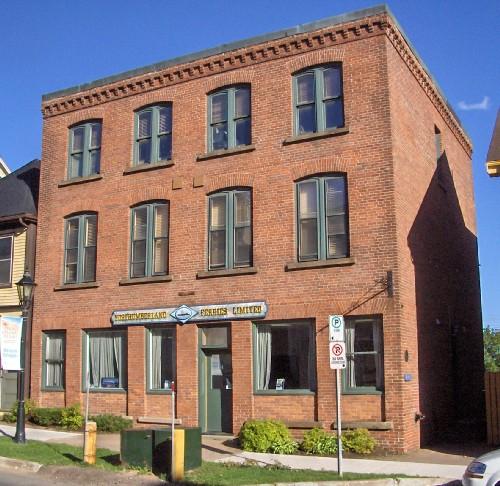 92-94 Water Street / Merchants Bank BuildingCharlottetown, Ile Du Prince Edouard
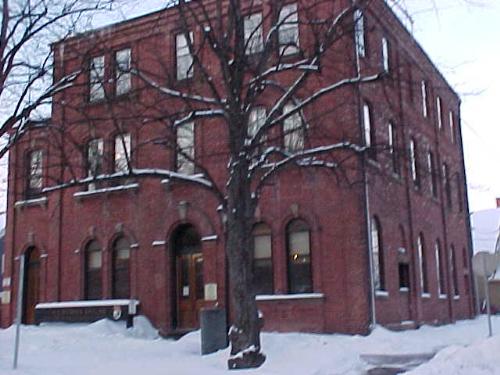 Customs HouseCharlottetown, Ile Du Prince Edouard
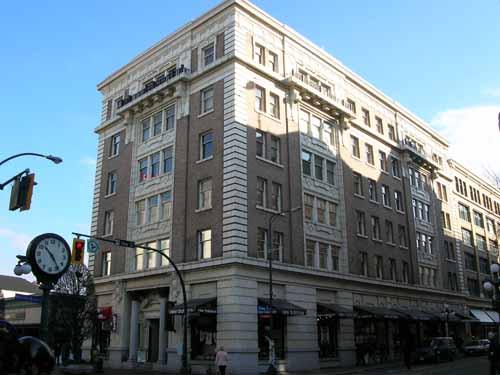 Union BankVictoria, Colombie Britannique
 Farmers' Bank of RusticoAnglo Rustico, Ile Du Prince Edouard
Tiré du Répertoire canadien des lieux patrimoniaux, dans sa dernière mise à jour du 12 décembre 2025. Le texte du répertoire est reproduit mot pour mot.