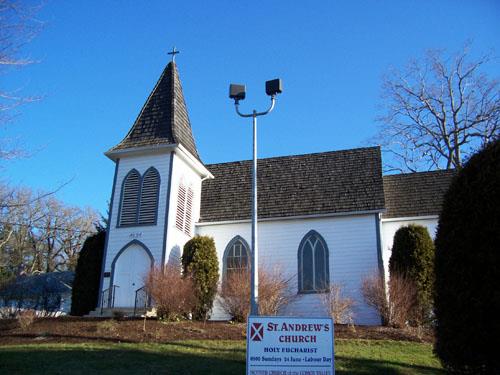
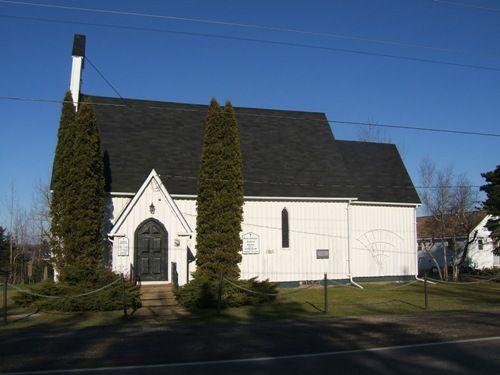
Photo: City of Courtenay, 2009
- Construction
- 1877
- Reconnaissance
- 2009
- Par
- Administrations locales (C.-B.)
Le texte du répertoire, mot pour mot
Description
St. Andrew’s Anglican Church is a modest, one-storey Gothic Revival-inspired church situated on its original lot at the intersection of Dingwall Road and North Island Highway in Courtenay. The site includes landscaping, which features mature trees and shrubbery, and an historic Anglican cemetery at the rear of the church.
Valeur patrimoniale
The significance of St. Andrew's Anglican Church lies in its historic and aesthetic value, particularly for its age, its association with the establishment of the Anglican faith in the Courtenay area, its association with the church’s first minister, and its unique architecture.
Built in 1877, St. Andrew’s Anglican Church is valued as one of the oldest buildings in Courtenay and is a symbol of the establishment of the Anglican faith in the area. The church, situated on its original historic site, was constructed by devout Anglican followers after their previous place of worship, a modest log cabin church shared with Presbyterians from 1864-1874, was deemed by the Anglican congregation as too small for the growing population of pioneers, reflecting the early expansion of the area’s population generally during the 1870s.
St. Andrew’s Anglican Church also has a historic relationship with Reverend Jules Xavier Willemar, (1842-1935) Courtenay’s first resident clergyman, who ultimately had a profound impact on the religious and social development of the Courtenay area by serving as minister for a span of 42 years.
St. Andrew’s Anglican Church is architecturally significant for its blend of Gothic Revival style and local building materials. While the Gothic style, reflected by its stained glass windows, rectangular massing, pointed-arched windows and tower, is typical of many Gothic Revival churches in North America, the church blends them with regional influences, such as the use of locally-milled timber in its construction, and for the pews and pulpit. It is also significant that the church’s stained glass windows, obtained by Willemar from an Anglican church in Alberni and church bell salvaged from a wrecked Australian ship, symbolize the practical nature of Courtenay's earliest Anglican pioneers.
SourceCity of Courtenay Planning Department
Éléments caractéristiques
Key elements which define the heritage character of St. Andrew's Anglican Church include its:
Site and Setting
- the elevated setting of the church, which adds to the structure's prominence
- situation of the church on its original site
- location of original roads adjacent to the church, which highlight the church’s historic use as a community landmark
Architecture
- Gothic Revival elements, including stained glass windows, rectangular massing, church tower and exterior trim
- locally-processed pews, pulpit, and timber framing
- church bell
Landscape
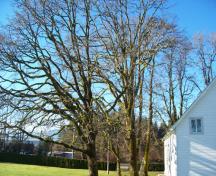
- mature trees and shrubbery
- cemetery
Fin du texte du répertoire
Emplacement
49.70334° N, 124.99038° W
Itinéraire (s’ouvre dans un nouvel onglet)L’inscription au répertoire ne rend pas un lieu accessible au public. Beaucoup sont des résidences ou des commerces privés; admirez-les depuis la rue.

Chargement de la carte…
À proximité
Les 22 lieux de Courtenay



Lieux semblables
Les lieux dont la description du répertoire se rapproche le plus de celle-ci.
 St. Andrew's CathedralVictoria, Colombie Britannique
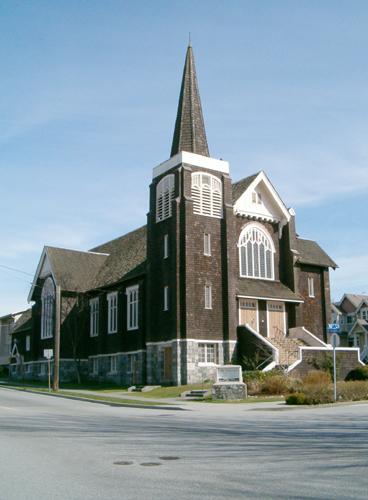 St. Andrew's United ChurchNorth Vancouver, Colombie Britannique
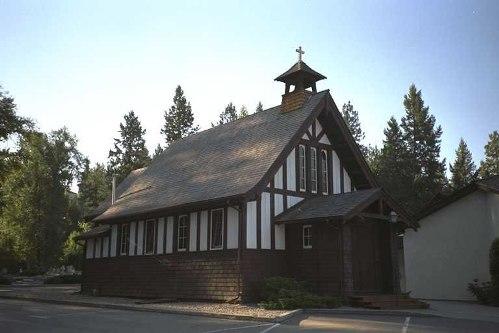 St. Andrew's ChurchKelowna, Colombie Britannique
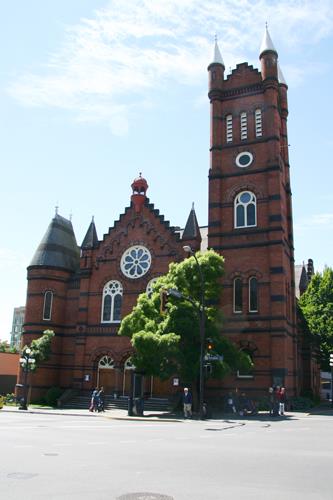 St. Andrew's Presbyterian ChurchVictoria, Colombie Britannique
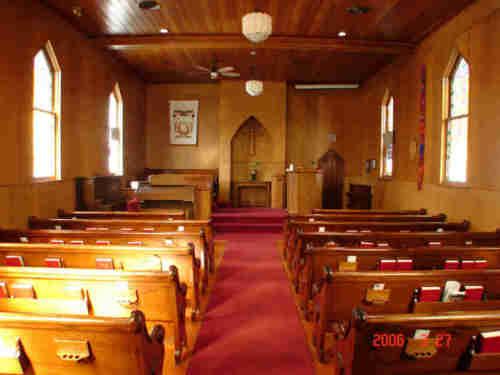 Saint Andrew's United ChurchTownship of Langley, Colombie Britannique
 St. Andrew's Anglican ChurchWallace, Nouvelle Ecosse
Tiré du Répertoire canadien des lieux patrimoniaux, dans sa dernière mise à jour du 12 décembre 2025. Le texte du répertoire est reproduit mot pour mot.