Fort Livingstone Protected Area
Description
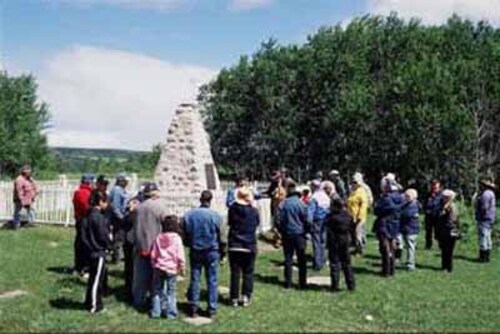
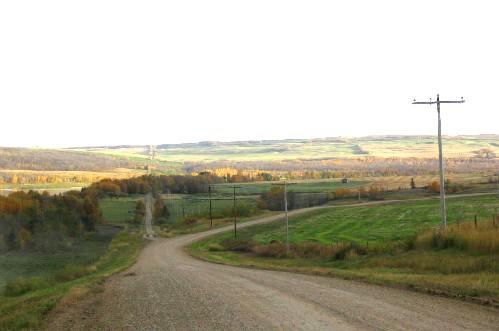
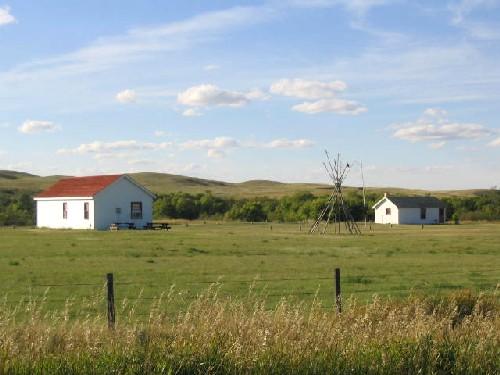
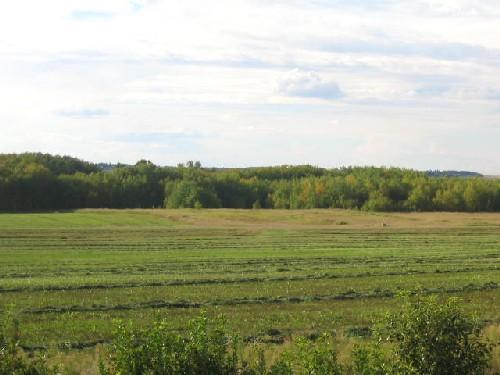
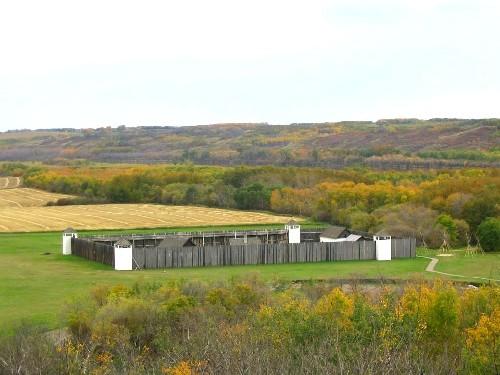
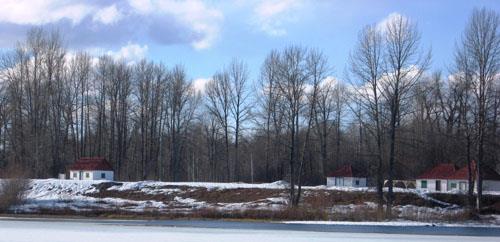
The Fort Livingstone Protected Area consists of 48 ha of woodland and meadows on the crest of the Swan River valley at the confluence of Snake Creek, approximately 6 km north of the Village of Pelly and 25 km west of the Manitoba border. The property is near the Fort Livingstone National Historic Site, which contains archaeological remains of the first western headquarters of the North-West Mounted Police.
Valeur patrimoniale
The heritage value of the Fort Livingstone Protected Area lies in its association with the early history of the North-West Mounted Police and the governance of the Northwest Territories. Located on the route of the Dominion Telegraph and the anticipated transcontinental railroad, Fort Livingstone (also known as the Swan River Barracks) was constructed during the fall and winter of 1874/75. The substantial post served as NWMP headquarters until the autumn of 1876, when concerns for security along the International Boundary prompted a move of the Force’s headquarters to Fort MacLeod in southern Alberta. Fort Livingstone continued as a NWMP post of lesser importance until it was closed in 1882. A fire destroyed the abandoned buildings in 1884.
Fort Livingstone was also the temporary seat of the Territorial government while facilities were being readied at Battleford, the designated capital. In November, 1876, the Northwest Territories’ first resident Lieutenant Governor, the Honourable David Laird, was sworn in at Fort Livingstone. The NWMP Commissioner’s former quarters served as the Lieutenant Governor’s residence and also as chambers for the first session of the Council of the Northwest Territories, which was held on March 8, 1877. Lieutenant Governor Laird left for Battleford in the fall of 1877, with the capital formally transferred in February, 1878.
Source:
Province of Saskatchewan, The Parks Act, May 26, 1986.
Éléments caractéristiques
The heritage value of the Fort Livingstone Protected Area resides in the following character-defining elements:
-elements that speak to the property’s association with the Fort Livingstone NWMP post, including any yet-to-be-identified archaeological remains dating to the NWMP or Territorial Government occupancies; the natural landscape features and vegetation; and the property’s location near the Fort Livingstone National Historic Site.
Lieux similaires
Sites patrimoniaux avec des caractéristiques semblables