Lieu provincial reconnu (Reconnu)
Fanny Bay
Fanny Bay, Colombie Britannique
- Reconnaissance
- 2017
- Par
- Province de la Colombie-Britannique
Le texte du répertoire, mot pour mot
Description
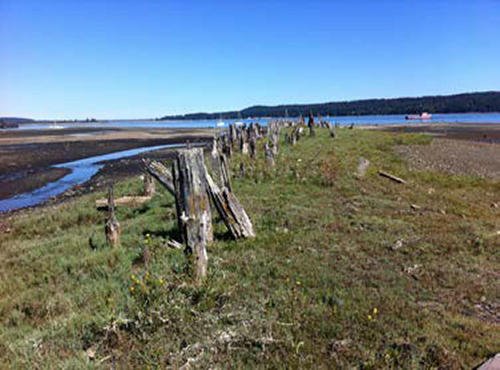
Fanny Bay is a small community on the east coast of Vancouver Island located approximately 80 kilometres north of Nanaimo, B.C., and the former site of the Deep Bay Logging company.
Valeur patrimoniale
Fanny Bay has historic, cultural, social, political and economic value to the Japanese Canadian community in B.C. primarily because it was the location of the successful logging business owned and operated by Eikichi Kagetsu.
Established in 1923, the Deep Bay Logging Company is significant for being a large, economically successful and sophisticated logging operation. With an operation that included over 200 workers and over 7,000 acres of prime timberland, it was one of the first to have constructed and operated a logging railway, with steam-powered shay locomotives (famed in the logging industry for being able to operate on almost any type of track) and flat cars to haul harvested logs to Fanny Bay for shipping overseas and to local markets.
Fanny Bay has historic and cultural value for the development of a company town that included housing for Japanese Canadian workers and their families, a mess hall for single male workers, a meeting and recreation hall, and a Japanese language school and kindergarten with a salaried teacher for the children. The camp also had a communal bathhouse, water system, and lush gardens.
Fanny Bay is important in the development of Japanese Canadian community in B.C. because of the success of Kagetsu, with the cooperation of other Japanese Canadian logging operators, in bringing an action against the 1919 discriminatory revisions to the provincial Forestry Law. These revisions effectively banned Japanese Canadians from owning, operating or labouring in logging, operations in the province. Deemed unconstitutional by both the Supreme Court of Canada and the Privy Council in England, the ruling was a notable victory that allowed other Japanese Canadian logging operations to flourish and for Eikichi Kagetsu to develop his company at Fanny Bay.
Fanny Bay and the Deep Bay Logging Company are important for representing the World War II dispossession and forcible sale of Japanese Canadian property. While poised to supply the demand for lumber brought about by the declaration of war in 1939, Kagetsu's massive holdings were sold to McMillan Bloedel in 1942 and Kagetsu, like all Japanese Canadians on the coast, was removed and incarcerated in an internment camp.
Fanny Bay has cultural and social importance because of its association with Kagetsu who, along with being one the largest single owners of logging operations in the pre-World War II Japanese Canadian community, was a significant figure in the Japanese Canadian community, including developing a Saisei (social welfare) club in 1936, serving as president of the Canadian Japanese Association, being closely involved in the Canadian Hompa Buddhist Church.
SourceProvince of British Columbia, Heritage Branch
Éléments caractéristiques
Not applicable
Fin du texte du répertoire
Emplacement
49.48983° N, 124.81158° W
Itinéraire (s’ouvre dans un nouvel onglet)L’inscription au répertoire ne rend pas un lieu accessible au public. Beaucoup sont des résidences ou des commerces privés; admirez-les depuis la rue.

Chargement de la carte…
À proximité
Lieux semblables
Les lieux dont la description du répertoire se rapproche le plus de celle-ci.
- Fanny ShipwreckOak Bay, Colombie Britannique
 Newcastle Island and Nanaimo ShipyardsNanaimo, Colombie Britannique
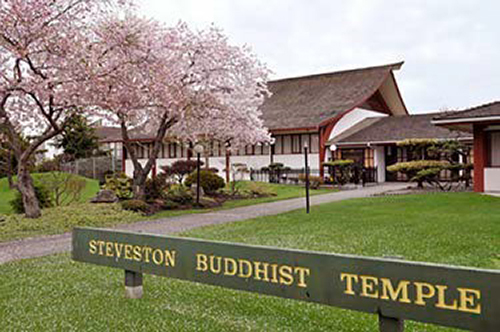 StevestonRichmond, Colombie Britannique
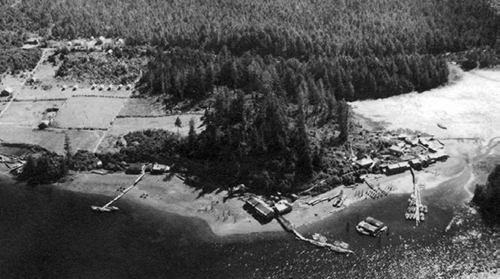 West Coast of Vancouver Island (Tofino and Ucluelet)Ucluelet, Colombie Britannique
 Arrandale, Mill Bay and Nass Harbour CanneriesNass Harbour, Colombie Britannique
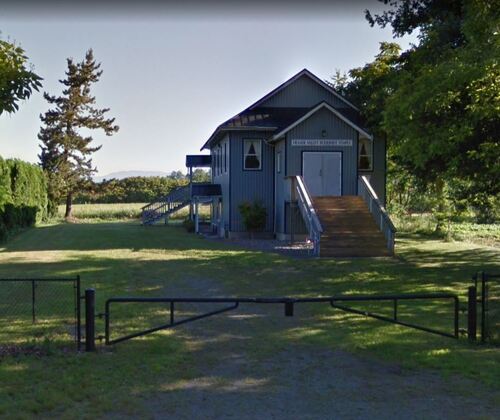 Fraser Valley Buddhist TempleAbbotsford, Colombie Britannique
Tiré du Répertoire canadien des lieux patrimoniaux, dans sa dernière mise à jour du 12 décembre 2025. Le texte du répertoire est reproduit mot pour mot.