Servitude de la Fondation du patrimoine ontarien
Battlefield Monument – Stoney Creek Battlefield Park
Hamilton, Ontario
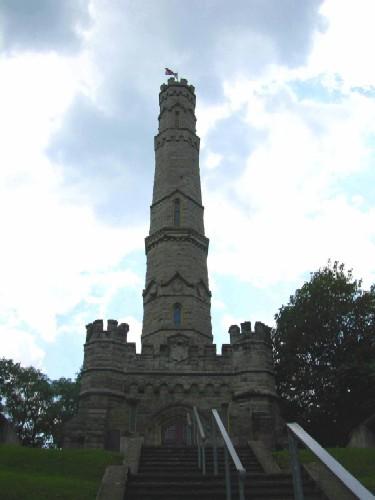
Photo: OHT, 2006
- Construction
- 1910–1913
- Reconnaissance
- 1992
- Par
- Trust du patrimoine ontarien
Le texte du répertoire, mot pour mot
Description
Battlefield Monument, at 77 King Street West, is part of Stoney Creek Battlefield Park. The monument is situated at the south-east corner of Centennial Parkway and King Street West in the City of Hamilton. Battlefield Monument is a 30.5-metre masonry structure which was completed in 1913 in the English Gothic Revival style. Along with the Gage House and the Nash-Jackson House, the Battlefield Monument is a focal point on the property.
The exterior of the structure and the scenic character of the 15-hectare property are protected by an Ontario Heritage Trust conservation easement. The property is owned by the City of Hamilton and was designated by the former City of Stoney Creek under Part IV of the Ontario Heritage Act (By-law No. 3419-91). Stoney Creek Battlefield Park was designated a National Historic Site in 1960.
Valeur patrimoniale
Located at the south-east corner of Centennial Parkway and King Street West the 15-hectare property retains a pastoral character of fields and woods, and reflects the partial implementation of a 1920s plan by the prominent landscape firm of Dunington-Grubb. The hill to the south of the Gage House provides a natural podium for the monument and its observation decks to overlook the entire battlefield.
Battlefield Monument at Stoney Creek Battlefield Park is significant for its association with the Battle of Stoney Creek, one of the key battles of the War of 1812. The Battle of Stoney Creek, which occurred in the early morning hours of June 6, 1813, was the turning point in the war between the British and Americans, which ultimately led to British victory. In April 1813, American forces had sacked York, the capital of Upper Canada and captured Fort George, leaving much of the Niagara peninsula vulnerable to American control. On June 5, 1813, while in retreat at Burlington Heights, British Lieutenant-Colonel John Harvey learned that American troops had camped at the Gage farm on Stoney Creek and immediately mounted an attack. Despite being greatly outnumbered, the 700 British soldiers of the 8th and 49th Regiments attacked nearly 3000 American soldiers, capturing American Brigadier-Generals Chandler and Winder, and initiating a continuous period of American retreat. Strong British Imperial sentiment in Canada in the 1880s, and the 1884 centennial of the Loyalists arrival to Canada, led to an interest in commemorating the nation's history, and played a role in the early preservation movement in Canada. In 1888, the Wentworth Historical Society was formed, intent on commemorating the battle. An outgrowth of the group, known as the Women's Wentworth Historical Society, opened the Battlefield House Museum (Gage House) in 1899 and in 1900, commissioned plans for the design of an impressive monument. The Women's Wentworth Historical Society, which was largely responsible for the monument's completion in 1913, became known as one of the first all-women's cultural societies in Canada.
Battlefield Monument is significant as the second largest monument built in Canada to commemorate the War of 1812 and the most prominent of many built for the battle's centennial. Crowning a hill to the south of the Gage House, the 30.5-metre monument completed in 1913, is second, in terms of scale, only to Brock's Monument (1856) in Niagara Falls. Influenced by the towering monument to Admiral Nelson at Calton Hill (1816) in Edinburgh, Scotland, Battlefield Monument was designed in the English Gothic Revival style. Battlefield Monument comprises a tapered, castellated tower rising from a buttressed, square base that references the keep of medieval castles. Observation decks at the top of the base and at the top of the tower afford views of the entire battlefield. The product of nationalistic and imperial sentiment, the monument exemplifies the affinity for architecture steeped in British tradition, contrasting with the Classical style adopted in America. Presenting a romanticized and picturesque appearance, the monument aligns with the romanticization of history prevalent among those celebrating the Loyalists arrival and the British war victories. Commemorating important British and Canadian figures of the battle, such as Major Ogilvie and Lieutenant Fitzgibbon, eight stone shields encircle the monument, each inscribed with a name. In keeping with the nationalistic attitude that characterized the project, only Canadian materials such as Queenston limestone were used. The Hamilton architectural firm of F.J. Rastrick and Sons first prepared plans for the monument in 1900, though it was Edward L. Rastrick who appears to be responsible for overseeing the design. In 1910 the cornerstone was finally laid with F.H. Dickenson in charge of the construction.
SourceOHT Easement Files
Éléments caractéristiques
Character defining elements that contribute to the heritage value of Battlefield Monument - Stoney Creek Battlefield Park include its:
- association with the Battle of Stoney Creek
- association with the architectural firm of F.J. Rastrick, and Edward L. Rastrick
- association with the early preservation and historical society movement in Canada
- vertically massed, compound plan consisting of a square base and a tapered tower with a combined height of 30.5 metres
- rough-dressed masonry construction consisting of regularly and irregularly coursed Queenston limestone with expressed mortar joints
- English Gothic Revival embellishments such as buttresses, corbel tables, label mouldings, battlements, a pointed arch doorway, Gothic and slit windows
- leaded windows
- batten double doors with iron rivets and strap hinges
- two observation decks with red quarry tile floors
- '1910' cornerstone
- plaque commemorating the 1913 unveiling;
- eight ornamental stone shields that encircle the monument with the names of important battle figures.
- interior flight of stairs leading to the observation decks atop the tower base and atop the tower.
- focal point situation amidst the Stoney Creek Battlefield Park
- alignment, on axis, with the Gage House
- relation to elements of the 1920s Dunington-Grubb landscape plan such as the terraced, flagstone steps leading to the monument, the elliptical drive on the southern side of the house, the entrance to the park, the informal and pastoral planting arrangement, the Scots pines which border King Street, and the front lawn, the west lawn towards the creek, and the east lawn beside the monument.
Fin du texte du répertoire
Emplacement
43.21810° N, 79.76640° W
Itinéraire (s’ouvre dans un nouvel onglet)L’inscription au répertoire ne rend pas un lieu accessible au public. Beaucoup sont des résidences ou des commerces privés; admirez-les depuis la rue.

Chargement de la carte…
À proximité
Les 30 lieux de Hamilton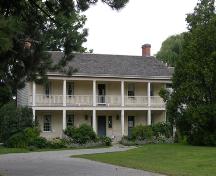 Gage House – Stoney Creek Battlefield Parkà moins de 100 m
 Lieu historique national du Canada de la Bataille-de-Stoney Creekà moins de 100 m
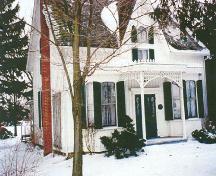 Lieu historique national du Canada de la Maison-Musée-Erland-Lee3,9 km · 1808
 Lieu historique national du Canada Usine-Hydraulique-de-Hamilton4,3 km · 1856
 Sandyford Place6,1 km · City of · 1856
 Church of the Ascension9,1 km · 1850
Lieux semblables
Les lieux dont la description du répertoire se rapproche le plus de celle-ci.
 Lieu historique national du Canada Burlington-HeightsHamilton, Ontario
 Lieu historique national du Canada des Hauteurs-de-QueenstonNiagara-on-the-Lake, Ontario
 Monument BrockQueenston, Ontario
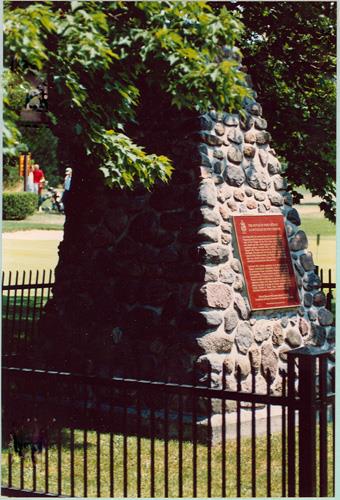 Lieu historique national du Canada du Champ-de-Bataille-du-Fort-GeorgeNiagara-on-the-Lake, Ontario
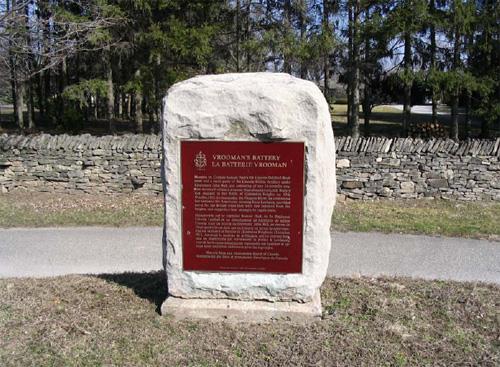 Lieu historique national du Canada de la Batterie-de-VroomanNiagara-on-the-Lake, Ontario
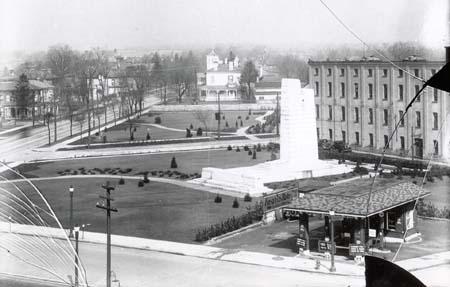 Brant County War MemorialCity of Brantford, Ontario
Tiré du Répertoire canadien des lieux patrimoniaux, dans sa dernière mise à jour du 12 décembre 2025. Le texte du répertoire est reproduit mot pour mot.