Protected Heritage Site
Drumrock
None, British Columbia
Also known as Persimmon, Helwig Vinnen, Log Tyee
- Built
- 1891
- Recognized
- 1929
- By
- Province of British Columbia
The register’s text, word for word
Description
The Drumrock shipwreck consists of the remains of a four-mast steel barque located in Takush Harbour off Smith Sound northeast of Cape Caution, British Columbia. The remains of the vessel straddle a rock at a depth of 6.5 metres, with the bow and stern in deeper water, the stern at 27.5 metres. Due to its steel construction the Drumrock is largely intact and sits above the surface of the sea floor. Significant artifacts remain including the bowsprit, masts, capstans, bollards, and rudder.
British Columbia's Heritage Conservation Act automatically protects all heritage wrecks, including the remains of all wrecked vessels and aircraft once two or more years have passed since the date of loss. It is illegal to damage, alter or remove a heritage object from a heritage wreck except under a permit issued by the Archaeology Branch.
Heritage value
The Drumrock has historic and scientific values derived from its construction and the history of its use and ownership. Built in Scotland in 1891, the Drumrock is an example of a "windjammer", a large, fast steel-hulled sailing ship that competed with early steamships. The Drumrock displays typical characteristics of this construction including using steel pipe for the bottom portion of the masts and the bowsprit. The Drumrock is a large example of this type of vessel, measuring 103 meters in length.
The Drumrock also holds historical value due to its many changes in ownership and use. In 1899 the vessel was sold to a German shipping company and renamed the Persimmon. In 1914, under the ownership of a second German shipping company and renamed the Helwig Vinnen, the vessel was interned as a belligerent in Mexico and remained there for the duration of the First World War. In 1920 the vessel was awarded to France as war reparations.
Eventually the vessel was acquired by a Vancouver-based towing company and was converted to a log barge. The masts were removed and the holds opened, and cranes were installed to convert it into the world's first fully self-loading log barge. This technological advancement greatly increased transportation speed and reduced losses compared to towing equivalent volumes of log booms. The Drumrock was in use as a log barge when it foundered on an uncharted rock in Takush Harbour, Smith Inlet, on February 1, 1927.
The scientific value of the wreck is enhanced by the relatively preserved condition of the vessel and its features including the bowsprit, masts, capstans, bollards, and rudder. The wreck is readily available to the recreational and academic diving communities due to its shallow and protected location.
Character‑defining elements
The character-defining elements of the Drumrock include:
- location and accessibility of the wreck site
- the dimensions and position of the wreck
- the intact rudder attached to the sternpost
- the four mast stems (all intact) which also formed the base of the cranes
- the crane machinery, capstans and winches
- other intact elements of the vessel including the bowsprit, bollards, and capstans
- the orientation of the wreck above the surface of the sea floor showing the form of the holds
End of the register’s text
Location
None, None, British Columbia, Canada
51.28465° N, 127.61787° W
Get directions (opens in a new tab)Being on the register doesn’t make a place open to visitors. Many are private homes or businesses; please view them from the street.

Loading map…
Nearby
All 20 places in None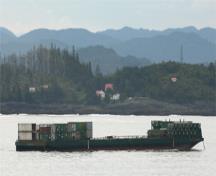
Similar places
Places whose register descriptions are closest to this one.
From the Canadian Register of Historic Places, as last updated on December 12, 2025. The register’s text is shown word for word.