Cavalier Building
Also known as: Cavalier Building, The Citadel, Cavalier Building, Édifice Cavalier de la citadelle
Description
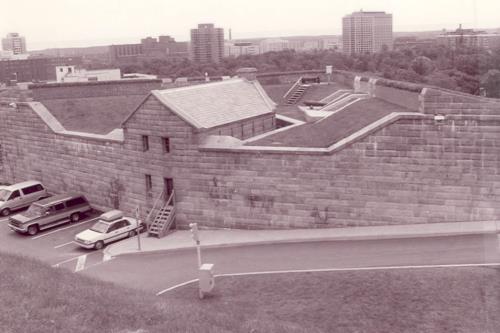
Located in the Halifax Defense Complex of the Halifax Citadel National Historic Side of Canada, the Cavalier Building is a three-storey, rectangular stone structure with a hipped roof and pronounced chimneys. Its long façade is dominated by a two storey colonnaded verandah terminated by wood-sided stair enclosures. Each side elevation has a triangular fenestration grouping on the lower portion, a line of windows and a single dormer above, and horizontally set windows on the verandah stair enclosures. The stark rear elevation displays a rhythm of windows and chimneys with only one opening on its short flanking sections. The designation is confined to the footprint of the building.
Heritage Value
The Cavalier Building is a Classified Federal Heritage Building because of its historical associations, and its architectural and environmental value.
Historical Value
The Cavalier Building is an excellent illustration associated with the active defence of the Imperial naval station in the period of mutual suspicion and hostility between Britain and the United States following the War of 1812. The completion of the Cavalier Building was part of a major upgrade of the Halifax defences, advocated by the Smythe Report of 1825 whereby the civilian employment generated by this project and the increased personnel needed to man the defences gave a boost to the economy of Halifax.
Architectural Value
The Cavalier Building is a very good representative example of British specialized military design. It was a detached fortified building within the greater fort where its main function was in the mounting of artillery on the roof to fire ‘en barbette’ for land defence. It also served as accommodation of garrison troops in bomb-proof casemates. Its value lies in its specialized design, its bomb-proof construction, the walls, the battery on the roof, the pattern of openings and the reconstructed two-storey colonnaded verandah and stair towers.
Environmental Value
The most striking building in the interior of the Citadel, with its animated roofline rising above the ramparts, the Cavalier Building has a strong influence and reinforces the military character of the Citadel site. The most conspicuous freestanding building, its period furnishings and museum displays are regularly seen by the many tourists and locals who visit the fortress every year, and thus has a strong identity within the Halifax region.
Sources: Rhona Goodspeed, and Edgar Tumak. The Citadel Vols.1+ 2, Halifax, Nova Scotia. Federal Heritage Buildings Review Office Report 95-001; The Cavalier Building, Halifax Defence Complex, Halifax Citadel, Halifax, Nova Scotia, Heritage Character Statement 95-001.
Character-Defining Elements
The character defining elements of the Cavalier Building should be respected.
Its features expressing its status as a specialized military structure, very good functional design and quality construction and craftsmanship as manifested in:
-its three-storey, rectangular massing with hipped roof and a two storey colonnaded verandah along its long façade with clapboard stair towers at its ends;
-its exterior stone walls and wood cladding on the third-storey walls;
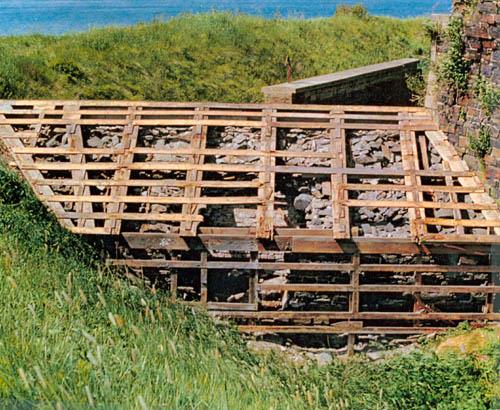
-its roof construction with barbette battery; masonry parapets on the north, west and south fronts and a dwarf wall across the east front enclosing a terreplein with curbs, pivots and full circle racers in the northwest and southwest corners and half-circle racers along the west face;
-its pattern of openings on the façade, each side and the rear elevation;
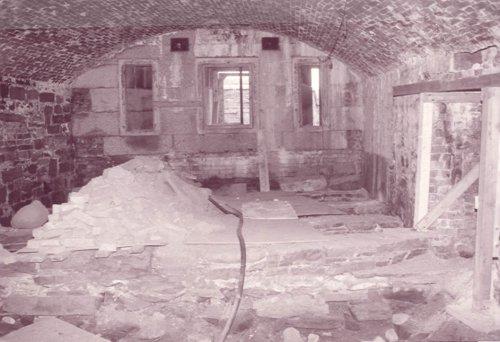
-its internal segmental profile brick vaults of multiple rings, a covering of glazed tiles, flagging and counter flagging, an asphalt layer and a filling of earth and broken stones.
The manner in which the Cavalier Building as the most striking structure on the site reinforces the military character and setting of the Halifax Citadel.
Gallery
1 imageLocation
Loading map...
Similar Places
Heritage sites with similar characteristics