Cable Building National Historic Site of Canada
Also known as: Western Union Telegraph Co., Bay Roberts Cable Building, Édifice du Câble de Bay Roberts
Description
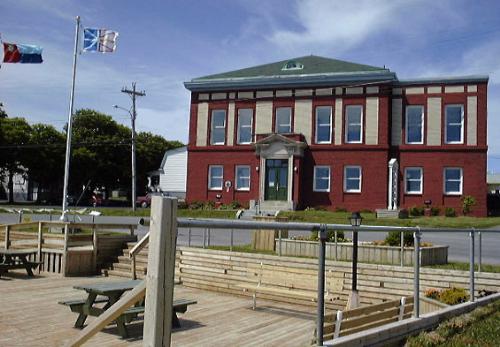
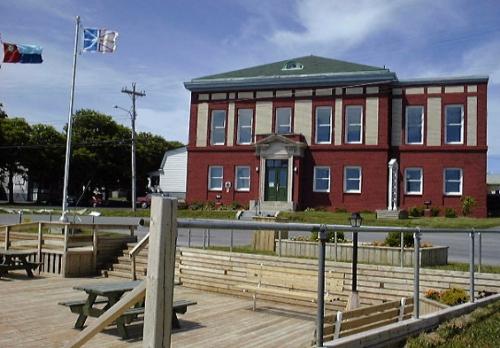
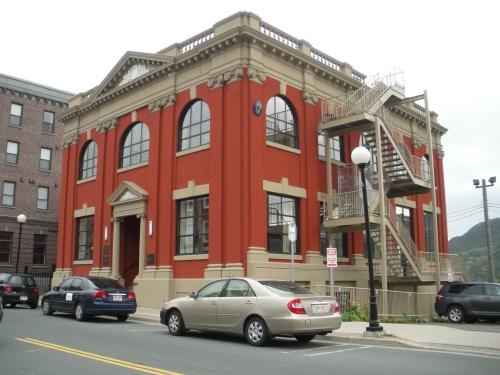
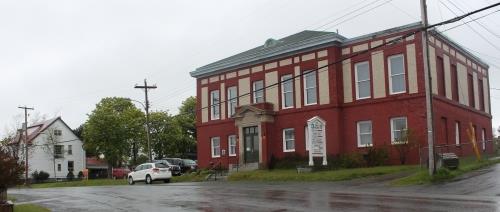
The Cable Building National Historic Site of Canada is a testament to the development of the telegraph industry in Newfoundland and Canada in the 20th century. Situated on Water Street in Bay Roberts, Newfoundland and Labrador, the concrete and steel structure is Neoclassical in design. The building is clad in red and beige brick and consists of a single, two-storey rectangular portion with a sympathetically-designed lateral wing. The interior spaces were designed to be open and spacious in order to accommodate the telegraph relay station. Currently, the ground floor houses the town hall, and the second floor is home to the Road to Yesterday Museum and the Christopher Pratt Art Gallery. The official recognition refers to the building on its footprint.
Heritage Value
The Cable Building was designated a national historic site of Canada in 2007 because:
- it was an important keystone in transatlantic communications and in the development of the Western Union Telegraph Company network. Its construction represents the corporate entity that dominated the transatlantic telegraph industry from 1912 to the 1960s;
- its design is a strong corporate symbol of the telecommunications giant and a direct affirmation of the impact of the telegraph industry in the 20th century. Moreover, its design introduced to Newfoundland a new type of telegraph station that was more functional and highly specialized in its layout; and,
- it was a flagship of telegraph technologies, illustrating Western Union's important role as an innovative industry leader.
In the late 19th century, Newfoundland became a major hub for the development of telecommunications networks as it offered the shortest route to link North America and Europe. In 1910, the first transatlantic cable for the Western Union Telegraph Company was landed in a temporary building in Bay Roberts. By 1913, the current Cable Building in Bay Roberts was built to serve as the main relay between the North American and European networks of Western Union Telegraph. Its establishment was a key component in the company’s international strategy and its architectural design is important corporate evidence of the expansion and dominance of Western Union in Newfoundland. The design of the Cable Building also introduced a new type of telegraph station to Newfoundland as it adopted the Western Union Telegraph corporate model. The architecture demonstrates a functional and specialized layout with rooms dedicated to specific equipment, technical operations, and administration. From its technical design to the connecting cables, the Cable Building was a flagship of telegraph technologies, illustrating Western Union's important role as an innovative industry leader.
Character-Defining Elements
Key elements contributing to the heritage value of this site include:
- the location in Bay Roberts, Newfoundland, strategically placed for transatlantic telecommunications;
- the concrete and steel structure, clad in red and beige brick, to minimize the risk of fire;
- the symmetrical disposition of openings, an expression of the building’s two levels and applied details such as an entrance with triangular pediment;
- the open and spacious interior spaces designed to accommodate the many functions of a telegraph relay station;
- the interior layout with strategically designed rooms dedicated to equipment, technical operations, and administration;
- the technical design that was more functional and highly specialized in its layout which became a strong corporate symbol of the Western Union Telegraph Company.
Gallery
3 imagesLocation
Loading map...
Similar Places
Heritage sites with similar characteristics