Recognized Federal Heritage Building
Border Crossing Facility
Stanstead, Quebec
Also known as Customs / Immigration Building
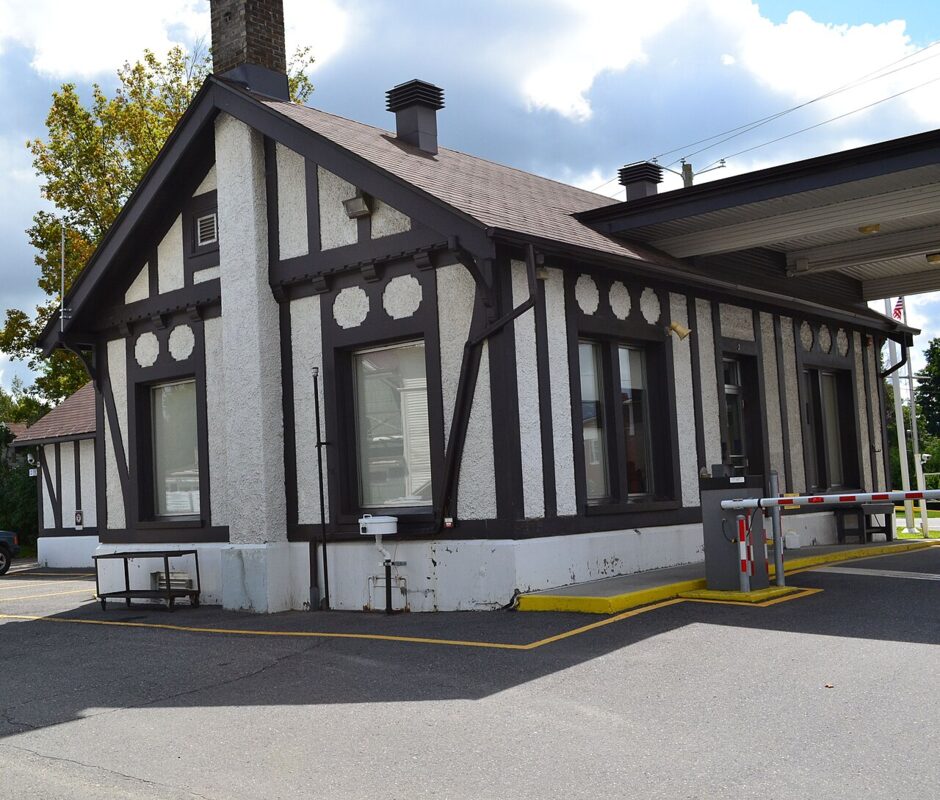
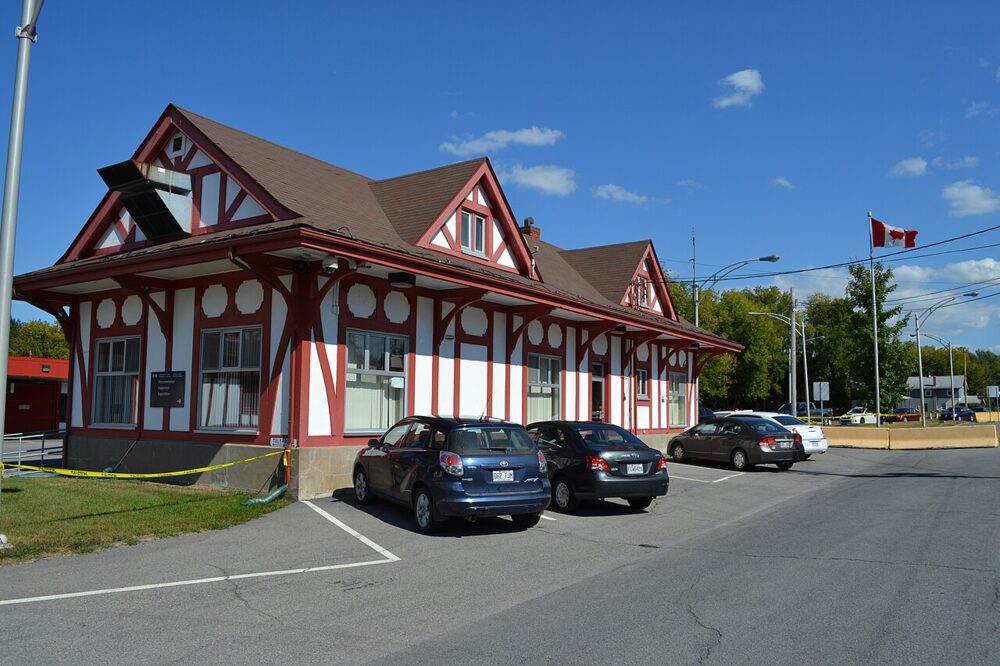
Not from the Register. Photo: Cantons-de-l'Est, Wikimedia Commons · CC BY-SA 3.0
- Built
- 1932
- Recognized
- 2001
- By
- Government of Canada
The register’s text, word for word
Description
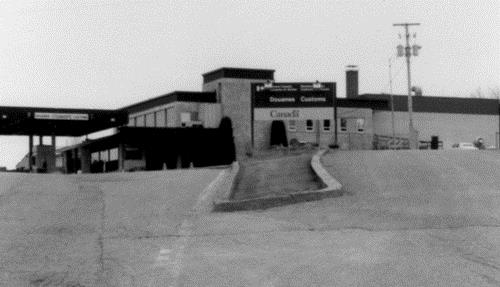
The Border Crossing Facility is located in the village of Beebe. It is a one-and-a-half storey, gable-roofed building designed in the Tudor-Revival style. Its picturesque form is embellished with gables, white stucco and half-timbering. Multi-pane wood windows are regularly arranged on the building’s façades and a brick chimney projects from the roof. A flat-roofed breezeway, which shelters the entrance, is attached to the building to protect the vehicles that pass through the border crossing. The designation is confined to the footprint of the building.
Heritage value
The Border Crossing Facility is a Recognized Federal Heritage Building because of its historical associations, and its architectural and environmental value.
Historical Value
The Border Crossing Facility is closely associated with the federal government’s construction of customs and immigration posts along the Canada-U.S. border to control the land circulation of goods and services. The construction of this border crossing facility at Beebe was a response to the smuggling scandal of 1926, which initiated the concern to strengthen Canada’s border with the United States.
Architectural Value
The Border Crossing Facility is valued for its good aesthetic and functional design. The Canadian government chose the Tudor-Revival style with the clear intention of asserting cultural and political distinctiveness. The handsome, one-and-a-half storey building, with stucco walls and gables set off by half-timbering, is a representative example from this period and demonstrates very good craftsmanship.
Environmental Value
The Border Crossing Facility reinforces the present character of its urban landscape setting. Built in the very heart of the village, it is a well-known landmark in the region.
SourceGeneviève Charrois, Poste frontalier, Beebe, Québec, Federal Heritage Buildings Review Office, Building Report, 00-102; Border Crossing Facility, Beebe, Québec, Heritage Character Statement, 00-102.
Character‑defining elements
The following character-defining elements of the Border Crossing Facility should be respected.
Its good aesthetic and functional design and very good craftsmanship and materials, for example:
- the formal elements, which help make this small one-and-a-half storey building a good example of a Tudor-Revival border crossing, particularly its picturesque form embellished with gables and its wet-dash cladding separated by half-timbering;
- the materials and construction techniques used for the half-timbering, including terracotta, wet dash and wood;
- the concept of a breezeway to protect the vehicles.
The manner in which the Border Crossing Facility reinforces the picturesque character of urban landscape setting and is a well-known landmark, as evidenced by:
- its relationship with the street and the Canada-U.S. border, which it serves;
- its overall scale, design and materials, which complement its urban surroundings;
- its high visibility in the urban fabric of Beebe and its familiar role as a high traffic border crossing.
End of the register’s text
Location
2 Principale Street (Highway 247), Stanstead, Quebec, Canada
45.00600° N, 72.14184° W
Get directions (opens in a new tab)Being on the register doesn’t make a place open to visitors. Many are private homes or businesses; please view them from the street.

Loading map…
Nearby
 Église Advent Christian200 m · Rue Principale · 1866
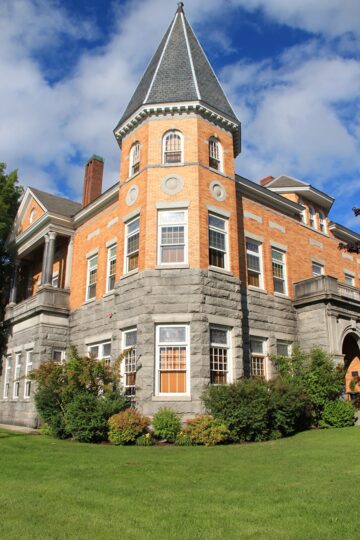 EnhancedÉdifice Haskell Free Library and Opera House3.5 km · Rue Church · 1901
 Haskell Free Library and Opera House National Historic Site of Canada3.5 km · 1901
 Maison Butters3.8 km · Rue Dufferin · 1866
 Maison Carrollcroft3.9 km · Rue Dufferin · 1858
 Loge maçonnique Golden Rule no 54.1 km · Rue Dufferin · 1860
Similar places
Places whose register descriptions are closest to this one.
From the Canadian Register of Historic Places, as last updated on December 12, 2025. The register’s text is shown word for word.