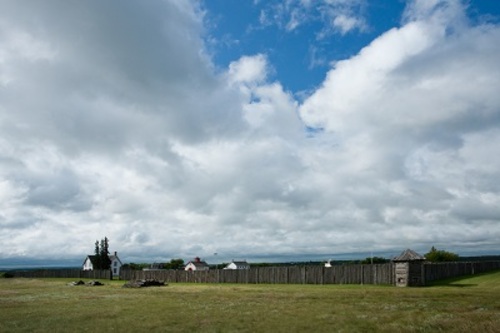
Battle of Cut Knife Hill National Historic Site of Canada
Also known as: Battle of Cut Knife Hill National Historic Site of Canada, Battle of Cut Knife Hill, Bataille de Cut Knife
Description
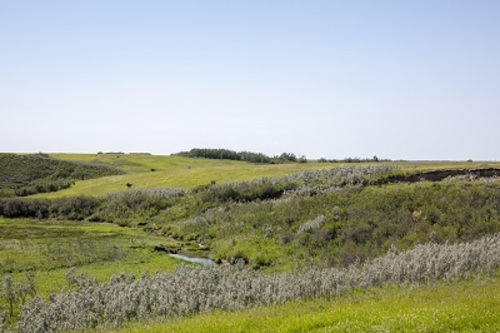
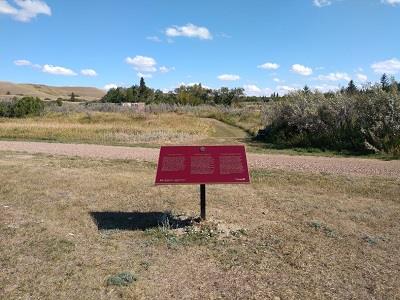
Battle of Cut Knife Hill National Historic Site of Canada is located on the Poundmaker Reserve of the Cree Nation, 16 kilometres from the town of Cut Knife, near Battleford, Saskatchewan. The site of the conflict is now marked by a plaque at the top of a steep hill surrounded by gently rolling grassland, ravines and hills with occasional stands of small trees. There are no visible remains of the battle during which Canadian military forces attacked gathered camps of Cree and Assiniboine bands before being forced to retreat. The site now contains the grave of Chief Poundmaker, a monument to Chief Big Bear, a tepee village, and a small interpretive museum. Official recognition refers to the polygonal site that encompasses the site of the battle.
Heritage Value
The Battle of Cut Knife Hill was designated a national historic site for the following reasons:
- it was the scene of an attack on 2 May 1885, by troops under Lieutenant- Colonel Otter Against the Cree and Assiniboine camps of Chief Pitikwahanapiwiyin (Poundmaker);
- after several hours' fighting, Otter retreated to Battleford and, on Chief Pitikwahanapiwiyin's orders, was not pursued;
- this battle was part of the 1885 conflict between Canadian government forces and the Métis and First Nations peoples over land and treaty issues.
In 1885 fighting erupted on the western prairies between Canadian government forces and the Métis and First Nations peoples over land and treaty issues. The Battle of Cut Knife Hill, as it is often referred to, occurred after the relief of Battleford when Lt. Col. W.D. Otter and over 300 men, accompanied by artillery, launched an attack on the gathered bands of Cree and Assiniboine camped at Poundmaker’s reserve at Cut Knife. These bands of Cree and Assiniboine were viewed by the government as rebels. The government troops, composed of North-West Mounted Police, “B” Battery, “C” Company, Foot Guards, Queen’s Own and Battleford Rifles, were ranged against Cree and Assiniboine led by Chief Poundmaker and Chief Fine Day. The surprise attack failed and the government forces encountered a very strong defence. After six hours fighting Otter withdrew his column in good order across a deep creek and retreated to Battleford. On Poundmaker's orders the warriors ceased fire and did not pursue the retreating troops. Despite prevailing in the battle, when word came of the Métis defeat at Batoche,
Chief Poundmaker ended hostilities by surrendering at Battleford on 26 May.
Character-Defining Elements
Key features contributing to the heritage value of this site include:
- the setting at the top of a steep hill surrounded by gently rolling grassland, ravines and hills with occasional stands of small trees; - its location in the Poundmaker Reserve; - the integrity of any surviving or as yet unidentified archaeological remains relating to the battle, which may be found within the site in their original placement and extent.
Gallery
1 imageLocation
Loading map...
Similar Places
Heritage sites with similar characteristics